
Water Extraction removes standing and absorbed water from your home or business after a plumbing leak, appliance failure, sump pump problem, or storm intrusion. Our team helps you limit further damage by pumping out water, recovering moisture from materials, and preparing the property for structural drying.
Our team provides service across Minneapolis, including neighborhoods and local areas such as North Loop, Uptown, Northeast Minneapolis, and Linden Hills.
Acting quickly can help protect flooring, drywall, baseboards, cabinets, and personal belongings. Water can move beneath wet carpet, into subfloors, and through wall cavities even after the visible surface looks dry. Our quick one-hour local response helps us begin the assessment and water removal process promptly in Minneapolis.
We serve property owners throughout Minneapolis and the Minneapolis-St. Paul Metro Area. Our IICRC-certified technicians use moisture meters, portable extractors, pumps, air movers, and dehumidifiers according to the conditions at your property.
Water Removal and Pump-Out Service for Minneapolis Properties
Our first step is to identify the water source and determine whether it has been stopped. A failed supply line, overflowing appliance, water heater failure, backed-up drain, sump pump failure, or storm opening may require different safety and cleanup decisions.
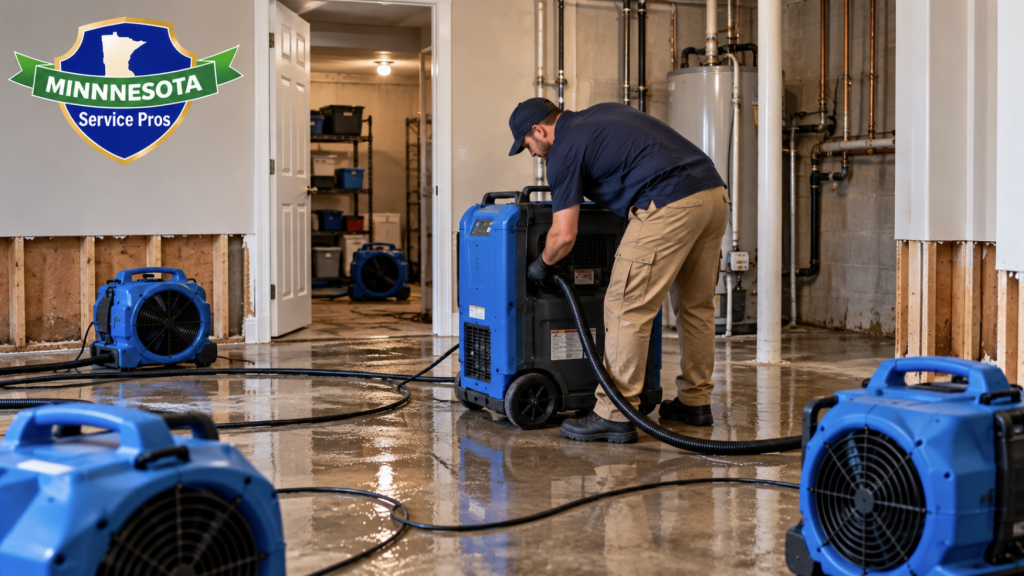
Standing water is removed with portable extractors or submersible pumps, depending on its depth and location. Water vacuuming can help recover moisture from carpet, carpet pad, hard-surface flooring, and other accessible materials. Flood water removal may require additional containment and disposal steps when the water may carry contaminants.
Removing visible water is only part of the work. Moisture can remain under flooring, behind baseboards, inside cabinets, and within drywall or wall cavities. Our technicians check these areas with moisture meters and use targeted extraction when materials can be safely restored.
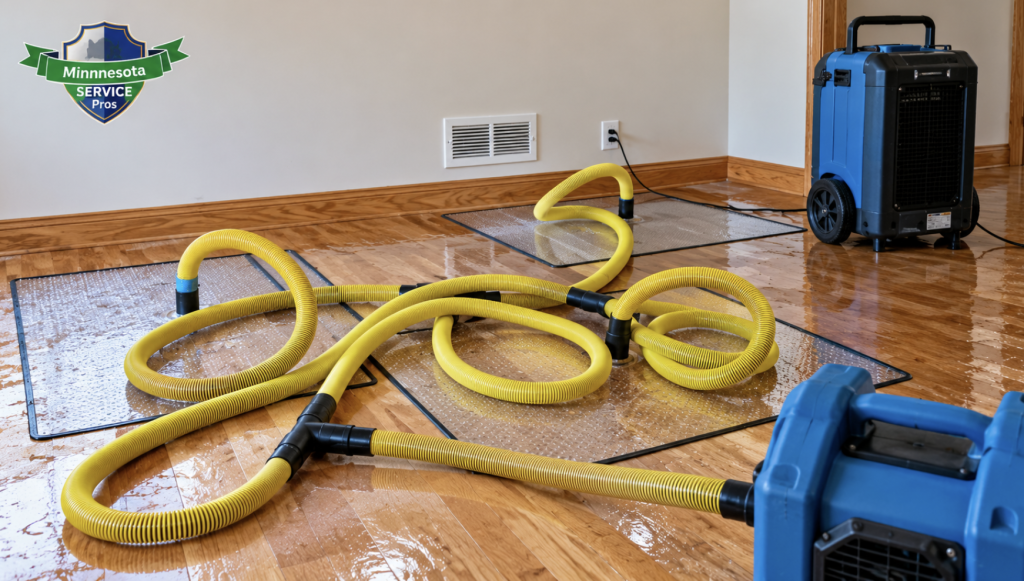
After the pump-out or extraction stage, structural drying begins. Air movers increase evaporation from damp surfaces, while dehumidifiers remove moisture from the air. Moisture monitoring helps show whether drying is progressing and whether equipment needs to remain in place.
Some materials may need removal when they are swollen, contaminated, or unable to dry safely. We explain the condition of affected materials before removal decisions are made. This can help you separate necessary restoration work from areas that only need drying and cleaning.
Who We Help in Minneapolis
Homeowners often call after a burst pipe, washing machine overflow, refrigerator line leak, water heater failure, or basement seepage. We can address a small affected area or coordinate the larger cleanup and drying needs of a multi-room loss.
Property managers and owners of condos, duplexes, and multifamily buildings may need a plan that protects neighboring units and shared building materials. Water can travel through ceilings, floors, plumbing chases, and wall assemblies, so the initial inspection may include areas beyond the room where the leak began.
Retail stores, offices, schools, healthcare properties, restaurants, and industrial spaces may need extraction that accounts for employees, residents, visitors, equipment, inventory, and building access. Our commercial planning focuses on safe work areas and a clear path toward reopening affected spaces.
What to Expect From Our Water Removal Process
Our work is based on moisture conditions rather than appearance alone. A dry-looking floor or wall may still hold moisture below the surface, and a damp material may need different treatment from a visibly flooded area.
Our IICRC-certified technicians follow recognized restoration practices while adapting the work to your building materials, water source, and level of damage. We explain what we find so you can make informed decisions about drying, cleaning, and material removal.
We are BBB Certified in Minnesota, and our goal is to keep communication clear from the first assessment through moisture monitoring. You should know which areas are affected, what equipment is being used, and what the next decision point will be.
- Safety and source check: We look for electrical hazards, unstable materials, contaminated water, and the active source of the loss. If a plumbing or electrical repair is needed, we explain which trade should address it before restoration continues.
- Moisture inspection: Moisture meters and visual inspection help us map affected rooms and materials. We check beyond the visible puddle because water may have traveled beneath flooring or through walls.
- Water removal: Portable extractors and submersible pumps remove standing water. Water removal methods are selected based on depth, material type, access, and the condition of the water.
- Material evaluation: We assess carpet, pad, flooring, drywall, insulation, cabinets, and contents. Items that can be dried safely are separated from items that are too damaged or contaminated to keep.
- Structural drying: Air movers and dehumidifiers support evaporation and humidity control. Equipment placement is based on the affected areas, airflow needs, and building layout.
- Monitoring and next steps: We return or check conditions as planned, document moisture changes, and adjust equipment when needed. Drying is complete when readings and material conditions support that conclusion, not simply when the surface feels dry.
What Minneapolis Property Owners Should Know
Minneapolis has many older homes, remodeled houses, apartments, condominiums, and mixed-use buildings with different plumbing layouts and flooring assemblies. Older construction may have layered flooring, plaster, masonry, or finished basements that require careful moisture checks.
Basements are common in the region and may be affected by sump pump failures, foundation seepage, drain backups, or heavy rain. Water can collect below finished flooring and move into stored belongings, wall framing, and insulation.
Cold Minnesota winters add another concern when pipes freeze and break. Water may travel through ceilings, walls, and floor systems before the failure is discovered. Once the source is controlled, prompt extraction and drying can help limit the time materials remain wet.
Spring snowmelt, summer storms, and freeze-thaw cycles can place added pressure on drainage systems and building openings. The right response depends on whether the water came from a clean supply line, a drain, groundwater, or exterior flooding.
Do not enter standing water if electrical equipment, outlets, or damaged wiring may be involved. Avoid using household vacuums on water, and do not run fans if doing so could spread contaminated moisture. If the water may contain sewage or other contaminants, keep people and pets away until the area is assessed.
Seasonal Conditions That Can Lead to Standing Water
Winter pipe breaks can release a large amount of water quickly and may affect several levels of a building. Once the plumbing issue is repaired, our team can evaluate saturation in walls, ceilings, and floors.
Spring thaw and heavy rain may contribute to basement seepage, sump pump failures, or exterior water entry. Pump-out work may need to be followed by cleaning, moisture checks, and drying of concrete, framing, flooring, and contents.
Summer storms can cause roof or window intrusion and may leave wet insulation, ceilings, and finished rooms. Extraction should be coordinated with temporary protection of the opening when needed.
Commercial Water Removal for Larger Properties
Commercial properties in Downtown Minneapolis and the North Loop include offices, retail spaces, restaurants, residential towers, and mixed-use buildings with different access and occupancy needs. Properties connected to Minneapolis-St. Paul International Airport and nearby business activity may also need careful scheduling around staff, travelers, equipment, inventory, and public areas. These settings can require phased extraction, protected walkways, controlled work zones, and documentation that supports communication with owners, managers, and other involved parties.
Larger water losses need a plan that separates urgent extraction from follow-up drying. Our commercial team can review affected floors, suites, tenant areas, mechanical spaces, storage rooms, and shared corridors to establish safe access and work priorities.
Business continuity may depend on keeping unaffected areas open while damaged spaces are isolated. We can discuss equipment placement, access windows, occupant safety, and phased work for offices, retail properties, healthcare facilities, schools, condos, multifamily buildings, and industrial spaces.
Documentation is important when several parties are involved. Moisture readings, affected-area notes, equipment locations, and progress updates can help property owners, managers, tenants, and insurers understand what has been removed, what is drying, and what decisions remain.
We can plan our service around projects of different sizes, from smaller affected areas to larger losses involving retail properties, offices, hospitals, schools, condos and multifamily buildings, and industrial properties.
Estimated Water Removal and Extraction Pricing
Every loss is different, so these general ranges are provided only to help with early planning. Your final cost can change based on the source of the problem, affected square footage, materials, contamination, access, equipment needs, drying time, demolition, cleaning, and repairs.
- Small project: $1,000–$3,500+
- Moderate project: $5,000–$10,500
- Large project: $10,500+
These prices are estimates for general reference only, not a quote for your property. An onsite inspection is required before our team can provide a complete price estimate. The affected area, materials, moisture or contamination, equipment needs, and full scope of work all have to be evaluated first.
Working With Insurance After Property Damage
Keep photos, videos, repair records, and notes about when the loss occurred and how the source was controlled. We can document affected materials, extraction work, moisture readings, and drying progress for your records. Coverage depends on your policy and the cause of loss, so contact your insurer promptly and follow its claim instructions.
Popular insurance companies we work with include: State Farm, Allstate, Farmers Insurance, Travelers, Liberty Mutual, American Family Insurance, USAA, and Nationwide.
Our team can help document the damage and work performed, but coverage and claim decisions depend on your policy, the cause of loss, and your insurance carrier. You should contact your carrier directly with coverage questions.
Water Removal Services in Nearby Communities
Our service area also includes nearby communities such as Bloomington, Eden Prarie, and Plymouth.
Water Extraction and Water Removal FAQs
How soon should water be removed from my property?
As soon as it is safe and the water source is controlled. Standing water can spread into flooring, drywall, cabinets, and contents. Prompt extraction reduces the time materials remain saturated and allows structural drying to begin sooner.
Can you remove water from a finished basement?
Yes. We can assess standing water, wet carpet and pad, hard-surface flooring, walls, and stored contents. The method depends on water depth, the source, electrical safety, and whether the water may be contaminated.
Is water removal the same as water damage restoration?
No. Extraction removes standing and absorbed water, while restoration may also include structural drying, cleaning, material evaluation, moisture monitoring, and repairs or reconstruction. Extraction is often the first major step in the larger process.
What should I do before technicians arrive?
Stop the water source if you can do so safely, move unprotected valuables away from the affected area, and keep people and pets away from standing water. Do not use electrical equipment in wet areas or operate a household vacuum on the water.
Can carpet and flooring be saved after a leak?
Sometimes. The answer depends on the water source, how long the materials were wet, the type of flooring, and whether moisture reached the pad or subfloor. We evaluate each layer and explain which materials can be dried safely.
Why are air movers and dehumidifiers needed after pumping out water?
Pumping removes liquid water, but materials may still hold absorbed moisture. Air movers help moisture leave surfaces, while dehumidifiers remove it from the indoor air. Together, they support structural drying and help control humidity.