

Flooded Basement Cleanup in Rochester helps remove standing water, protect your structure, and begin drying materials that may hold moisture below the surface. We help homeowners, landlords, and property managers address water from sump pump failure, foundation seepage, floor drains, heavy rain, or snowmelt.
We serve homes and businesses across Rochester, including communities around Kutzky Park, Pill Hill, Slatterly Park, and Folwell.
Timely action can limit damage to finished walls, flooring, carpet, stored belongings, and electrical components. Our local response is available within one hour, and our IICRC-certified technicians assess the affected areas before choosing the safest removal and drying methods.
From a small utility-room leak to water covering much of a basement, our team explains what we find and what needs to happen next. You will know which areas require water removal, which contents may be salvageable, and where hidden moisture may remain.
Basement Water Removal and Drying in Rochester
Basement water removal begins with a careful inspection. We look for the water source, the depth and spread of standing water, affected materials, electrical hazards, and signs that moisture has moved behind walls or beneath flooring.
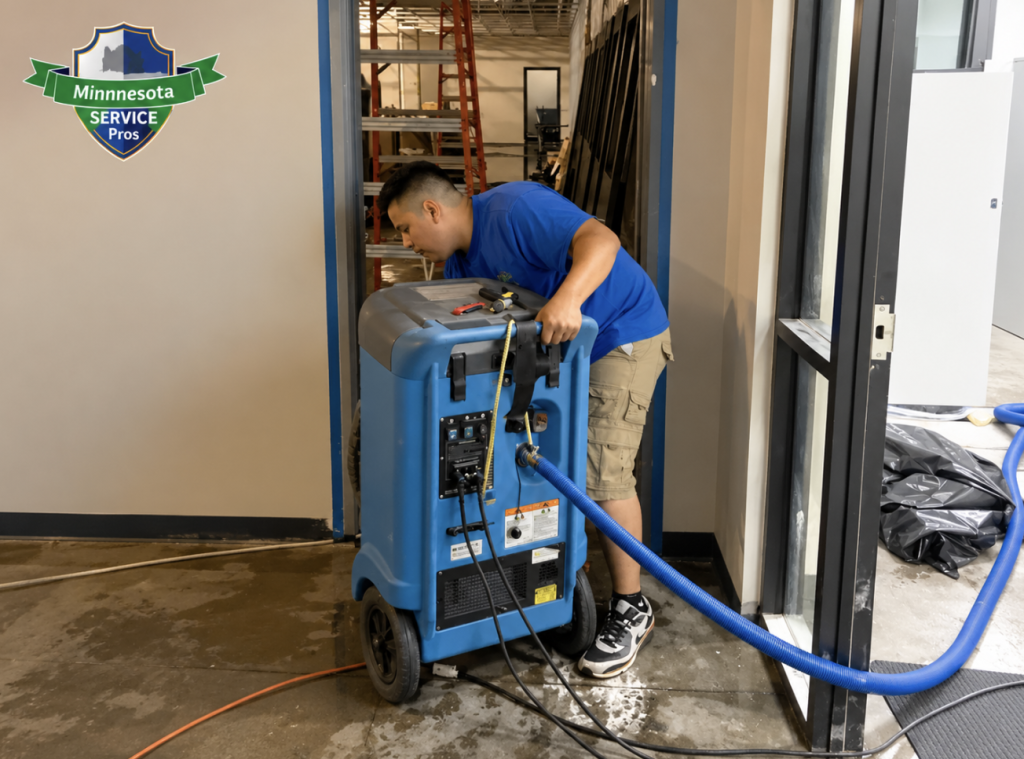
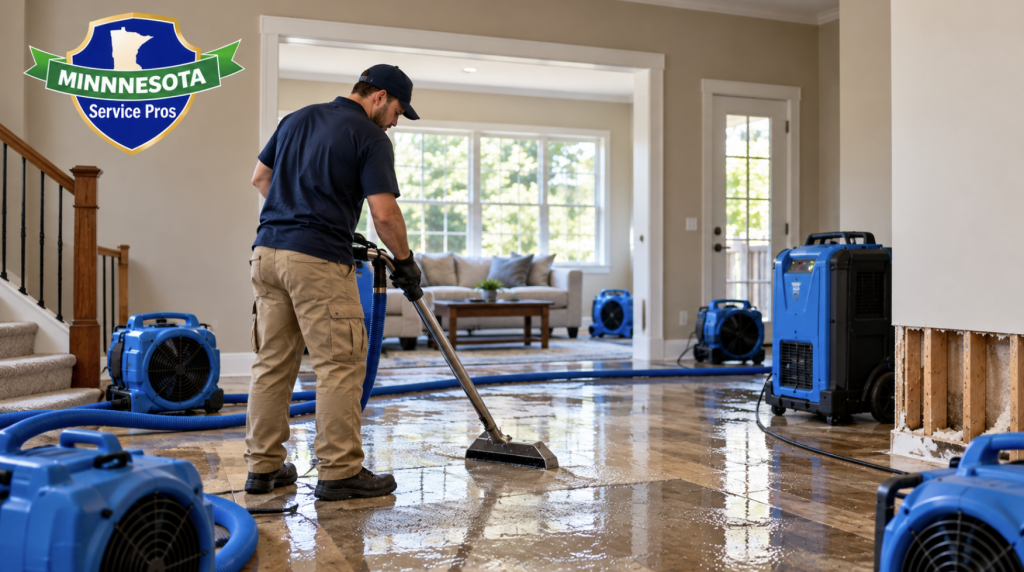
Pumps, wet vacuums, and extraction equipment may be used according to the amount and type of water present. Removing visible water is only the first step. Subfloors, wall cavities, insulation, carpet padding, and stored contents can continue holding moisture after the surface appears dry.
Structural drying uses air movement, dehumidification, and moisture monitoring to reduce moisture in building materials. Our technicians compare readings during the project instead of relying only on how a surface feels. This helps show when affected materials have reached an appropriate drying level.
Finished basements often need special attention because carpet and pad, drywall, trim, cabinets, and personal property can all be affected at once. We separate items that can be cleaned and dried from materials that may need removal because they are swollen, contaminated, or unable to dry properly.
If water came from a drain backup, soil, or another potentially contaminated source, safety and material decisions may differ from those used for a clean supply-line leak. We identify the source and discuss precautions before cleanup proceeds.
Who We Help in Rochester
Homeowners dealing with a failed sump pump, leaking foundation, overflowing floor drain, or water intrusion after a storm can use our flooded basement cleanup service to stabilize the space and plan the next steps.
Landlords and property managers may need coordinated work when water affects several units, shared mechanical areas, storage rooms, or common hallways. We document affected areas so you can track the scope of the loss.
Families with finished basements often need help protecting furniture, electronics, toys, documents, and other stored belongings. Moving contents away from moisture can help create room for extraction and drying.
We also work with owners of older homes, newer construction, rental properties, condos, and multifamily buildings. Each structure can move and hold water differently, so the inspection guides the work rather than a one-size-fits-all plan.
What to Expect From a Basement Pump-Out and Drying
Our approach combines immediate water removal with a broader review of the basement and the materials connected to it. A pump-out that leaves moisture under flooring or inside drywall can allow damage to continue.
We use IICRC-certified technicians who follow established restoration principles for inspection, extraction, drying, and documentation. Our BBB certification in Minnesota provides another point of accountability as you manage a stressful property problem.
A one-hour local response helps us begin evaluating the situation sooner. Response time does not replace a complete inspection, but early assessment can help identify safety concerns and reduce unnecessary delay.
You receive clear explanations about the source, affected materials, drying needs, and possible next steps. We can work on smaller residential losses as well as larger projects that involve multiple rooms, units, or commercial areas.
- Contact and initial questions: We ask where the water came from, whether the source has stopped, how much of the basement is affected, and whether anyone has concerns about electricity, sewage, or unsafe access.
- Safety and inspection: Our technicians check for hazards before entering or operating equipment. We identify visible and hidden moisture, document affected rooms and contents, and note materials that may require removal or specialized cleaning.
- Water extraction or pump-out: Standing water is removed with equipment suited to the depth and spread of the loss. Contents may be moved or elevated when safe, and saturated carpet pad or other damaged materials are evaluated.
- Cleaning and controlled drying: We clean affected surfaces as appropriate, place air movers and dehumidifiers where needed, and create a drying plan for floors, walls, framing, and contents. Equipment placement may change as readings improve.
- Moisture monitoring: Our team checks materials during the process and records progress. If moisture remains in a subfloor, wall cavity, or other concealed area, the plan is adjusted before the space is considered dry.
- Final review: We explain the work completed, remaining repairs or concerns, and any follow-up needed. If reconstruction, plumbing work, or mold evaluation may be required, we identify that distinction clearly rather than treating every issue as the same service.
What Rochester Property Owners Should Know
Rochester properties can experience basement water from heavy rain, rapid snowmelt, clogged or overwhelmed drainage systems, foundation seepage, and sump pump problems. The cause matters because cleanup alone will not correct an active source.
Many basements in the area serve as living spaces, laundry rooms, storage areas, mechanical rooms, or home offices. Water can therefore affect both the structure and the daily use of the property.
Homes and buildings around low-lying areas or near drainage features may have different moisture patterns from properties on higher ground. The slope of the lot, foundation condition, grading, gutters, downspouts, and drain systems all influence how water reaches a basement.
Older properties may contain layered flooring, plaster, wood trim, or prior repairs that dry differently from modern materials. Newer finished spaces can also hide moisture behind insulated walls and built-in cabinets. Inspection helps us account for those differences.
The Zumbro River and surrounding drainage systems are part of Rochester's broader water environment, but a basement loss can also result from a very localized problem such as a failed pump or blocked floor drain. We focus on the conditions at your property rather than assuming the same cause for every address.
Seasonal Conditions That Can Flood Basements
Spring snowmelt can send water toward foundations and test sump pumps, discharge lines, gutters, and grading. Check that discharge points are not blocked by ice, soil, or landscaping.
Summer and fall storms may deliver heavy rain in a short period. A floor drain or sump system can become overwhelmed, especially when several drainage issues occur at the same time.
Winter introduces frozen soil, ice-covered discharge lines, and plumbing risks. If a basement is already damp, colder conditions can make drying slower and increase the chance of damage to stored items and finishes.
Commercial Basement and Lower-Level Water Removal
Rochester's Downtown area, South Broadway, and the Apache Mall area include offices, retail spaces, restaurants, multifamily properties, and other occupied buildings. Water removal in these settings may require planning around customers, employees, residents, loading access, shared utilities, and operating hours. We evaluate the affected area, the building layout, and the need to keep unaffected spaces usable while extraction and drying take place.
Commercial basement water damage can affect offices, retail properties, medical spaces, schools, hospitality buildings, condos, multifamily properties, and industrial facilities. Our team plans access, equipment placement, occupant safety, and separation between affected and unaffected areas.
Larger losses may involve several rooms, tenant spaces, mechanical areas, or multiple units. We organize extraction and drying around the building's layout and help document affected materials so owners, managers, and other involved parties can follow the work.
Business continuity may depend on protecting inventory, records, equipment, entrances, and critical operating areas. Drying equipment can require power, clearance, and monitoring, so we discuss placement and site access before work begins. Documentation of moisture conditions and completed steps can also support communication with owners, managers, and insurers.
We can plan our service around projects of different sizes, from smaller affected areas to larger losses involving retail properties, offices, hospitals, schools, condos and multifamily buildings, and industrial properties.
Estimated Basement Water Removal Pricing
Every loss is different, so these general ranges are provided only to help with early planning. Your final cost can change based on the source of the problem, affected square footage, materials, contamination, access, equipment needs, drying time, demolition, cleaning, and repairs.
- Small project: $1,000–$3,500+
- Moderate project: $5,000–$10,500
- Large project: $10,500+
These prices are estimates for general reference only, not a quote for your property. An onsite inspection is required before our team can provide a complete price estimate. The affected area, materials, moisture or contamination, equipment needs, and full scope of work all have to be evaluated first.
Working With Insurance After Property Damage
We can provide documentation about the affected areas, moisture conditions, equipment used, and work performed. Keep records of the loss, protect receipts and photos when it is safe to do so, and contact your insurer to learn about your policy's reporting and coverage requirements. Coverage decisions are made by your policy and insurer, not by the cleanup process.
Popular insurance companies we work with include: State Farm, Allstate, Farmers Insurance, Travelers, Liberty Mutual, American Family Insurance, USAA, and Nationwide.
Our team can help document the damage and work performed, but coverage and claim decisions depend on your policy, the cause of loss, and your insurance carrier. You should contact your carrier directly with coverage questions.
Basement Water Removal in Nearby Communities
Our service area also includes nearby communities such as Brooklyn Park, Minnetonka, and Eagan.
Flooded Basement and Water Removal FAQs
What should I do before your team arrives?
If it is safe, stop the water source and keep people away from standing water near electrical equipment. Do not use outlets or appliances that may have been exposed to water. Move small valuables only when you can do so without walking through unsafe water, and take photos from a dry location if possible.
Can you clean up a small amount of basement water?
Yes. A small area still deserves an inspection because water may move under flooring, behind trim, or into wall cavities. We can evaluate the size and source of the loss and explain whether extraction, targeted drying, cleaning, or additional repair is appropriate.
How long does basement drying take?
The time depends on the amount of water, the materials affected, indoor conditions, the source, and how much moisture is hidden below the surface. We monitor the structure during drying rather than promising a fixed timeline. Materials are considered ready for the next step when readings and conditions support that decision.
Do I need to remove wet carpet and drywall?
Not always. Carpet, pad, drywall, insulation, and trim are evaluated based on the water source, saturation, condition, and ability to dry. Some materials can be cleaned and dried, while others may be too damaged, contaminated, or difficult to dry safely.
What if my sump pump failed?
We can remove the water and dry the affected basement, but the pump or drainage problem also needs attention. A plumber or qualified drainage professional may be needed to repair the source, test the system, or improve the discharge setup. We explain what we observe so you can arrange the right follow-up.
Can basement water cause mold?
Damp materials can support microbial growth if they remain wet. Prompt extraction and structural drying reduce that risk, but they do not guarantee that growth will not occur. If you see visible growth or suspect extensive contamination, tell us before work begins so the cleaning and safety plan can be reviewed.