
Flooded Basement Cleanup in Coon Rapids, Minnesota

Flooded Basement Cleanup services in Coon Rapids, Minnesota

Flooded Basement Cleanup removes standing water, protects the structure, and helps you return your basement to a safe, usable condition. We help homeowners and property managers in Coon Rapids after sump pump failures, heavy rain, snowmelt, foundation seepage, or plumbing problems. Acting promptly can limit damage to flooring, drywall, stored belongings, and the framing below finished surfaces.

Our crews serve properties throughout Coon Rapids, including areas around Riverdale, Sand Creek, and Crooked Lake.

Our team provides a quick 1-hour local response when available, followed by an inspection of the affected areas. We identify where water traveled, remove accessible water, and plan the drying work needed to address moisture that may remain below the surface.

A wet basement can continue causing problems after the visible water is gone. Our IICRC-certified technicians use moisture checks and practical restoration methods to guide the next steps for your property.

Basement Water Removal and Drying in Coon Rapids

Basement water removal begins with a safety and damage assessment. We look at the source, the amount of water, the type of water involved, electrical concerns, and the materials that may have absorbed moisture. If the source is still active, it should be stopped or controlled before cleanup proceeds.

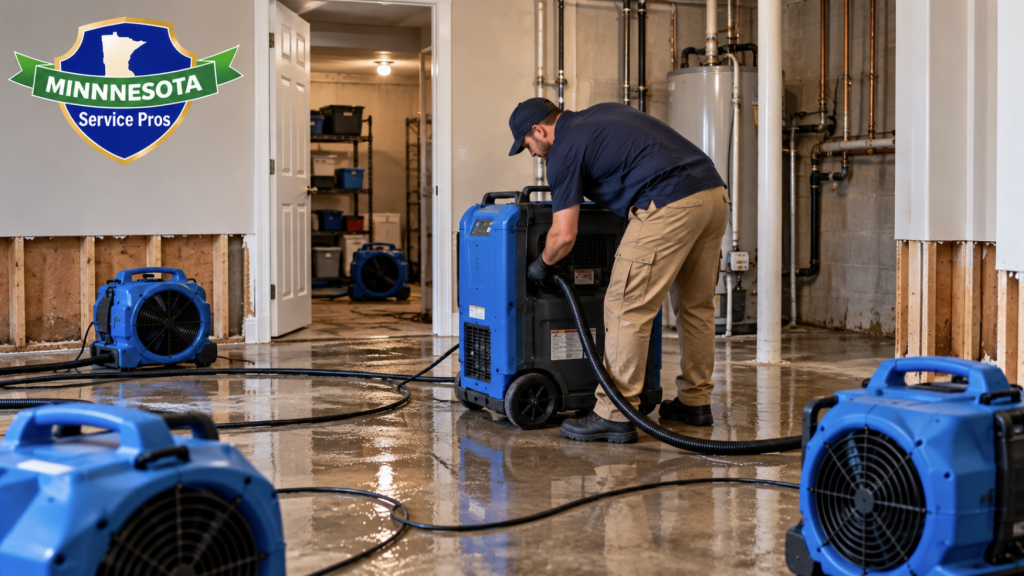
Standing water is removed with pumps or extraction equipment suited to the conditions. A basement pump-out may be needed for deeper water, while surface extraction can address water across concrete, flooring, carpet, and other accessible areas. Removing water quickly helps reduce the time materials remain saturated.

Water can move under carpet and pad, into cracks, beneath flooring, and behind lower sections of drywall. Our technicians check more than what you can see so the drying plan addresses subfloors, baseboards, wall cavities, and other structural materials when appropriate.

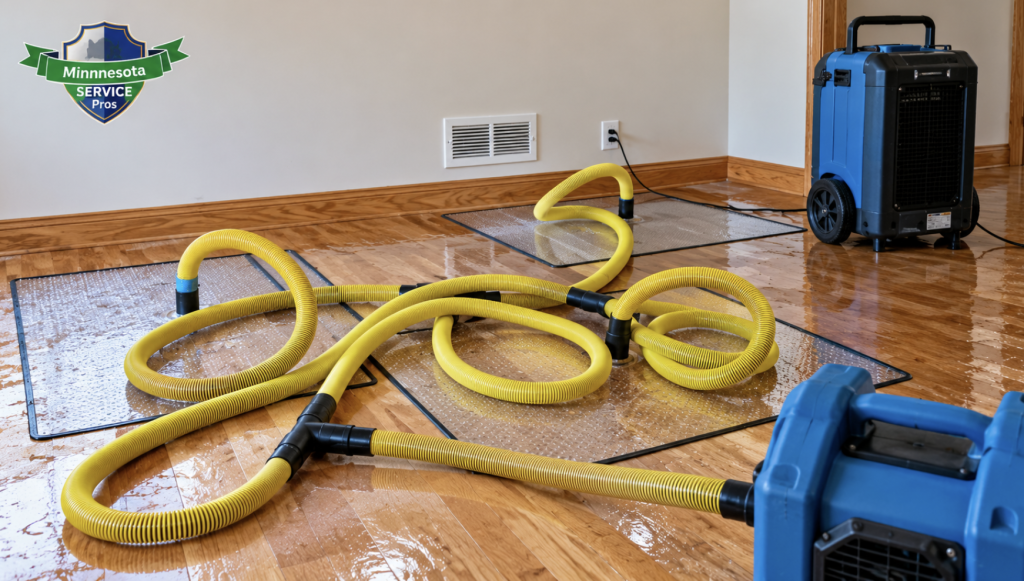
Structural drying may include air movement, dehumidification, and repeated moisture monitoring. Drying equipment is selected and placed based on the size of the affected area and the materials involved. Readings help us determine whether conditions are improving instead of relying only on how a surface feels.

Finished basements often require careful handling of carpet, pad, laminate, cabinets, insulation, drywall, and personal contents. Some items can be dried in place, while others may need to be moved, cleaned, or removed if they cannot be safely restored. We explain these decisions before work moves forward whenever conditions allow.

Flooded Basement Cleanup company serving Coon Rapids, Minnesota

Who We Help in Coon Rapids

We work with homeowners dealing with a small wet area as well as larger basement flooding that affects several rooms. A failed sump pump, blocked floor drain, appliance leak, or foundation seepage can all require a careful response.

Property managers and landlords may need help protecting occupied homes, rental units, and shared building areas. We can organize the work around access, occupant safety, contents, and the need to keep unaffected areas separate from the cleanup.

Our restoration team also helps owners of multifamily, office, retail, school, healthcare, and industrial properties plan water removal and drying when a basement, mechanical room, storage area, or lower-level workspace is affected.

What to Expect From a Basement Pump-Out and Drying

Our approach starts with the conditions at your property rather than a fixed cleanup routine. The water source, depth, materials, temperature, airflow, and length of exposure all affect the work needed.

We explain what we find, what needs immediate attention, and which areas require monitoring. You receive a clearer picture of the affected space before restoration decisions are made.

We are available for a quick 1-hour local response when conditions and scheduling allow. Our technicians are IICRC certified, and we are BBB certified in Minnesota. These facts support a careful, documented approach while the condition of your basement remains the main guide.

Small losses and large projects call for different levels of equipment and coordination. We can adjust the cleanup plan to the size of the affected area, the building layout, and the materials that need drying.

  1. Contact and initial questions: We ask what happened, whether water is still entering, how deep it is, and whether power or other safety concerns are present. If you can do so safely, keep people and pets away from standing water.
  2. Inspection and source review: Our technicians inspect the basement, look for visible and hidden moisture, and note affected materials. We may also identify conditions that require a plumber, electrician, pump contractor, or other specialist.
  3. Water removal: Pumps and extraction equipment remove standing water and trapped surface moisture. Contents may be moved to create access and help separate wet items from dry areas.
  4. Damage control: Materials are evaluated for drying, cleaning, removal, or disposal. Carpet and pad, drywall, insulation, trim, and stored contents are considered based on water exposure and condition.
  5. Drying and dehumidification: Air movement and dehumidification help release moisture from structural materials. Equipment remains in place as needed while readings are taken during the drying process.
  6. Monitoring and next steps: Moisture checks show whether affected areas are progressing toward a dry condition. We discuss cleaning, repairs, contents handling, and any additional restoration work that follows water removal.

What Coon Rapids Property Owners Should Know

Coon Rapids properties can experience basement water problems from heavy summer rain, spring snowmelt, frozen ground, and changes in groundwater or drainage conditions. These events can overwhelm a sump system or expose weak points around a foundation.

Many homes use basements for finished living areas, laundry, mechanical equipment, storage, or utilities. Water in one part of the lower level can affect several types of materials, each with different drying needs.

Floor drains, sump pits, discharge lines, grading, and foundation joints all influence how water moves through a basement. We assess these conditions as part of understanding the loss, but permanent drainage or plumbing repairs may require another qualified professional.

The Minneapolis-St. Paul Metro Area includes a wide range of homes, multifamily buildings, and commercial properties. Building age, construction, insulation, finished interiors, and basement use can vary from one property to the next, so the response must fit your specific building.

Flooded Basement Cleanup help for property owners in Coon Rapids, Minnesota

Seasonal Conditions That Can Flood Basements

Spring thaw can send snowmelt toward foundations while frozen or saturated soil limits how quickly water drains. Check your sump pump, discharge line, and backup plan before the thaw when possible.

Summer storms can deliver more rain than gutters, downspouts, floor drains, or sump systems can manage at one time. After a storm, look for standing water, damp walls, musty odors, and wet stored contents.

Freeze and thaw cycles can affect exterior drainage and foundation areas. Winter plumbing failures can also release water into a basement, where cold temperatures may slow drying and create additional concerns for pipes and contents.

A Common Wet Basement Cleanup Scenario in Coon Rapids

A homeowner in Coon Rapids might discover water around the sump pit after a storm and find that carpet, boxes, and lower drywall are wet. We may arrive to assess whether the sump system stopped, whether water traveled beneath the carpet, and how far moisture reached into the finished room.

The visible puddle may be only part of the problem. Our team can remove accessible water, lift or move affected materials as needed, and check the subfloor and lower wall areas before setting up drying equipment. The example illustrates the type of evaluation that may be needed; every property is assessed on its own conditions.

What Our Customers Say

“Our upstairs bathroom line let go around two in the morning and water was coming through the kitchen ceiling. I called expecting to leave a voicemail and someone actually picked up. The crew was at the house in under an hour with fans and a pump. They walked me through what they were doing instead of just working around me, and by the third day everything read dry.”

— Kate Williams

Commercial Basement and Lower-Level Water Removal

Commercial properties around Riverdale Village and the U.S. Highway 10 and Coon Rapids Boulevard corridors may include retail, offices, service businesses, multifamily buildings, and other occupied spaces. A basement or lower-level water loss can affect inventory, equipment, tenant areas, access routes, and daily operations. Planning must account for safe entry, separation of unaffected areas, extraction and drying capacity, documentation, and the timing of work around occupants or business activity. Named areas are provided as local context, not as customer or project references.

For a commercial water loss, we begin by identifying affected rooms, access points, utilities, contents, and areas that need to remain open. A written work plan can help owners and managers coordinate occupants, building staff, contractors, and insurance documentation.

Larger basements, mechanical rooms, storage areas, and shared building spaces may require more equipment, staged extraction, and separate drying zones. We organize the work around safety and building use while monitoring affected materials.

Retail properties, offices, schools, healthcare spaces, condos, multifamily buildings, and industrial facilities each have different access and continuity concerns. We discuss containment of the affected area, protection of contents, documentation, and the next repair decisions as conditions become clear.

We can plan our service around projects of different sizes, from smaller affected areas to larger losses involving retail properties, offices, hospitals, schools, condos and multifamily buildings, and industrial properties.

Estimated Basement Water Removal Pricing

Every loss is different, so these general ranges are provided only to help with early planning. Your final cost can change based on the source of the problem, affected square footage, materials, contamination, access, equipment needs, drying time, demolition, cleaning, and repairs.

  • Small project: $1,000–$3,500+
  • Moderate project: $5,000–$10,500
  • Large project: $10,500+

These prices are estimates for general reference only, not a quote for your property. An onsite inspection is required before our team can provide a complete price estimate. The affected area, materials, moisture or contamination, equipment needs, and full scope of work all have to be evaluated first.

Working With Insurance After Property Damage

We document the affected areas, visible damage, moisture conditions, and work performed so you have organized information for your insurance conversation. Coverage and deductibles depend on your policy and the cause of loss, so contact your insurer promptly and keep records of conversations, photos, receipts, and emergency actions. We can provide restoration documentation related to our work, but your insurer determines coverage.

Popular insurance companies we work with include: State Farm, Allstate, Farmers Insurance, Travelers, Liberty Mutual, American Family Insurance, USAA, and Nationwide.

Our team can help document the damage and work performed, but coverage and claim decisions depend on your policy, the cause of loss, and your insurance carrier. You should contact your carrier directly with coverage questions.

Basement Water Removal in Nearby Communities

Our service area also includes nearby communities such as Maple Grove, Woodbury, and Eagan.

Flooded Basement and Water Removal FAQs

How quickly should I address a flooded basement?

As soon as it is safe to do so. Standing water can move into flooring, drywall, insulation, stored contents, and framing. Prompt water removal and drying can reduce the time materials remain wet and may limit additional damage.

What should I do before your team arrives?

Keep people and pets away from standing water, especially if electricity may be involved. If you can safely reach the shutoff, stop the water source. Do not use electrical equipment in or near water. Take photos from a safe location and contact your insurer if appropriate.

Can you remove water from a finished basement?

Yes. We assess carpet, pad, flooring, drywall, trim, cabinets, and contents to determine what can be dried, cleaned, moved, or removed. Hidden moisture under flooring and behind walls may require additional checks.

Will carpet and pad need to be removed?

Not always. The decision depends on the water type, how long the materials were wet, the extent of saturation, and whether the materials can be properly cleaned and dried. We explain the condition we find and the practical options.

Why is drying needed after standing water is removed?

Water removal addresses liquid water, but moisture can remain in subfloors, framing, drywall, and other materials. Air movement, dehumidification, and moisture monitoring help reduce that remaining moisture and confirm drying progress.

Can you help if the sump pump failed?

We can address the resulting water damage and drying needs. A plumber, electrician, or sump pump specialist may be needed to repair the failed equipment or change the drainage system. We identify related concerns when we inspect the basement.

Scroll to Top