
Flooded Basement Cleanup in Rochester, Minnesota

Flooded Basement Cleanup services in Rochester, Minnesota

Flooded Basement Cleanup removes standing water, wet contents, and hidden moisture from your lower level so the space can begin drying safely. We help homeowners, landlords, and property managers dealing with sump pump failure, foundation seepage, floor drain backups, heavy rain, or snowmelt. Acting promptly can limit damage to flooring, drywall, framing, stored belongings, and indoor air quality.

We serve homes and businesses across Rochester, including communities around Kutzky Park, Slatterly Park, Elton Hills, and Pill Hill.

Our team provides a quick 1-hour local response for urgent water damage situations. We begin by identifying the water source and checking whether electrical, structural, or contamination hazards are present. The first visit is focused on safe water removal and a clear plan for drying your basement.

Flooded Basement Cleanup is more than pumping out visible water. Moisture can remain below carpet, inside padding, beneath flooring, behind baseboards, and within wall materials. Our IICRC-certified technicians use inspection, extraction, drying, and moisture monitoring to address both the water you can see and the moisture you cannot.

Basement Water Removal and Drying in Rochester

Basement flooding can start with a failed sump pump, blocked floor drain, leaking foundation, broken water line, or rainwater entering through a window well. The cause affects how the cleanup is handled, so our technicians look at the source before placing equipment.

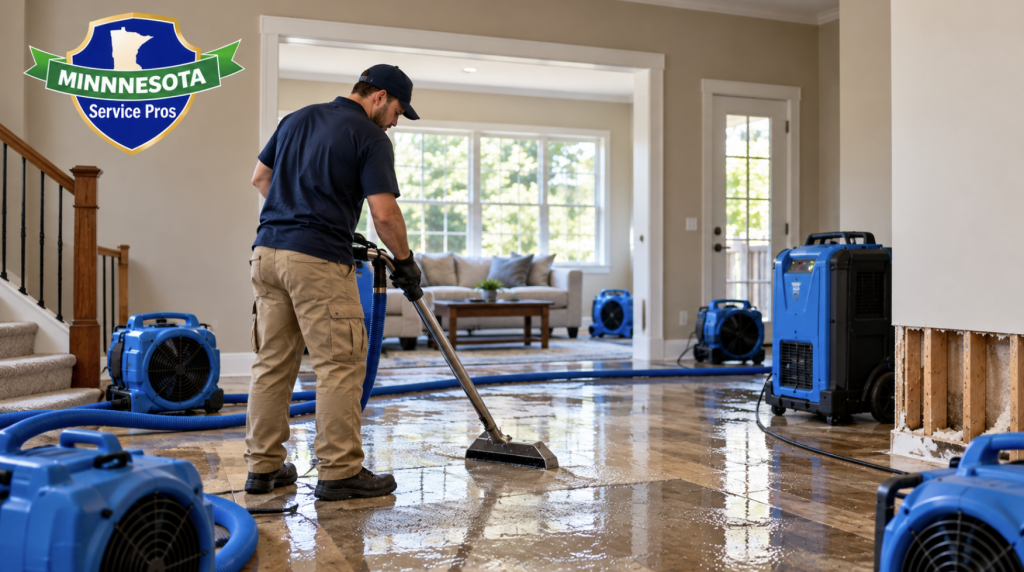
Standing water is removed with pumps and extraction equipment suited to the depth and amount of water. Removing the bulk of the water helps protect finishes and makes it possible to evaluate the subfloor, concrete, walls, and stored contents more closely.

Carpet and pad often hold more water than they appear to. We check whether they can be cleaned and dried or whether removal is needed. The same evaluation applies to drywall, insulation, baseboards, cabinets, and personal belongings.

After water removal, air movement and dehumidification help release moisture from building materials. Drying is not complete simply because the floor feels dry. Moisture readings help show whether subfloors, framing, and other materials have reached an appropriate dry condition.

Our crew documents affected areas and keeps you informed about the work being performed. We are registered with the BBB in Minnesota, and our technicians are IICRC certified. Those qualifications support a careful process, but each basement still requires an on-site assessment because construction and water conditions vary.

Flooded Basement Cleanup company serving Rochester, Minnesota

Who We Help in Rochester

Homeowners may need help after a sump pump stops during a storm, a washing machine supply line breaks, or water enters through the foundation. Finished basements can be especially vulnerable because carpet, drywall, furniture, and stored items absorb water quickly.

Landlords and property managers often need a clear process that protects residents, documents affected areas, and reduces disruption to the rest of the building. We can organize water removal and drying around occupied spaces when conditions allow.

Condo and multifamily properties may have water affecting one unit, shared walls, lower-level storage, or common mechanical areas. Finding the full path of moisture is important because water can move beneath flooring and through wall cavities.

Small leaks and large basement floods both deserve careful evaluation. The visible amount of water does not always show how far moisture has traveled, particularly when it reaches insulation, subfloors, or finished walls.

What to Expect From a Basement Pump-Out and Drying

Our work follows the larger water-damage restoration process rather than stopping after visible water is gone. That includes identifying the source, removing water, assessing materials, drying the structure, and checking moisture during the project.

A quick 1-hour local response helps us begin the assessment sooner when conditions are urgent. Response time does not replace a careful inspection; it allows the safety and stabilization steps to start without unnecessary delay.

You receive practical information about what is wet, what may be salvageable, what needs removal, and what drying equipment is being used. Clear explanations help you make decisions about your property and belongings.

Our IICRC-certified technicians use established restoration practices and moisture checks to guide the work. We do not assume that every basement needs the same equipment or the same level of removal.

  1. Safety and source check: We look for electrical hazards, unstable materials, sewage or other contamination concerns, and the likely source of the water. If the source is still active, it must be controlled before cleanup can progress.
  2. Water classification and inspection: The condition of the water and the materials it contacted affect the work plan. We inspect flooring, walls, contents, mechanical areas, and less visible spaces where moisture may collect.
  3. Pump-out and extraction: Pumps remove deeper standing water, while extraction tools address water held in carpet, pad, and other porous materials. Contents may be moved to improve access and prevent additional damage.
  4. Material evaluation: Some materials can be cleaned and dried, while saturated or damaged materials may require removal. We discuss those decisions with you instead of treating every wet item the same way.
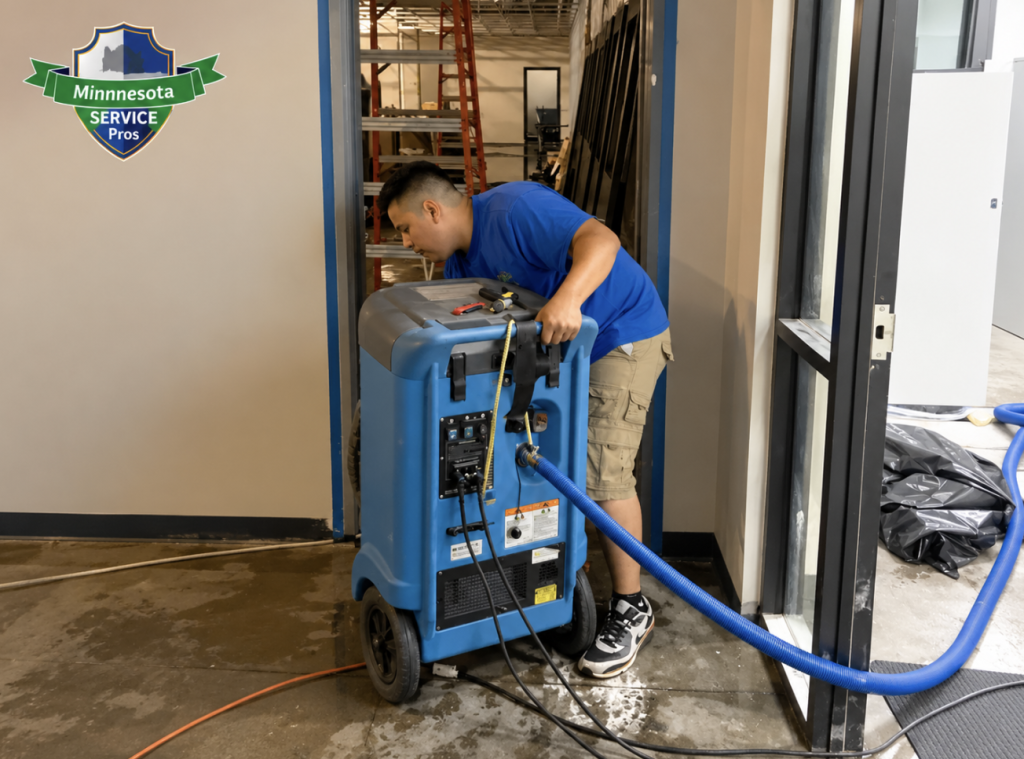
  5. Structural drying: Air movers and dehumidifiers help dry the basement, including areas beneath flooring and within affected building materials. Equipment placement depends on the layout, materials, and moisture readings.
  6. Monitoring and completion review: Our technicians return to check moisture and adjust equipment as conditions change. The work is reviewed when affected materials have dried sufficiently and remaining restoration needs are understood.

What Rochester Property Owners Should Know

Rochester homes include older properties, newer construction, finished lower levels, slab-on-grade areas, and basements with different foundation and drainage designs. A cleanup plan must account for the actual construction rather than relying on the age or appearance of the home.

Heavy rain can overwhelm surface drainage, window wells, grading, or foundation systems. Snowmelt can create a similar problem when frozen ground limits absorption and water collects around the foundation.

Sump pumps are important in many basements, but a pump can fail because of a power outage, mechanical problem, blocked discharge line, or excessive inflow. A working pump does not prevent every flood, so the surrounding drainage and foundation conditions still matter.

Floor drains and utility areas can spread water across a basement quickly. If water has a sewage-like odor or may have come from a drain backup, avoid contact and tell our technicians before cleanup begins so the safety plan reflects the water source.

Flooded Basement Cleanup help for property owners in Rochester, Minnesota

Seasonal Conditions That Can Flood Basements

Spring snowmelt can push water toward foundations and create wet floors, damp walls, or active seepage. The visible water may recede while moisture remains in concrete, insulation, carpet, and stored contents.

Summer and fall storms can produce short periods of intense rainfall. Water may enter through window wells, foundation cracks, floor drains, or low areas around the home, especially when drainage systems cannot keep up.

Cold-weather conditions can affect sump pump discharge lines and exterior drainage. Frozen or blocked discharge paths may cause water to return toward the foundation. Indoor temperature and humidity also influence how quickly materials dry during winter.

A Common Wet Basement Cleanup Scenario in Rochester

A Rochester homeowner might discover several inches of water after a sump pump failure during a spring thaw. We may arrive to find wet carpet, boxes stored on the floor, and moisture along the lower drywall. The first priorities would be safety, source control, water removal, and moving contents out of the affected area.

In another situation, heavy rain may leave only a shallow layer of water on a concrete floor. That can look minor, but moisture may have traveled beneath finished flooring or into baseboards. Our inspection would help determine whether surface cleanup is enough or whether deeper drying is needed.

A landlord could find water near a shared basement hallway after a floor drain backup. We would assess the water source, affected common areas, nearby units, and building materials before selecting extraction and drying methods. This is an illustrative situation, not a description of a completed project.

What Our Customers Say

“Our upstairs bathroom line let go around two in the morning and water was coming through the kitchen ceiling. I called expecting to leave a voicemail and someone actually picked up. The crew was at the house in under an hour with fans and a pump. They walked me through what they were doing instead of just working around me, and by the third day everything read dry.”

— Kate Williams

Commercial Basement and Lower-Level Water Removal

Commercial properties in Downtown Rochester, along South Broadway, and near Rochester International Airport can include offices, retail spaces, lodging, medical-related facilities, storage areas, and mixed-use buildings. Basement flooding in these settings may affect occupied space, inventory, records, mechanical equipment, or access routes. Planning must account for business continuity, tenant communication, security, and the scale of extraction and drying rather than treating the loss like a single-room residential cleanup.

For offices, retail properties, lodging, schools, medical facilities, and multifamily buildings, we separate immediate water removal from the larger recovery plan. Access routes, occupied areas, sensitive contents, and building operations are considered as work is organized.

Larger losses may require multiple extraction points, expanded drying capacity, staged equipment, and repeated moisture checks. Our team coordinates the work around safety requirements and the need to keep unaffected portions of the property usable when conditions permit.

Documentation is important after commercial water damage. Affected areas, removed materials, equipment placement, moisture conditions, and progress can be recorded to support communication among owners, managers, occupants, contractors, and insurance representatives.

We can plan our service around projects of different sizes, from smaller affected areas to larger losses involving retail properties, offices, hospitals, schools, condos and multifamily buildings, and industrial properties.

Estimated Basement Water Removal Pricing

Every loss is different, so these general ranges are provided only to help with early planning. Your final cost can change based on the source of the problem, affected square footage, materials, contamination, access, equipment needs, drying time, demolition, cleaning, and repairs.

  • Small project: $1,000–$3,500+
  • Moderate project: $5,000–$10,500
  • Large project: $10,500+

These prices are estimates for general reference only, not a quote for your property. An onsite inspection is required before our team can provide a complete price estimate. The affected area, materials, moisture or contamination, equipment needs, and full scope of work all have to be evaluated first.

Working With Insurance After Property Damage

Water damage insurance decisions depend on the policy, the source of water, exclusions, deductibles, and the condition of the property. We can document affected areas, visible damage, removed materials, drying equipment, and moisture readings for your records. Keep damaged items when it is safe to do so, photograph conditions before moving belongings, and share restoration documentation with your insurance representative. Coverage questions should be directed to your insurer or adjuster.

Popular insurance companies we work with include: State Farm, Allstate, Farmers Insurance, Travelers, Liberty Mutual, American Family Insurance, USAA, and Nationwide.

Our team can help document the damage and work performed, but coverage and claim decisions depend on your policy, the cause of loss, and your insurance carrier. You should contact your carrier directly with coverage questions.

Basement Water Removal in Nearby Communities

Our service area also includes nearby communities such as Brooklyn Park, Minnetonka, and Eagan.

Flooded Basement and Water Removal FAQs

How quickly should basement water be removed?

Water should be addressed as soon as it is safe to do so. Prompt removal can reduce the time that flooring, drywall, contents, and framing remain wet. Delays may allow moisture to spread or increase the chance of odor and additional damage.

Can I clean up a small amount of basement water myself?

A small amount of clean water on an unfinished concrete floor may be manageable if there are no electrical, contamination, or structural hazards. Avoid entering standing water near outlets, appliances, or electrical panels. If water has reached carpet, drywall, insulation, stored contents, or hidden spaces, professional assessment can help identify moisture that surface cleanup misses.

Will you remove carpet and drywall?

Not automatically. We evaluate the material, the type of water, how long it was wet, and whether it can be safely cleaned and dried. Saturated pad, damaged drywall, or contaminated materials may need removal, while some items can be restored in place.

How long does basement drying take?

The time varies with the amount of water, temperature, humidity, construction, and materials involved. A basement may need equipment for several days or longer. Moisture readings, not a fixed timetable, help determine when drying has progressed sufficiently.

What should I do before the restoration team arrives?

Keep people and pets away from standing water, avoid electrical equipment in wet areas, and stop the water source if you can do so safely. Move only lightweight belongings that are not contaminated or electrically hazardous. Do not operate a furnace, appliance, or pump if doing so could create a safety risk.

Can basement flooding cause mold?

Persistent moisture can support mold growth, especially in porous materials and poorly ventilated areas. Fast water removal and thorough drying reduce that risk. If you see visible growth, notice a strong musty odor, or suspect moisture has remained hidden, tell our technicians during the assessment.

Scroll to Top