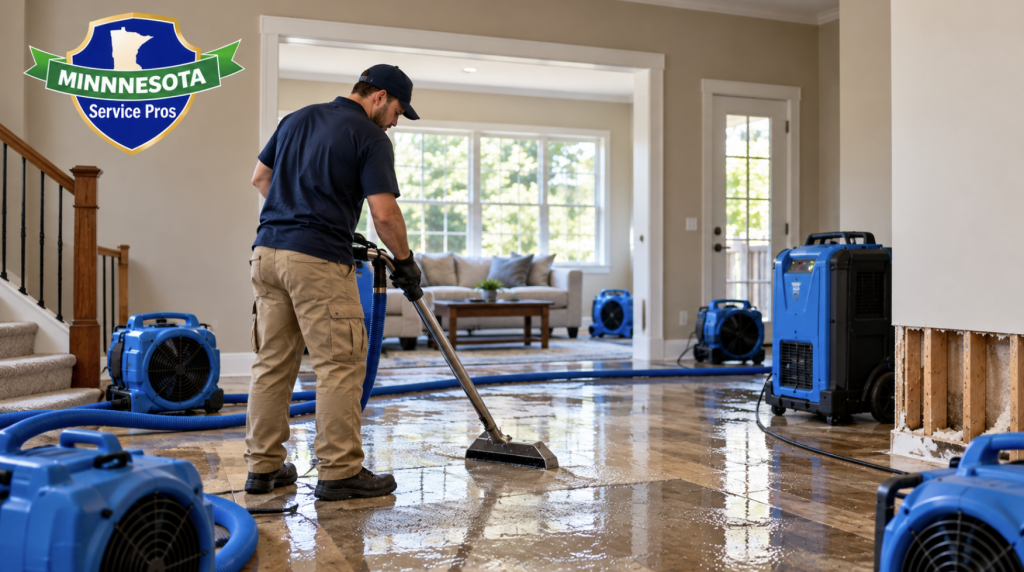

Flooded Basement Cleanup removes standing water, addresses moisture in floors and walls, and helps return your lower level to a safe, usable condition. We help homeowners, landlords, and property managers in St. Paul after sump pump failure, foundation seepage, floor drain backups, heavy rain, or snowmelt. Acting promptly can limit damage to drywall, flooring, stored belongings, and the structure beneath your finished or unfinished basement.
Our crews serve properties throughout St Paul, including areas around Highland Park, Macalester-Groveland, Como, Midway, and Dayton's Bluff.
Our team provides a quick 1-Hr Local Response, so you can begin evaluating the damage without waiting through a worsening leak. Water removal is only the first step. Moisture can remain under carpet pad, inside wall cavities, beneath flooring, and around framing unless the affected materials are checked and dried properly.
From Highland Park and Macalester-Groveland to Como and the Midway, older homes and newer remodels can have different drainage, plumbing, and construction conditions. We adjust the assessment to your basement instead of assuming every water loss follows the same pattern.
Basement Water Removal and Drying in St Paul
Basement flooding may leave more than visible puddles. Water can move below laminate, soak carpet and pad, reach subfloors, or collect behind baseboards and lower drywall. Our technicians identify where water traveled before deciding which materials can be dried and which may need removal.
Standing water is removed with pumps or extraction equipment suited to the amount of water and the condition of the space. A small seepage event may need focused extraction, while a failed sump pump or major storm intrusion may require a broader basement pump out. We protect unaffected areas as work moves through the space.
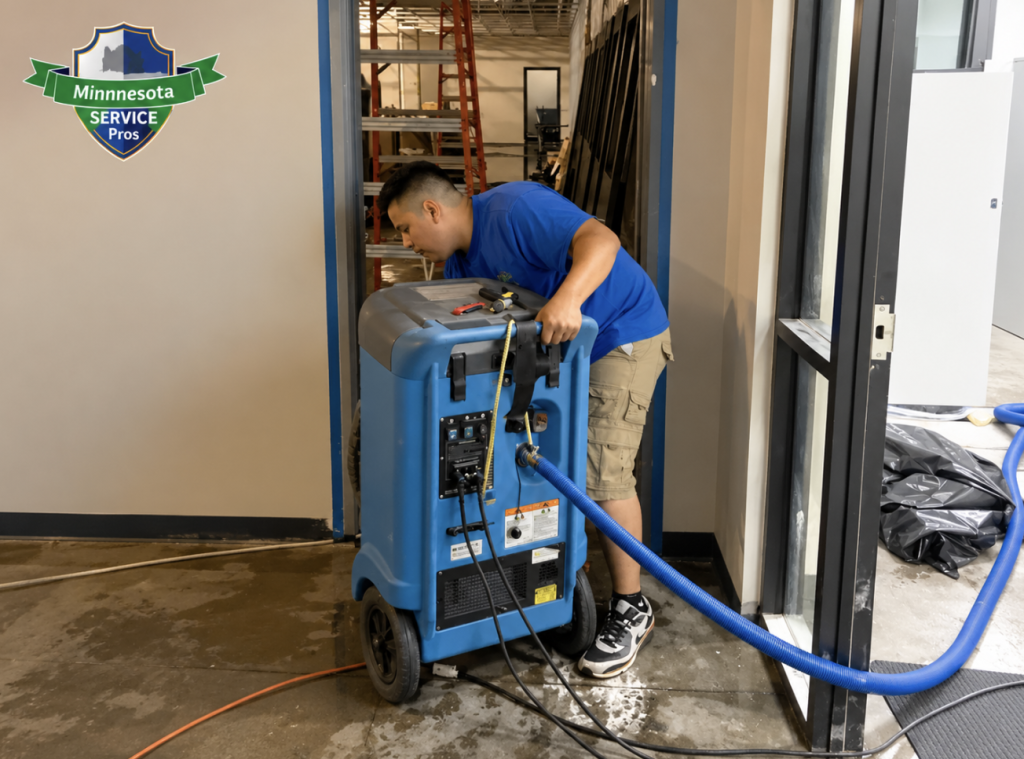
After water removal, structural drying begins. Air movement and dehumidification help reduce moisture in floors, framing, walls, and other building materials. Moisture monitoring allows our IICRC certified technicians to check progress rather than relying only on how a surface feels.
Finished basements need special attention because carpet, pad, cabinets, trim, drywall, and insulation can hold moisture. Stored contents are evaluated separately so items can be moved, cleaned, dried, or documented without spreading water to unaffected areas.
Flooded Basement Cleanup is part of the larger water damage restoration process. If the water may contain sewage, chemicals, or other contaminants, avoid contact and tell us what happened before work begins. Different water sources require different safety decisions and handling procedures.

Who We Help in St Paul
We work with homeowners dealing with a wet basement after a plumbing problem, storm, sump pump failure, or drainage issue. You do not need to know the source or estimate the full extent of the damage before calling for an assessment.
Landlords and property managers may need help coordinating access, protecting tenant belongings, and limiting disruption in buildings with several units. Clear separation of affected and unaffected areas can help occupants understand where they should not walk or store items.
Our restoration team can also evaluate smaller isolated losses and larger water events. The right scope depends on the water source, the materials involved, how long they stayed wet, and whether the basement is occupied or used for storage.
What to Expect From a Basement Pump-Out and Drying
We explain what we find as the work develops. You will know where water is present, which materials are being dried, and which items may require further evaluation. That information helps you make decisions without guessing from the visible damage alone.
Our technicians use moisture checks, extraction, air movement, and dehumidification as connected parts of the job. Removing water without drying hidden moisture can leave problems below the surface, while running drying equipment without first controlling standing water is not an efficient approach.
We provide a quick 1-Hr Local Response for St. Paul properties. Our technicians are IICRC certified, and we are BBB Certified in Minnesota. These facts do not replace a property-specific inspection, but they give you clear points of reference when you are choosing help during a stressful loss.
- First, we discuss the water source, when the flooding began, affected rooms, electrical concerns, and any immediate access or safety issues. If water is still entering, stop the source when you can do so safely and contact the appropriate plumber or utility provider.
- Next, we inspect the basement and document visible conditions. Moisture checks help identify wet areas beyond the puddles, including flooring, subfloors, lower walls, framing, and contents. We also look for conditions that may change the drying plan.
- Water extraction or pump-out work follows. Furniture, boxes, and other contents may need to be moved so water can be reached and affected materials can be assessed. Electrical equipment and outlets are treated carefully; do not enter standing water near electrical hazards.
- Drying equipment is placed according to the affected layout and materials. Air movement supports evaporation, while dehumidification removes moisture from the air. Our technicians monitor conditions and adjust the setup as drying progresses.
- Finally, we review the drying status and remaining work with you. Some finishes may need repair or replacement after the area is dry. If the source was a plumbing or drainage problem, resolving that cause is important to reduce the chance of another loss.
What St Paul Property Owners Should Know
St. Paul properties can experience basement water problems from heavy rain, rapid snowmelt, saturated soil, foundation seepage, or a sump pump that cannot keep up. Water may enter through cracks, joints, window wells, floor drains, or low areas around the foundation.
Older homes may contain a mix of masonry, plaster, wood framing, remodeled rooms, and newer flooring. That combination can make moisture travel differently from one section of the basement to another. A finished lower level may hide wet materials that are not visible from the room side.
Properties near the Mississippi River and low-lying areas may face different drainage concerns than homes on higher ground. This does not determine the damage by itself, so we evaluate the actual source, path, and affected materials at your address.
Basement access also varies across St. Paul. Narrow stairs, utility rooms, stored contents, and multi-level properties can affect how extraction equipment and drying materials are brought in. Planning the route helps protect your home while work is performed.

Seasonal Conditions That Can Flood Basements
Spring snowmelt can place pressure on foundation drainage and overwhelm a sump pump, especially when the ground remains frozen or saturated. Check your basement promptly if you notice damp flooring, seepage, or a pump that cycles unusually often.
Summer thunderstorms and periods of heavy rain can send water toward window wells, floor drains, foundation walls, and low areas. A basement may appear dry after the storm while moisture remains under flooring or inside wall materials.
Cold weather can create plumbing risks, particularly in poorly insulated areas, utility spaces, and exterior walls. If a pipe breaks, shut off the water when safe, avoid electrical hazards, and begin documenting affected rooms and belongings.
A Common Wet Basement Cleanup Scenario in St Paul
A St. Paul homeowner might discover water around the sump pit after a storm and find that the basement carpet is damp several feet away. We may arrive to trace how far the water traveled, remove standing water, check the pad and subfloor, and set a drying plan for the finished room.
In another situation, a property owner may notice a musty odor and staining after snowmelt without seeing much water on the floor. Our assessment would focus on moisture near foundation walls, trim, flooring, and stored contents. The response may involve targeted extraction, material evaluation, and monitoring rather than a full basement pump out.
What Our Customers Say
“We got about six inches in the finished basement after the storm came through in June. I called three places that morning and they were the only one who gave me a straight answer about when they could actually be there. Their crew showed up that afternoon, pulled the water out and helped finish the entire mitigation process. We were pleased with their work and would recomment them to all of our neighbors.”
— David Lyons
Commercial Basement and Lower-Level Water Removal
Commercial properties in Downtown St. Paul, the Midway, and along the University Avenue corridor can include offices, retail spaces, multifamily buildings, schools, and other occupied facilities. Basement water work in these settings may require careful access planning, separation of public and work areas, protection of records or inventory, and coordination around business hours. We plan extraction and drying around the building layout, affected occupancy, safety needs, and the amount of water involved without assuming that any named area is a customer.
For offices, retail properties, schools, healthcare spaces, condos, and multifamily buildings, basement flooding can affect mechanical rooms, storage, corridors, tenant areas, and critical access routes. We help identify the affected sections, establish safe work boundaries, and organize extraction and drying so the property owner or manager can make informed operating decisions.
Larger losses may require more equipment, multiple drying zones, and scheduled moisture checks across separate rooms or units. Our team considers elevator or stair access, occupied spaces, contents movement, security, and the need to keep unaffected areas available when possible. Work is planned around the property rather than treating every room as one open space.
Documentation can be useful for owners, managers, and insurance discussions. We record affected conditions, moisture findings, equipment placement, and drying progress as appropriate to the job. If a commercial loss involves a plumbing, roof, drainage, or mechanical issue, coordinating source correction with the restoration work helps prevent continued moisture during drying.
We can plan our service around projects of different sizes, from smaller affected areas to larger losses involving retail properties, offices, hospitals, schools, condos and multifamily buildings, and industrial properties.
Estimated Basement Water Removal Pricing
Every loss is different, so these general ranges are provided only to help with early planning. Your final cost can change based on the source of the problem, affected square footage, materials, contamination, access, equipment needs, drying time, demolition, cleaning, and repairs.
- Small project: $1,000–$3,500+
- Moderate project: $5,000–$10,500
- Large project: $10,500+
These prices are estimates for general reference only, not a quote for your property. An onsite inspection is required before our team can provide a complete price estimate. The affected area, materials, moisture or contamination, equipment needs, and full scope of work all have to be evaluated first.
Working With Insurance After Property Damage
We can help you organize information about the loss, including the suspected source, affected areas, visible damage, moisture findings, and work performed. Coverage depends on your policy and the cause of loss, so contact your insurer promptly and keep copies of photos, reports, receipts, and related communication. We do not determine coverage or promise reimbursement.
Popular insurance companies we work with include: State Farm, Allstate, Farmers Insurance, Travelers, Liberty Mutual, American Family Insurance, USAA, and Nationwide.
Our team can help document the damage and work performed, but coverage and claim decisions depend on your policy, the cause of loss, and your insurance carrier. You should contact your carrier directly with coverage questions.
Basement Water Removal in Nearby Communities
Our service area also includes nearby communities such as Woodbury, Edina, and Minneapolis.
Flooded Basement and Water Removal FAQs
What should I do before flooded basement cleanup begins?
If it is safe, stop the water source and move people and pets away from standing water. Do not enter water near electrical outlets, appliances, or wiring. Avoid using a household vacuum for floodwater, and do not move heavy furniture if it could cause injury. Take photos from a safe location and contact your insurer if you plan to file a claim.
How quickly should basement water be removed?
Begin as soon as possible. Standing water can spread into flooring, walls, contents, and framing. Prompt extraction and drying may reduce the time materials remain wet, but the proper response still depends on the water source, how long the area was affected, and the materials involved.
Can carpet and pad be dried after a basement flood?
Sometimes, but it depends on the water source, how long the carpet stayed wet, the type of padding, and whether the subfloor is also affected. We evaluate carpet, pad, tack strips, and the floor below rather than assuming the visible carpet tells the full story.
Do I need to leave my home during basement drying?
Not always. Many homeowners can remain upstairs while work continues, but you should avoid affected areas and follow equipment and safety instructions. Occupancy may need to change if the water is contaminated, electrical conditions are unsafe, access is restricted, or the drying area affects essential systems.
Will drying equipment remove all odors?
Drying addresses moisture, which is an important cause of many musty odors, but odor treatment depends on the source and affected materials. Items that stayed wet for a long time, contaminated water, or hidden damage may need additional cleaning, removal, or specialized evaluation.
What happens if I see mold after basement flooding?
Do not disturb visible growth or remove large areas yourself. Tell us when the moisture problem began and where you see or smell a concern. Mold-related work may require a separate assessment, containment, cleaning, or material removal based on the extent and source of moisture.