


Water on your basement floor can spread into walls, carpet, storage, and electrical areas. We help homeowners in Coon Rapids, Minnesota, remove water and restore usable space.
If water is near outlets, appliances, the furnace, water heater, or electrical panel, don't enter. Leave the area and wait for qualified electrical guidance.
Our Quick 1-Hr Local Response helps us begin the assessment promptly. We handle basement water removal for small losses and larger cleanup projects.
Basement Water Removal and Drying in Coon Rapids
We first check where water entered and how far it spread. Common causes include sump pump failure, foundation seepage, floor drains, and plumbing leaks.
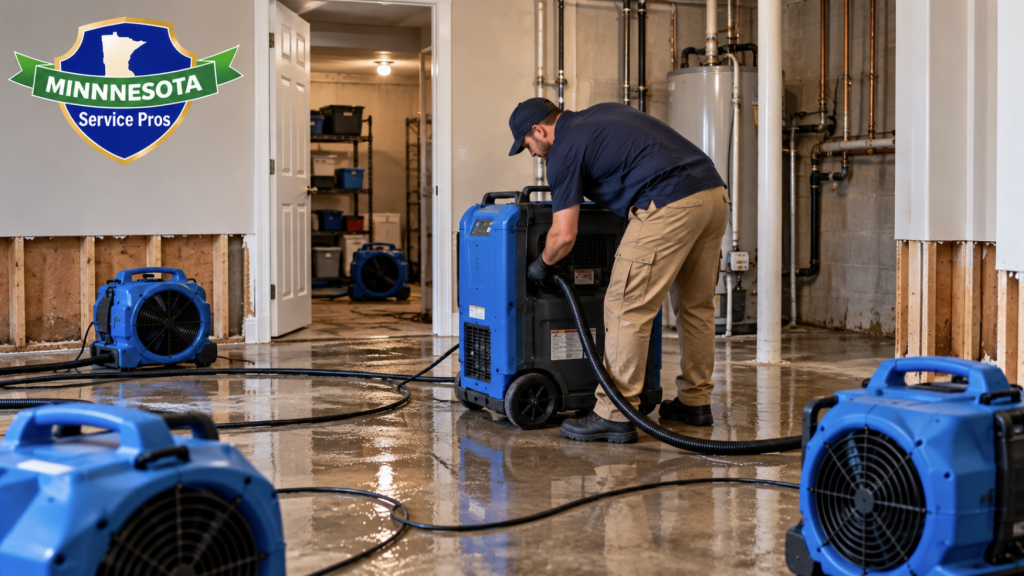
We remove standing water with pumps and extraction equipment. Then we check carpet, pad, drywall, flooring, stored contents, and the subfloor for trapped moisture.
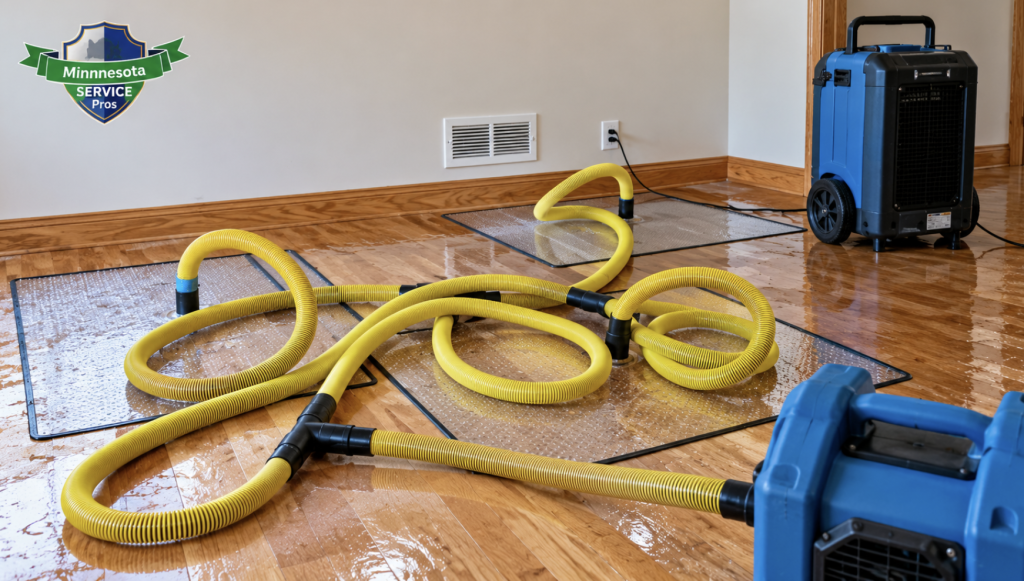
Drying uses air movement and dehumidification. Our technicians take moisture readings because surfaces can feel dry while materials underneath stay wet.
Some materials clean and dry well, while soaked materials may need removal. We explain those choices before work changes your basement.
Who We Help
We help homeowners with finished or unfinished basements. These spaces may include carpet, drywall, storage, laundry equipment, or living areas.
A small water loss still needs a careful inspection. Larger flooding often involves extraction, drying, contents handling, and access planning.
What to Expect From a Basement Pump-Out and Drying
Our Certified IICRC Techs use restoration methods focused on removing water and drying the building correctly.
You receive clear information about affected materials, drying progress, and the next work step.
- First steps: Keep people and pets away from unsafe water. We inspect the area, identify the water source, and note electrical hazards.
- Water removal: We remove standing water and move affected contents from the wet area. We protect cleaner parts of your home during the work.
- Moisture checks: We check floors, walls, carpet, pad, and stored materials. Drying equipment stays in place while readings show progress.
- Final review: We explain what dried, what needs repair, and what belongs to another trade. Plumbers, electricians, or builders may handle those repairs.
Seasonal Conditions That Can Flood Basements
Heavy rain can overwhelm a sump system or expose foundation seepage. Snowmelt can also send water toward basement walls and floor drains.
After seasonal water, check for damp walls, soft flooring, musty odors, and water near stored items. Don't enter standing water near electrical equipment.
What Our Customers Say
“Our upstairs bathroom line let go around two in the morning and water was coming through the kitchen ceiling. I called expecting to leave a voicemail and someone actually picked up. The crew was at the house in under an hour with fans and a pump. They walked me through what they were doing instead of just working around me, and by the third day everything read dry.”
— Kate Williams
Commercial Basement and Lower-Level Water Removal
Commercial basement cleanup requires planning around occupants, inventory, and access. We separate clean areas from wet work and protect paths used by staff or visitors.
In larger buildings, extraction and drying may cover several rooms or floors. We coordinate the work sequence so essential areas reopen in a practical order.
Estimated Basement Water Removal Pricing
These ranges are a starting point. Price changes with the size of the loss, what got damaged, and the work needed to clean or dry it.
- Small project: $1,000–$3,500+
- Moderate project: $5,000–$10,500
- Large project: $10,500+
These are estimates, not quotes. We need to see the damage before we can give you a full price. An onsite inspection shows us the size of the loss and what needs to be cleaned, removed, or dried.
Working With Insurance
Keep photos, videos, damaged-item notes, and restoration records. We can document observed damage and completed work, but your insurer decides coverage and payment.
We often work with insurers such as State Farm, USAA, and Nationwide.
We can document the damage and the work we do. We can’t decide what your policy covers. Ask your carrier or adjuster about coverage.
Basement Water Removal in Nearby Communities
Our service area also includes nearby communities such as Maple Grove, Woodbury, and Eagan.
Flooded Basement and Water Removal FAQs
What should I do before flooded basement cleanup begins?
Keep everyone out of unsafe water and stop using nearby electrical equipment. Don't touch outlets, appliances, cords, or panels in or near the water.
Can you remove water from a finished basement?
Yes, we remove water from finished basements and check carpet, pad, drywall, flooring, and subfloors. Drying decisions depend on the material and how long it stayed wet.
How long does basement drying take?
Drying time depends on water volume, materials, temperature, humidity, and airflow. We use moisture readings to decide when the structure is dry enough for the next step.
Can wet carpet and drywall be saved?
Some materials can be cleaned and dried, while others need removal. We assess each material by its condition, water exposure, and drying progress.
Do you repair the failed sump pump or plumbing leak?
We can remove water and dry the affected area, but licensed plumbers or electricians handle many source repairs. We explain when another trade should take over.
What if the basement smells musty after the water is gone?
A musty smell can point to moisture remaining in walls, flooring, contents, or hidden spaces. We check those areas instead of relying only on surface dryness.