Water extraction removes standing and absorbed water from your home or business after a leak, overflow, appliance failure, sump pump problem, or storm intrusion. Our Minneapolis restoration team helps you limit damage to flooring, walls, cabinets, and personal property while the affected areas are assessed for deeper moisture.
Our team provides service across Minneapolis, including neighborhoods and local areas such as Uptown, Northeast Minneapolis, North Loop, and Linden Hills.
Acting promptly can reduce the time water remains in building materials and make the drying process more manageable. We offer a quick one-hour local response, and our team serves properties throughout Minneapolis and the Minneapolis-St. Paul Metro Area. We handle both smaller losses and larger cleanup projects.
You may first notice wet carpet, buckled flooring, staining, damp odors, or water collecting near a plumbing fixture. Even when the surface looks mostly dry, moisture can remain beneath flooring, inside wall cavities, or under cabinets. Our IICRC-certified technicians use inspection and moisture measurements to determine what needs to be removed, dried, or monitored.
Water Removal and Pump-Out Service for Minneapolis Properties
The first step is locating and, when possible, stopping the water source. Common causes include burst or leaking pipes, failed water heaters, overflowing tubs or toilets, appliance supply lines, sump pump failures, roof or window intrusion, and water entering during a storm. If the source is still active, contact the appropriate plumber or utility professional while we address the resulting damage.
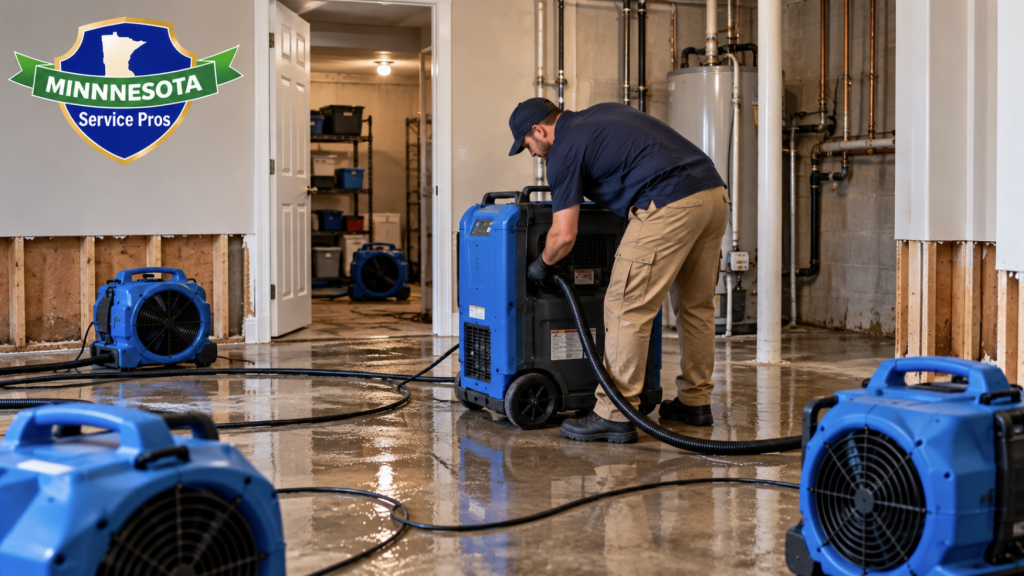
Standing water is removed with equipment suited to the amount and location of water. Submersible pumps can move larger volumes, while portable extractors and wet vacuums help remove water from carpet, hard-surface flooring, stairs, and other accessible areas. Water pump-out work is often the safest way to reduce the load before detailed drying begins.
Water that has soaked into carpet pad, subfloors, drywall, insulation, or cabinetry requires more than surface cleaning. Our technicians check moisture in and around affected materials and identify areas that may need controlled removal. This helps prevent hidden moisture from continuing to damage the structure.
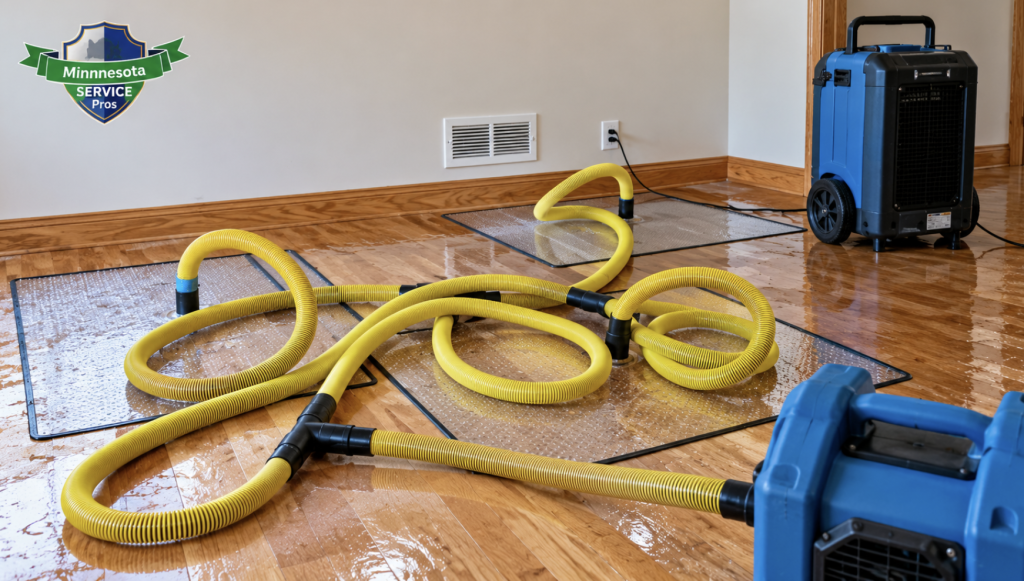
After water removal, air movers increase evaporation and dehumidifiers help control the moisture released into the air. Structural drying may include moving furniture, lifting carpet edges, removing wet pad, opening selected areas for airflow, and checking moisture levels over time. Extraction and drying are connected parts of the larger water damage restoration process.
Clean water, used water, and contaminated flood water may require different handling and safety measures. Avoid contact with sewage, chemicals, or unknown water whenever possible. Keep children and pets away from wet areas, and do not use electrical equipment where water may have reached outlets, wiring, or appliances.

Who We Help in Minneapolis
We help Minneapolis homeowners, landlords, tenants, property managers, and business owners respond to water damage in single-family homes, duplexes, condominiums, apartments, offices, retail spaces, schools, medical settings, and industrial properties.
Residential calls may involve a wet basement, failed washing machine hose, overflowing bathroom, refrigerator line, or water spreading across several rooms. We can help you understand which materials are wet, what can be dried in place, and what may need removal.
Multifamily properties often require careful coordination between units, shared walls, corridors, mechanical rooms, and occupied spaces. We document affected areas and plan the work so access, safety, and communication are considered throughout the project.
What to Expect From Our Water Removal Process
Our work begins with finding the extent of the moisture, not simply removing the water that is easy to see. Moisture meters and visual inspection help us evaluate flooring, baseboards, drywall, cabinets, and nearby areas that may have been affected.
We are BBB certified in Minnesota, and our technicians are IICRC certified. Those qualifications support a measured approach to water damage cleanup, including appropriate containment, equipment use, documentation, and drying practices.
A quick response matters, but rushing without a clear assessment can leave hidden moisture behind. We explain what we find, identify immediate safety concerns, and keep you informed as moisture conditions change. Our local response service is designed to help us reach you quickly, with a one-hour local response offering.
- Call and initial questions: We ask about the water source, when it happened, how much water is present, affected rooms, safety concerns, and whether the source has been stopped. This helps us prepare the right equipment.
- Inspection and scope: On arrival, our technicians inspect visible damage and use moisture readings to evaluate floors, walls, ceilings, cabinets, and adjacent areas. You receive a practical explanation of the affected materials and recommended next steps.
- Water removal: Pumps, extractors, and other equipment remove standing water and absorbed water from accessible surfaces. We protect unaffected areas as reasonably possible and work carefully around furniture, finishes, and personal belongings.
- Drying setup: Air movers and dehumidifiers are placed to promote evaporation and control humidity. Materials that cannot be dried safely or effectively may be discussed for removal, based on their condition and the type of water involved.
- Monitoring: Moisture readings are repeated during the drying process. Equipment placement may change as conditions improve. Drying is considered complete when affected materials reach appropriate moisture conditions, not simply when they feel dry to the touch.
- Documentation and next steps: We record affected areas, equipment, moisture observations, and work completed. If repairs, plumbing work, contents handling, or additional cleaning are needed, we explain how those steps relate to the restoration process.
What Minneapolis Property Owners Should Know
Minneapolis properties range from older homes with plaster, wood flooring, and finished basements to newer apartments, condominiums, offices, and mixed-use buildings. Construction type affects how water travels and where moisture can remain, so our inspection considers the building rather than relying only on visible staining.
Basements and lower levels can be especially vulnerable when heavy rain overwhelms drainage, groundwater enters through foundation areas, or a sump pump stops working. Water removal in these spaces may involve concrete floors, finished walls, insulation, stored belongings, and mechanical equipment.
Older plumbing systems, remodeled rooms, and additions may have different materials and pathways behind finished surfaces. A small leak near a sink or bathroom can move into a wall, under flooring, or through a ceiling before the damage is obvious.
Snowmelt, freeze-thaw conditions, ice dams, and summer thunderstorms can all introduce water into different parts of a property. We consider the source, timing, and location when deciding how to inspect, extract, dry, and monitor the affected area.

Seasonal Conditions That Can Lead to Standing Water
Winter freezes can split supply lines, damage plumbing near exterior walls, and create leaks after a property has been vacant or poorly heated. If you discover frozen or burst plumbing, shut off the water when it is safe to do so and avoid electrical hazards in wet areas.
Spring thaw and heavy rain can place pressure on basement walls, window wells, foundations, and sump systems. Check that exterior water is directed away from the building, but do not delay professional assessment when water has entered finished areas.
Summer storms may cause roof, siding, window, or basement intrusion. Wet insulation, drywall, carpet, and subfloors can hold moisture after the visible water has been removed, especially in warm, humid conditions.
A Common Flood Water Removal Scenario in Minneapolis
A Minneapolis homeowner might call us after a washing machine supply line releases water across a laundry room and nearby hallway. We may find wet carpet, saturated pad, damp baseboards, and moisture beneath portions of the flooring. The response would begin with source control, water removal, moisture testing, and a drying plan based on the materials involved.
A property manager might discover water below a failed water heater in a multifamily mechanical room. We would assess whether water traveled into adjacent units, corridors, wall cavities, or lower levels. Larger losses require controlled access, equipment planning, communication with occupants, and repeated monitoring rather than a single pass with an extractor.
What Our Customers Say
“Our upstairs bathroom line let go around two in the morning and water was coming through the kitchen ceiling. I called expecting to leave a voicemail and someone actually picked up. The crew was at the house in under an hour with fans and a pump. They walked me through what they were doing instead of just working around me, and by the third day everything read dry.”
— Kate Williams
Commercial Water Removal for Larger Properties
Commercial properties in Downtown Minneapolis, the North Loop, Dinkytown, and Northeast Minneapolis can include offices, restaurants, retail spaces, apartments, mixed-use buildings, and older commercial structures. Water damage in these settings may affect occupied rooms, shared corridors, tenant spaces, inventory, elevators, mechanical areas, or customer access. Our planning considers the size of the loss, safe entry, business continuity, equipment placement, documentation, and the need to coordinate work around normal operations.
For offices, retail properties, restaurants, schools, medical spaces, and other occupied buildings, we plan extraction and drying around people, inventory, equipment, and access requirements. Work may be divided into zones so unaffected areas remain available when conditions allow.
Larger losses may involve multiple rooms, floors, units, or shared building systems. Our restoration team evaluates the water path, organizes pumps and extraction equipment, places air movers and dehumidifiers, and monitors conditions across the affected areas. Clear documentation helps property owners and managers understand the scope of work.
Industrial and multifamily properties may have concrete floors, large open areas, mechanical rooms, stored materials, and difficult access points. We consider safety, electrical concerns, ventilation, tenant communication, and protection of unaffected spaces while the water pump-out and structural drying work is completed.
We can plan our service around projects of different sizes, from smaller affected areas to larger losses involving retail properties, offices, hospitals, schools, condos and multifamily buildings, and industrial properties.
Estimated Water Removal and Extraction Pricing
Every loss is different, so these general ranges are provided only to help with early planning. Your final cost can change based on the source of the problem, affected square footage, materials, contamination, access, equipment needs, drying time, demolition, cleaning, and repairs.
- Small project: $1,000–$3,500+
- Moderate project: $5,000–$10,500
- Large project: $10,500+
These prices are estimates for general reference only, not a quote for your property. An onsite inspection is required before our team can provide a complete price estimate. The affected area, materials, moisture or contamination, equipment needs, and full scope of work all have to be evaluated first.
Working With Insurance After Property Damage
We can help you organize basic documentation such as affected areas, moisture observations, equipment used, and work performed. Contact your insurance carrier promptly to ask about your policy, reporting requirements, deductibles, and next steps. Coverage decisions are made by your insurer, so keep damaged-material information and receipts available without delaying necessary safety and water removal work.
Popular insurance companies we work with include: State Farm, Allstate, Farmers Insurance, Travelers, Liberty Mutual, American Family Insurance, USAA, and Nationwide.
Our team can help document the damage and work performed, but coverage and claim decisions depend on your policy, the cause of loss, and your insurance carrier. You should contact your carrier directly with coverage questions.
Water Removal Services in Nearby Communities
Our service area also includes nearby communities such as Bloomington, Plymouth, and Maple Grove.
Water Extraction and Water Removal FAQs
How quickly should water be removed?
As soon as it is safe and the water source is controlled. Fast removal can reduce how long flooring, drywall, insulation, cabinets, and belongings remain wet. If the water may contain sewage or chemicals, avoid contact and wait for trained professionals to determine safe handling.
Can you remove water from a finished basement?
Yes. We can assess standing water, wet carpet, pad, drywall, stored belongings, and other affected materials. A finished basement may need both extraction and structural drying because moisture can move beneath flooring or into walls.
Do I need water extraction if the floor looks dry?
Possibly. Surface water can disappear while moisture remains under flooring, inside carpet pad, below baseboards, or in wall cavities. Moisture readings help determine whether additional drying or material removal is needed.
What should I do before your technicians arrive?
If it is safe, stop the water source and move people and pets away from wet areas. Do not use electrical devices in standing water or touch outlets and appliances that may be affected. Photograph damage when practical, but do not delay urgent water removal to document it.
How long does structural drying take?
The time depends on the amount of water, the materials involved, indoor humidity, airflow, temperature, and how quickly the source was stopped. We use moisture monitoring to guide the process rather than removing equipment based only on a calendar estimate.
Can wet carpet be saved?
Sometimes. The answer depends on the type of water, how long the carpet has been wet, the condition of the pad, and whether the subfloor is affected. We inspect the carpet and pad and explain when cleaning and drying may be reasonable or when removal is safer.