
Water extraction removes standing and absorbed water before it spreads farther through your Bloomington property. Our team helps homeowners, landlords, and property managers address water from plumbing leaks, failed water heaters, sump pump problems, appliance leaks, and storm intrusion. Acting promptly can reduce damage to flooring, drywall, cabinets, and personal belongings while helping limit conditions that support mold growth.
We serve homes and businesses across Bloomington, including communities around East Bloomington, West Bloomington, Normandale, and South Loop.
Our local team provides a quick 1-Hr Local Response for urgent water emergencies. We begin by identifying the water source, protecting people and property, and determining how far the moisture has traveled. From a small room with wet carpet to a larger flooded area, the first goal is to remove water safely and begin a clear drying plan.
In Bloomington, homes and businesses can have different floor assemblies, finished basements, slab areas, and hidden wall spaces. Our approach is based on what your property needs rather than a one-size-fits-all package.
Water Removal and Pump-Out Service for Bloomington Properties
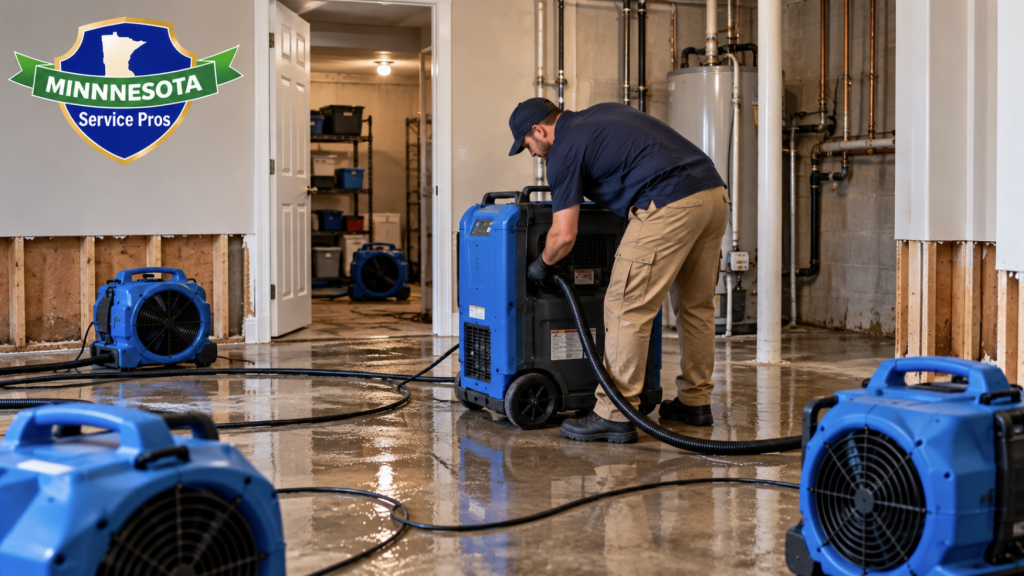
Water extraction is the controlled removal of water from floors, carpets, furnishings, and other affected materials. Portable extractors can remove water from wet carpet and carpet pad, while submersible pumps may be needed when several inches of water are present. Standing water removal comes before detailed moisture inspection and structural drying.
After visible water is gone, moisture may remain below flooring, inside carpet padding, beneath cabinets, or in subfloors. Our technicians use moisture meters and visual inspection to check areas that cannot be judged by appearance alone. Drywall and wall cavities may also need evaluation when water has traveled along walls or entered through openings.
Hard-surface flooring can hold water at seams and edges, especially over wood-based subfloors. Removing surface water without checking the layers beneath it may leave hidden damage behind. We connect extraction with air movement, dehumidification, and moisture monitoring so the drying work addresses the structure, not just what you can see.
The source of the water matters. A supply-line leak, water heater failure, sump pump failure, or rain intrusion may require different safety steps. If the source is still active, it must be stopped or controlled before cleanup can proceed. Water that may contain sewage or other contaminants requires added precautions and should not be handled like clean supply water.
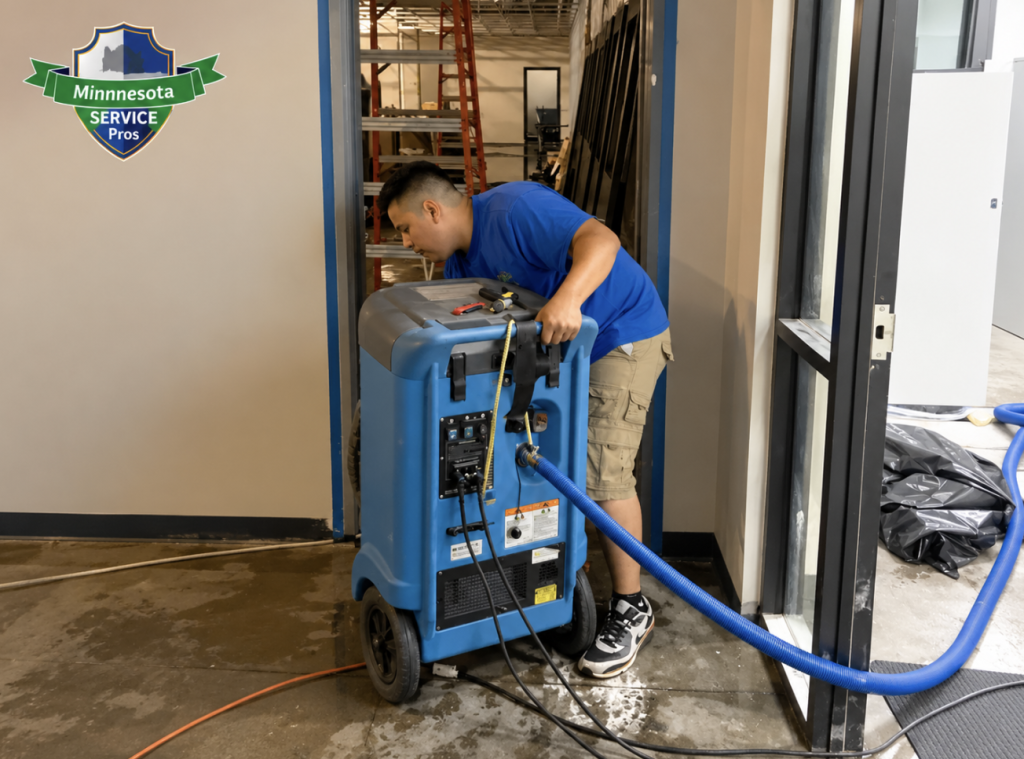
Extraction is one part of water damage restoration. Once water is removed, structural drying helps lower moisture in building materials and indoor air. Our crew may place air movers and dehumidifiers based on the affected rooms, materials, and readings. Moisture monitoring helps show whether drying is progressing and whether additional work is needed.
Who We Help in Bloomington
We help homeowners dealing with basement seepage, burst pipes, overflowing fixtures, appliance leaks, and storm-related water. Removing water quickly can protect finished living areas and reduce disruption to your household.
Landlords and property managers can use a coordinated process for apartments, condominiums, and shared buildings. Water may move between units or through common walls, so the affected area can be larger than the first visible stain. We document affected areas and explain what needs attention next.
Our team can also work with owners and managers of offices, retail spaces, schools, healthcare properties, hospitality sites, and industrial buildings. Larger properties often require access planning, occupant safety measures, and drying work that continues across several rooms or building zones.
What to Expect From Our Water Removal Process
We focus on finding the extent of the moisture before deciding what equipment and work are appropriate. That means checking visible and less obvious areas rather than assuming the wettest-looking material is the only concern.
Our technicians are IICRC certified, and we are BBB certified in Minnesota. These qualifications support a careful, structured approach, but every property still needs an assessment because construction, water type, and the length of exposure can change the work required.
You receive an explanation of what we find, what we remove, and what should happen after extraction. Clear information helps you make decisions about drying, damaged materials, contents, and insurance documentation without guessing from a surface appearance.
- Initial safety and source review: We look for electrical hazards, unstable materials, contaminated water, active leaks, and areas that should remain off-limits. If water is still entering, stopping the source is the first priority.
- Inspection and moisture mapping: Our technicians identify affected rooms and materials, check moisture levels, and consider how water may have moved below floors or into walls. We separate visible damage from hidden moisture concerns.
- Water removal: Portable extractors, pumps, and other equipment are selected for the amount and location of water. Removing standing water early helps limit additional absorption and makes the next inspection more useful.
- Contents and material assessment: Wet furniture, rugs, stored items, flooring, baseboards, and drywall are evaluated individually. Some items can be dried in place, while others may need relocation, specialized cleaning, or removal if they cannot be safely restored.
- Structural drying: Air movers and dehumidifiers support evaporation and moisture control. Equipment placement depends on room size, air flow, material type, and readings rather than a fixed arrangement.
- Monitoring and next-step planning: We return to check moisture levels and adjust the drying plan when needed. You will know whether areas are drying as expected and whether repair, cleaning, or further restoration work should follow.
What Bloomington Property Owners Should Know
Bloomington properties include older homes, newer construction, finished basements, townhomes, condominiums, and commercial buildings. Finished lower levels can contain carpet, pad, drywall, trim, and stored belongings that absorb water quickly when a drain backs up or a sump pump stops working.
Heavy rain and rapid snowmelt can challenge foundation drainage and low-lying areas. The Minnesota River and nearby drainage systems are part of the broader local setting, but the source of water at your property still needs to be identified before cleanup begins.
Cold weather can create frozen or split plumbing, while spring thaw can reveal seepage around foundations. Summer storms may bring wind-driven rain or roof and exterior drainage problems. Each source can place water in different parts of a building, so the inspection must follow the path it took.
Commercial and multifamily buildings may have shared risers, mechanical rooms, elevators, loading areas, or multiple occupied units. Water removal in these settings requires attention to access, tenant safety, business operations, and the possibility that moisture has traveled beyond the original room.
Seasonal Conditions That Can Lead to Standing Water
Winter freezes can affect exposed plumbing, hose connections, sprinkler components, and unheated areas. If a pipe breaks, shut off the water when it is safe to do so and avoid electrical equipment or outlets in wet areas.
Spring snowmelt and heavy rain can increase seepage through foundation cracks, window wells, floor drains, or sump systems. Water that appears on a basement floor may have moved beneath flooring or behind finished walls.
Summer thunderstorms can cause roof leaks, overflowing gutters, and stormwater entry. Remove standing water only when conditions are safe, and avoid contact with water that may have picked up contaminants from outside surfaces or sewer lines.
Commercial Water Removal for Larger Properties
The South Loop District, American Boulevard corridor, and Normandale Lake Office Park represent different commercial settings in Bloomington, including retail, office, hospitality, and mixed-use properties. Water incidents in these areas may affect occupied suites, shared building systems, customer areas, inventory, records, or equipment. Planning may include access coordination, work-zone separation, extraction capacity, drying across multiple rooms, and documentation that helps property managers track the response without suggesting that any named area is a customer.
Commercial water removal needs to protect people, operations, and the building at the same time. We can help plan work around occupied offices, retail areas, medical spaces, schools, multifamily buildings, and industrial properties while keeping affected zones clearly identified.
Larger losses may involve several floors, units, corridors, mechanical areas, or storage spaces. Our team evaluates the water source, material types, access points, and equipment needs before setting up extraction and drying areas. Air movers, dehumidifiers, and moisture monitoring are used according to the conditions found at the property.
Documentation can help owners and managers track affected rooms, equipment placement, moisture readings, and changing conditions. We also consider business continuity, safe travel paths, tenant communication, and the need to protect inventory, records, furnishings, and building systems during the work.
We can plan our service around projects of different sizes, from smaller affected areas to larger losses involving retail properties, offices, hospitals, schools, condos and multifamily buildings, and industrial properties.
Estimated Water Removal and Extraction Pricing
Every loss is different, so these general ranges are provided only to help with early planning. Your final cost can change based on the source of the problem, affected square footage, materials, contamination, access, equipment needs, drying time, demolition, cleaning, and repairs.
- Small project: $1,000–$3,500+
- Moderate project: $5,000–$10,500
- Large project: $10,500+
These prices are estimates for general reference only, not a quote for your property. An onsite inspection is required before our team can provide a complete price estimate. The affected area, materials, moisture or contamination, equipment needs, and full scope of work all have to be evaluated first.
Working With Insurance After Property Damage
Keep photos, notes about when the damage was discovered, information about the water source, and records of work performed. We can provide documentation from our assessment and restoration process for you to review with your insurance representative. Coverage decisions depend on your policy and insurer, so confirm next steps directly with them.
Popular insurance companies we work with include: State Farm, Allstate, Farmers Insurance, Travelers, Liberty Mutual, American Family Insurance, USAA, and Nationwide.
Our team can help document the damage and work performed, but coverage and claim decisions depend on your policy, the cause of loss, and your insurance carrier. You should contact your carrier directly with coverage questions.
Water Removal Services in Nearby Communities
Our service area also includes nearby communities such as Woodbury, St Paul, and Maple Grove.
Water Extraction and Water Removal FAQs
How quickly should water extraction begin?
As soon as it is safe and the water source is controlled. Standing water can continue soaking carpet, pad, flooring, drywall, and contents. Early removal may reduce the time materials stay wet, but safety comes first when electricity, sewage, structural damage, or active storms are involved.
Can I remove the water myself?
You may be able to handle a small amount of clean water with safe household methods, but avoid wet electrical areas and contaminated water. A larger loss often needs commercial extraction equipment, moisture meters, and structural drying because water can remain below flooring or inside walls after the surface looks dry.
What happens after the water is pumped out?
The next step is checking for absorbed and hidden moisture. Air movers and dehumidifiers may be used to dry structural materials, and moisture readings help track progress. Damaged flooring, drywall, insulation, or contents are evaluated separately for cleaning, drying, repair, or removal.
Will wet carpet always need to be removed?
Not always. The decision depends on the water type, how long the carpet stayed wet, the condition of the pad and subfloor, and whether the materials can be cleaned and dried safely. Contaminated water or prolonged exposure may change what can be restored.
What should I do before the crew arrives?
If safe, stop the water source, move people and pets away from wet areas, and avoid using electrical devices around water. Do not walk through contaminated water. Photos of the damage and the source can be useful, but do not delay safety steps to document the loss.
Can water damage be hidden under flooring?
Yes. Water can collect beneath vinyl, laminate, tile edges, carpet pad, or other floor coverings and may affect the subfloor. Moisture meters and careful inspection help identify areas that need drying even when the visible surface appears mostly dry.