

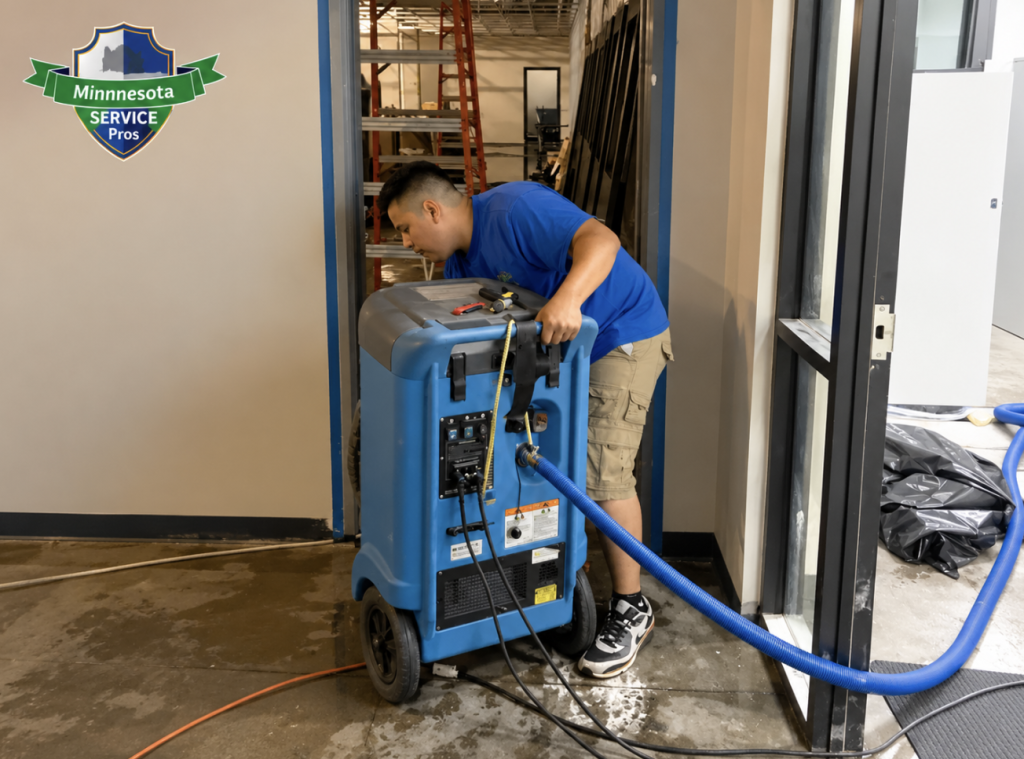
Water Extraction removes standing and absorbed water from your home or business after a leak, overflow, appliance failure, storm intrusion, or other water event. Our team serves property owners in Woodbury and throughout the Minneapolis & St. Paul Metro Area, using pumps, extractors, moisture meters, air movers, and dehumidifiers as the situation requires.
Property owners throughout Woodbury can call our team for help, including those in and around Dancing Waters, Eagle Valley, and Woodbury Village.
Fast removal can limit how far water spreads into flooring, walls, cabinets, and belongings. It can also reduce the time that wet materials remain vulnerable to odors, staining, and secondary damage. Our technicians respond locally within about one hour, assess the affected areas, and explain what needs to happen next before work begins.
A small visible puddle may not show the full problem. Water can move beneath carpet, through flooring seams, into subfloors, or inside wall cavities. We focus on finding that hidden moisture so your cleanup addresses the structure, not only the surface.
Water Removal and Pump-Out Service for Woodbury Properties
We begin by identifying the water source when it is safe to do so. Common causes include burst or leaking pipes, failed water heaters, washing machine supply lines, refrigerator connections, sump pump failures, overflowing toilets, and storm-related intrusion. Plumbing repairs or electrical work may require another qualified professional, but knowing the source helps us plan safe removal and drying.
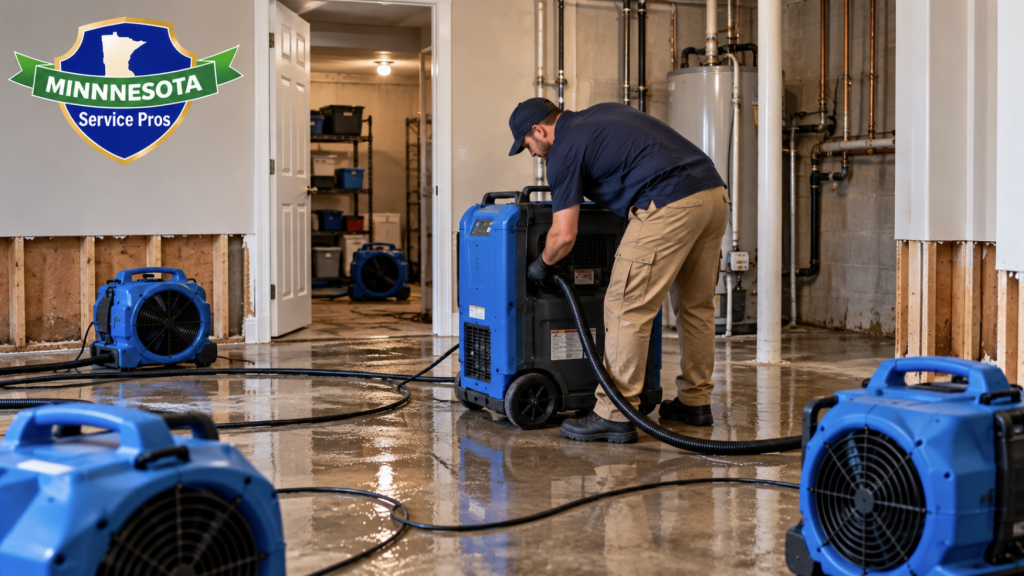
Standing water is removed with portable extractors or submersible pumps selected for the depth and volume involved. Water vacuuming may be appropriate for shallow areas, while a pump-out is more practical when a lower level or large room has substantial water. Removal continues until affected surfaces can be evaluated accurately.
Wet carpet and carpet pad often hold water below the visible surface. We check the pad, tack strips, subfloor, and nearby baseboards before deciding what can be dried and what may need removal. Hard-surface flooring also requires careful evaluation because water can collect beneath planks, tile, or resilient flooring.
Moisture meters help us compare affected materials with areas that were not exposed. We may check drywall, trim, cabinets, subfloors, and wall cavities. If moisture is found below the surface, air movers and dehumidifiers support structural drying after the bulk water has been removed.
Water damage restoration is more than pumping out a room. It may include water removal, controlled drying, cleaning of affected surfaces, selective removal of damaged materials, and moisture monitoring. We explain each step so you can distinguish emergency extraction from later repair or reconstruction work.
Who We Help in Woodbury
Homeowners may call us after a plumbing leak, overflowing fixture, appliance failure, or basement water event. We can help assess wet rooms, finished lower levels, kitchens, bathrooms, laundry areas, and adjoining spaces where water may have traveled.
Our work also supports landlords, condo owners, property managers, and multifamily residents. Shared walls, stacked plumbing, elevators, and occupied units can make access and drying more complex. We plan around those conditions while keeping you informed about affected areas.
Small losses and larger flood cleanup projects both benefit from a measured approach. A limited leak may need focused extraction and drying, while a major failure may require pumps, multiple drying zones, contents protection, and continued moisture checks.
What to Expect From Our Water Removal Process
Our technicians are IICRC certified, which supports a structured approach to water damage assessment and drying. We use the condition of your property, the type of water, and the materials involved to guide the work rather than applying the same process to every loss.
We are BBB certified in Minnesota. That provides an additional point of accountability as you make decisions about your property during a stressful event. Clear explanations and accurate documentation remain important throughout the visit.
Our quick one-hour local response helps us begin the assessment sooner. Response time does not replace careful inspection, but earlier access can help identify the source, remove standing water, and prevent avoidable spread into nearby materials.
- First, we discuss what happened, whether the source is still active, and any immediate safety concerns. If water is near electrical equipment, outlets, furnaces, or other hazards, do not enter the area until it is safe.
- Next, we inspect visible and accessible areas to map the water’s path. Moisture readings help show whether the problem is limited to one room or has moved into adjacent flooring, walls, cabinetry, or lower levels.
- We then choose the appropriate extraction method. Portable extractors can remove water from carpet and hard surfaces, while submersible pumps are used for deeper or heavier accumulation. Furniture and belongings may be moved or protected when practical.
- After bulk water removal, drying equipment is placed to move air across wet materials and lower humidity. Air movers support evaporation, while dehumidifiers collect moisture from the air. Equipment placement depends on the room layout, materials, and affected areas.
- Moisture monitoring continues during the drying phase. We may adjust equipment as readings change and explain when materials have reached an acceptable dry condition. Damaged materials that cannot be restored are discussed before removal whenever possible.
- The final phase includes reviewing the work performed, remaining concerns, and any next steps for repairs, cleaning, or reconstruction. Water extraction addresses the immediate moisture problem; damaged finishes or building components may require separate repair decisions.
What Woodbury Property Owners Should Know
Woodbury includes a mix of newer subdivisions, established homes, townhome communities, condominiums, apartments, retail properties, and office buildings. Construction details vary from one property to another, so the same amount of visible water can affect different materials and spaces.
Finished basements are common across the Twin Cities housing market and may contain carpet, drywall, stored belongings, offices, or recreation areas. A failed sump pump or storm-related seepage can affect both the floor and the lower portions of walls. Water removal should include checks below carpet and along wall edges.
Hard freezes and rapid temperature changes in Minnesota can place stress on exposed plumbing, utility rooms, hose connections, and vacant properties. If a pipe breaks while a property is unattended, water may continue spreading until someone discovers it.
Woodbury’s roads, drainage patterns, and developed lots can direct stormwater toward lower entrances, window wells, garages, and basement areas. Exterior drainage improvements may be needed later, but interior extraction and drying should begin once the area is safe.
Properties near busy retail and office areas may have different access needs than single-family homes. Occupancy, customer traffic, delivery schedules, and shared building systems can affect how equipment is placed and how work is sequenced.
Seasonal Conditions That Can Lead to Standing Water
Winter pipe breaks can release a large amount of water quickly and may affect finished basements, mechanical rooms, and neighboring units. After the source is controlled, we look for water beneath flooring and inside insulated or enclosed areas.
Spring thaw and heavy rain can expose drainage problems around foundations, window wells, garages, and lower-level doors. Basement water may carry soil or outdoor contaminants, so avoid contact until the condition has been assessed.
Summer thunderstorms can cause roof, siding, window, and drainage-related intrusion. Wind-driven rain may enter in places that are not obvious from inside the room, making moisture readings useful beyond the first visible stain.
A Common Flood Water Removal Scenario in Woodbury
A Woodbury homeowner might discover water around a failed water heater after returning from work. We may find that the visible floor water has also reached the carpet pad, baseboards, and nearby closet. The first priorities are to confirm the source is controlled, remove standing water, and measure moisture in connected materials.
A property manager might report water from an upper-floor plumbing failure in a multifamily building. In that situation, we may need to evaluate the unit below, shared wall spaces, hallways, and elevator access. Extraction and drying are organized around safe entry, resident communication, and limiting disruption while affected materials are monitored.
What Our Customers Say
“Our upstairs bathroom line let go around two in the morning and water was coming through the kitchen ceiling. I called expecting to leave a voicemail and someone actually picked up. The crew was at the house in under an hour with fans and a pump. They walked me through what they were doing instead of just working around me, and by the third day everything read dry.”
— Kate Williams
Commercial Water Removal for Larger Properties
Woodbury Lakes, Tamarack Village, and the Valley Creek Road and Hudson Road commercial corridors include retail, office, service, and mixed-use properties where water damage can affect customers, employees, inventory, records, and tenant spaces. Commercial extraction planning may need to account for entrances, loading areas, shared walls, operating hours, public safety, and access for drying equipment. These locations are provided as property-context references, not as claims of customers or completed projects.
For retail and office properties, we plan extraction around safe paths, occupied areas, merchandise, furnishings, records, and business access. A leak near a storefront, restroom, break room, or mechanical room may affect neighboring suites, so the inspection should extend beyond the first visible area.
Hospitals, schools, clinics, condos, and multifamily buildings often require coordination with occupants, building managers, maintenance staff, and other vendors. We can organize drying zones, protect high-traffic areas, and document moisture conditions while keeping the work area as controlled as possible.
Industrial and larger commercial spaces may involve deeper water, concrete floors, storage areas, equipment, or broad drainage paths. Pumps, extractors, air movers, and dehumidifiers are selected for the conditions present. Documentation of affected areas, readings, equipment, and progress can help property managers track the restoration process and discuss next steps with stakeholders.
We can plan our service around projects of different sizes, from smaller affected areas to larger losses involving retail properties, offices, hospitals, schools, condos and multifamily buildings, and industrial properties.
Estimated Water Removal and Extraction Pricing
Every loss is different, so these general ranges are provided only to help with early planning. Your final cost can change based on the source of the problem, affected square footage, materials, contamination, access, equipment needs, drying time, demolition, cleaning, and repairs.
- Small project: $1,000–$3,500+
- Moderate project: $5,000–$10,500
- Large project: $10,500+
These prices are estimates for general reference only, not a quote for your property. An onsite inspection is required before our team can provide a complete price estimate. The affected area, materials, moisture or contamination, equipment needs, and full scope of work all have to be evaluated first.
Working With Insurance After Property Damage
We can help you organize basic documentation such as the source of the loss, affected areas, photographs, moisture readings, equipment used, and work performed. Contact your insurer promptly to ask about your policy and claim process, and keep receipts and records related to the loss. Coverage decisions are made by your policy and insurer, not by our assessment.
Popular insurance companies we work with include: State Farm, Allstate, Farmers Insurance, Travelers, Liberty Mutual, American Family Insurance, USAA, and Nationwide.
Our team can help document the damage and work performed, but coverage and claim decisions depend on your policy, the cause of loss, and your insurance carrier. You should contact your carrier directly with coverage questions.
Water Removal Services in Nearby Communities
Our service area also includes nearby communities such as Maple Grove, Brooklyn Park, and Bloomington.
Water Extraction and Water Removal FAQs
How quickly should water be removed?
As soon as it is safe to begin. Prompt removal limits the time water can spread or remain inside porous materials. First address the source and electrical hazards, then arrange an assessment so visible and hidden moisture can be evaluated.
Can I remove the water myself?
You may be able to handle a small, clean spill with towels or a wet vacuum if the area is safe. Larger losses, contaminated water, water near electrical systems, or moisture beneath flooring need professional evaluation. Do not use household vacuums on standing water.
Will wet carpet always need to be replaced?
Not always. The decision depends on the water source, how long the carpet was wet, the condition of the pad, the amount of contamination, and whether the subfloor can be dried. We evaluate the carpet system instead of judging only by its appearance.
Why is moisture testing needed after the water is gone?
Water can remain below flooring, behind baseboards, inside drywall, or in wall cavities after the surface looks dry. Moisture readings help identify these areas and show whether structural drying is progressing.
What should I do before the restoration team arrives?
If safe, stop the water source, move small valuables away from the affected area, and keep people and pets away from standing water. Do not enter water near electrical equipment or use electrical devices in wet areas. Photograph damage when you can do so safely.
How long does structural drying take?
The time varies with the amount of water, material type, temperature, humidity, airflow, and how deeply materials were affected. We use moisture monitoring rather than a fixed timetable to determine when drying equipment can be adjusted or removed.