


Flooded Basement Cleanup helps remove standing water, protect your home, and address moisture that can remain below floors, behind walls, and inside stored belongings. We help Eden Prairie homeowners after sump pump failures, heavy rain, snowmelt, foundation seepage, and other water events. Acting promptly can limit damage to drywall, flooring, insulation, furniture, and personal items while reducing the chance of lingering odors or microbial growth.
Property owners throughout Eden Prarie can call our team for help, including those in and around Staring Lake, The Preserve, Bearpath, and Bent Creek.
Our local response is available within about one hour, and our IICRC-certified technicians bring a careful process to both small and large water-loss situations. You will receive a clear assessment of affected areas, the steps needed for extraction and drying, and practical information about what should happen next.
Basement water problems can feel overwhelming, especially when the source is not obvious. We focus first on safety, water removal, and moisture control so you can make informed decisions about your property.
Basement Water Removal and Drying in Eden Prarie
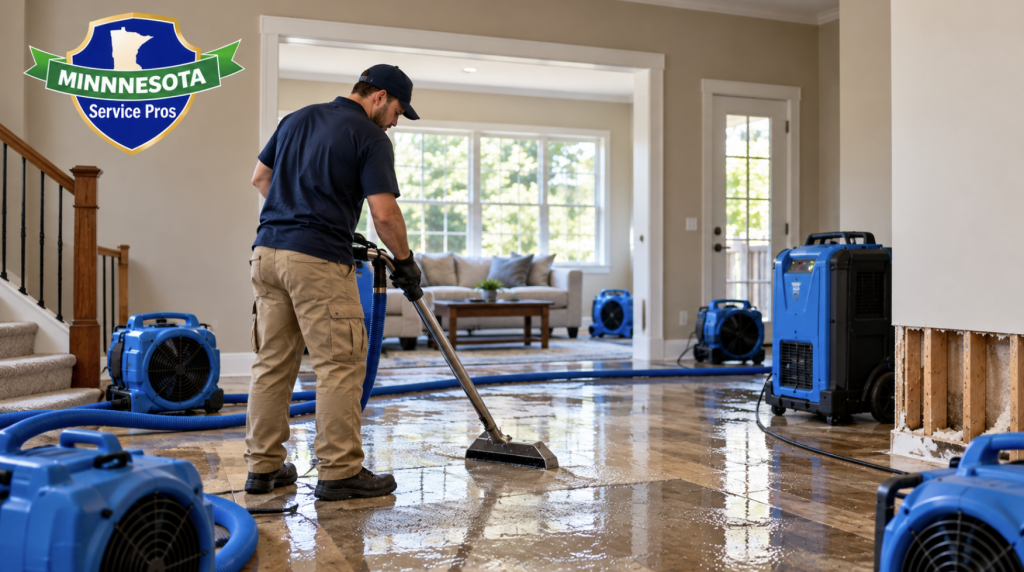
Basement flooding is more than a wet floor. Water can move beneath carpet and pad, into subfloors, behind baseboards, and through drywall. Our technicians inspect visible and concealed areas before deciding how much extraction and drying equipment is needed.
Standing water is removed with pumps or extraction equipment suited to the amount and location of water. After the basement pump out, we evaluate the materials that remain wet and separate salvageable contents from items that may need specialized cleaning or disposal.
Finished basements often need extra attention because carpet, pad, drywall, trim, cabinets, and built-in storage can hold moisture. Carpet may sometimes be cleaned and dried, but saturated pad commonly requires removal because it dries slowly and can keep the subfloor wet.
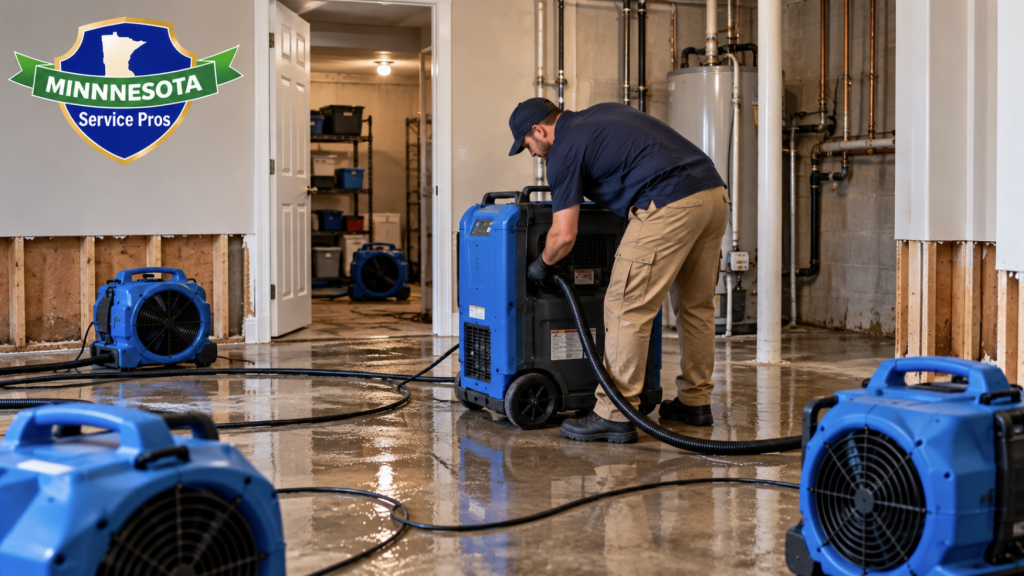
Structural drying follows water removal. Air movement, dehumidification, and moisture monitoring work together to lower moisture in floors, framing, walls, and other building materials. Drying is not complete simply because the surface feels dry; readings help confirm whether moisture remains below the surface.
If water came from a drain backup, outside flooding, or another contaminated source, avoid contact until the area is assessed. Contaminated water may require different protective measures and removal methods than a clean supply-line leak. Keep children and pets away from affected areas, and do not use electrical equipment where water is present.
Who We Help in Eden Prarie
We help homeowners with unfinished utility basements, finished family rooms, laundry areas, storage spaces, and lower levels with bedrooms or home offices. Rental property owners and managers may also need a coordinated response when water affects more than one unit or shared building systems.
A small amount of water around a failed sump pump can still affect flooring and wall cavities. A larger flood may involve stored contents, multiple rooms, mechanical equipment, and extensive structural drying. Our technicians evaluate the actual conditions rather than assuming the size of the visible puddle tells the whole story.
Commercial and multifamily properties may need water extraction while occupants, tenants, staff, or customers are still using other parts of the building. We plan access, equipment placement, safety controls, and communication around the building's daily operations.
What to Expect From a Basement Pump-Out and Drying
We begin with the condition of your property, not a preset list of equipment. The source, water category, affected materials, temperature, ventilation, and length of time the area stayed wet all influence the restoration plan.
Our IICRC-certified technicians use moisture checks to guide decisions about removal and drying. You can understand which areas are affected, which contents may be recoverable, and why certain materials may need to be opened or removed.
We are BBB certified in Minnesota, and our local response is available within about one hour. These points provide useful peace of mind, but the most important part of the work is a careful assessment and clear communication throughout the project.
- Make the area safe. If water is near outlets, appliances, furnaces, or electrical panels, avoid entering until the power and conditions are evaluated. Stop the water source if it is safe to do so, then protect people and pets from slipping, electrical, or contaminated-water hazards.
- Inspect the loss. We identify where water came from, how far it traveled, and which rooms, contents, floors, walls, and building systems may be involved. Moisture can spread farther than the visible waterline, particularly under flooring and inside wall assemblies.
- Remove standing water. Pumping and extraction reduce the amount of water that can continue to soak into materials. Contents may be moved to improve access, and items are considered separately because wood, fabric, paper, electronics, and finished surfaces respond differently to water.
- Set up drying. Air movers and dehumidifiers support evaporation and moisture removal. Equipment placement is based on the affected materials and room conditions, not simply on the number of rooms. Some materials may require controlled removal to allow trapped moisture to escape.
- Monitor progress. Our team takes moisture readings during the drying process and adjusts equipment as conditions change. This helps identify areas that are drying normally and spots that need more time or additional access.
- Explain restoration needs. Once the affected areas are dry and cleaned as appropriate, we outline remaining repairs or replacement needs. Restoration may include rebuilding drywall, replacing flooring or pad, repairing trim, or addressing the original plumbing, drainage, or sump system problem.
What Eden Prarie Property Owners Should Know
Eden Prairie properties can include finished lower levels, older homes with updated basements, newer construction, townhomes, and multifamily buildings. Construction details vary from property to property, so the path water takes and the materials affected must be checked on site.
Heavy rain can overwhelm soil, grading, window wells, or drainage systems and may lead to foundation seepage. Water entering through a foundation or below-grade opening can affect wall edges, insulation, carpet, and stored contents even when the floor has only a shallow layer of water.
Sump pump failure is an important concern in many below-grade homes. A failed pump, blocked discharge line, power interruption, or overwhelmed pit can allow groundwater to collect quickly. After cleanup, you may also need a plumber, electrician, or drainage professional to correct the source.
Floor drains, utility areas, and mechanical rooms can create additional safety concerns during a flood. Do not assume a drain is working because water is moving slowly. A backup may require different cleaning and protective procedures.
Seasonal Conditions That Can Flood Basements
Spring snowmelt can saturate soil around foundations and place pressure on basement walls and drainage systems. Check sump pumps and discharge lines before thawing conditions intensify, and keep the area around the sump accessible.
Summer and fall storms can produce heavy rain in a short period. Clear leaves and debris from exterior drains and watch low window wells, foundation joints, and areas where water collects near the home. If water enters, move valuables only when it is safe to do so.
Winter brings frozen ground, ice, and possible pipe failures. A burst pipe can release clean water quickly, while freezing conditions may also affect discharge lines and exterior drainage. Shut off the water if possible and contact us for guidance on removal and drying.
A Common Wet Basement Cleanup Scenario in Eden Prarie
A homeowner in Eden Prairie might discover water around a failed sump pump after a spring thaw. We may find standing water on the basement floor, damp carpet pad, and moisture along the lower drywall. The first steps would be to confirm that the area is safe, remove the water, move affected contents, and check how far moisture traveled.
A finished lower level may look mostly dry after a storm, yet moisture can remain beneath floating flooring or behind baseboards. Our technicians would use inspection tools and moisture readings to determine whether surface cleanup is enough or whether focused drying and limited removal are needed. This example illustrates the process, not a report of a completed customer project.
What Our Customers Say
“Our upstairs bathroom line let go around two in the morning and water was coming through the kitchen ceiling. I called expecting to leave a voicemail and someone actually picked up. The crew was at the house in under an hour with fans and a pump. They walked me through what they were doing instead of just working around me, and by the third day everything read dry.”
— Kate Williams
Commercial Basement and Lower-Level Water Removal
Commercial areas around Eden Prairie Center, Flying Cloud Business Campus, and Southwest Station include retail, office, transportation, and multifamily property contexts with different access and occupancy needs. Water loss planning may involve protecting merchandise, records, tenant spaces, mechanical rooms, and shared corridors while keeping unaffected areas usable. Equipment placement, after-hours access, documentation, and communication with owners or managers become especially important when extraction and drying extend across several suites or floors.
Retail properties may need fast removal from sales floors, stockrooms, loading areas, and lower-level storage. We plan safe routes for equipment and personnel, protect unaffected merchandise where possible, and coordinate drying around customers, employees, deliveries, and building access.
Office, healthcare, school, condo, and multifamily properties often involve shared walls, elevators, corridors, utility rooms, or occupied units. Our team can help organize affected and unaffected areas, document conditions, and stage extraction or drying equipment to limit disruption while protecting occupants.
Larger losses in industrial or business properties may require multiple drying zones, contents handling, moisture monitoring, and a written record of work completed. We discuss access, safety, equipment placement, and the sequence of work so property representatives can make decisions while normal operations continue where conditions allow.
We can plan our service around projects of different sizes, from smaller affected areas to larger losses involving retail properties, offices, hospitals, schools, condos and multifamily buildings, and industrial properties.
Estimated Basement Water Removal Pricing
Every loss is different, so these general ranges are provided only to help with early planning. Your final cost can change based on the source of the problem, affected square footage, materials, contamination, access, equipment needs, drying time, demolition, cleaning, and repairs.
- Small project: $1,000–$3,500+
- Moderate project: $5,000–$10,500
- Large project: $10,500+
These prices are estimates for general reference only, not a quote for your property. An onsite inspection is required before our team can provide a complete price estimate. The affected area, materials, moisture or contamination, equipment needs, and full scope of work all have to be evaluated first.
Working With Insurance After Property Damage
We can help you organize photos, moisture findings, affected-material notes, and work documentation for your insurance discussion. Coverage depends on your policy and the cause of loss, so contact your insurer promptly and keep records of damage, emergency measures, and related expenses. Our documentation supports the conversation but does not determine coverage.
Popular insurance companies we work with include: State Farm, Allstate, Farmers Insurance, Travelers, Liberty Mutual, American Family Insurance, USAA, and Nationwide.
Our team can help document the damage and work performed, but coverage and claim decisions depend on your policy, the cause of loss, and your insurance carrier. You should contact your carrier directly with coverage questions.
Basement Water Removal in Nearby Communities
Our service area also includes nearby communities such as Rochester, Woodbury, and Minneapolis.
Flooded Basement and Water Removal FAQs
How soon should basement water be removed?
As soon as it is safe to begin. Water can continue moving into carpet pad, subfloors, drywall, and stored contents. Prompt extraction and drying may limit the amount of material affected, but electrical and contaminated-water hazards must be addressed first.
Can I clean up a small amount of basement water myself?
You may handle a minor, clean-water spill if the area is safe and you have suitable equipment, but watch for moisture beneath flooring and behind walls. Call for professional help when water is widespread, contaminated, connected to a drain backup, near electrical equipment, or still entering the property.
Will wet carpet and pad need to be replaced?
Not always. The answer depends on the water source, how long the materials were wet, the type of carpet and pad, and whether complete drying is practical. Carpet pad often holds water and may require removal, while some carpet can be cleaned and dried under the right conditions.
How do you find moisture that I cannot see?
Our technicians use moisture-monitoring tools and inspect transitions, baseboards, subfloors, wall edges, and other likely pathways. Readings are compared over time so we can see whether materials are drying or whether moisture remains trapped.
What should I do if my sump pump fails?
If safe, stop or limit the water source, keep people away from standing water near electrical equipment, and contact a qualified professional for the pump or discharge problem. We can address water removal and drying, while a plumber or electrician may be needed for the underlying system repair.
Will you handle contents in the basement?
We can assess affected contents and help move, separate, or document items as part of the cleanup plan. Paper, electronics, upholstered furniture, wood, and clothing each require different handling, and some items may need a specialized contents service.