
Sewage Cleanup removes wastewater, contaminated materials, and harmful residue after a sewer backup, toilet overflow, floor drain failure, or damaged sewer line. We help homeowners, landlords, property managers, and businesses in Bloomington protect people and limit damage to floors, walls, cabinets, and subfloors. Acting quickly can reduce contact with contaminants, slow the spread of moisture, and make the next steps easier to manage.
Our team provides service across Bloomington, including neighborhoods and local areas such as South Loop District, Normandale Lake, West Bloomington, and East Bloomington.
Our team provides a quick 1-Hr Local Response for urgent cleanup needs. We use appropriate personal protective equipment, contain affected areas when needed, and separate contaminated materials from clean parts of your property. You will receive a clear explanation of what we find, what must be removed, and how drying and sanitation will proceed.
Sewage problems are not only water problems. Wastewater can carry bacteria, viruses, and other contaminants, so avoid touching it and keep children and pets away. If the overflow may involve electrical equipment, do not enter the area until it is safe to do so.
Sewer Backup and Sewage Removal for Bloomington Properties
Our Sewage Cleanup process begins with a safety assessment. We identify the source when possible, determine where contaminated water has traveled, and look for affected flooring, drywall, trim, insulation, cabinets, and contents. Photographs and moisture readings help establish the work area before removal begins.
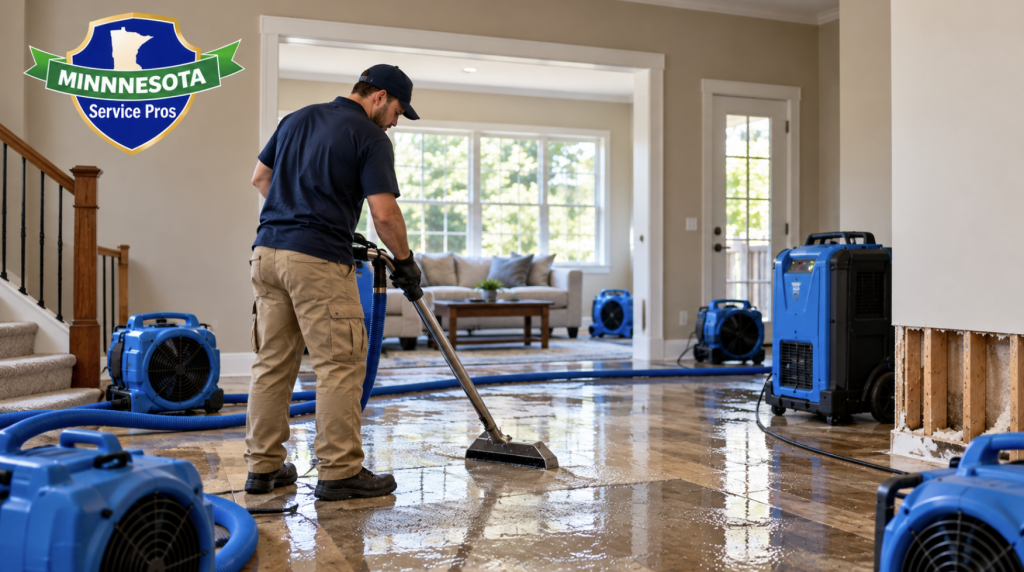
Standing wastewater is removed with extraction equipment or pumps suited to the amount and location of water. Removal comes before drying because wet, contaminated materials can continue spreading odors and moisture into the structure. We also inspect below flooring and around wall edges where water may remain hidden.
Porous materials that have absorbed sewage may not be suitable for cleaning and may need controlled removal. Examples can include carpet padding, damaged drywall, insulation, particleboard, and some upholstered contents. We explain these decisions before work moves forward so you know why a material must be discarded rather than simply treated.
Hard, salvageable surfaces are cleaned and disinfected with products selected for the material and the type of contamination. Sanitation may include washing, disinfecting, deodorizing, and careful handling of affected contents. Odor control works best after the source and contaminated materials have been addressed.
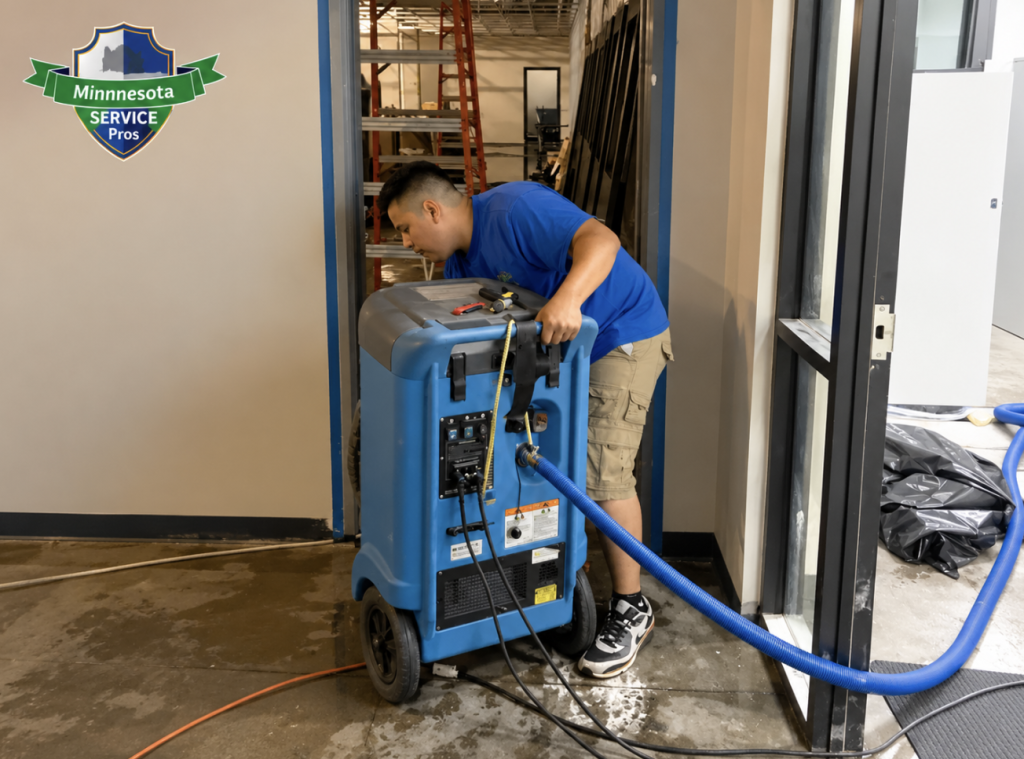
After extraction and material removal, our technicians check moisture in the subfloor, framing, baseboards, and nearby rooms. Air movement and dehumidification help lower remaining moisture. Drying is not complete just because a surface feels dry, so readings guide when equipment can be removed safely.
Who We Help in Bloomington
Homeowners may call us after a backed-up toilet, blocked sewer line, failed floor drain, or wastewater release in a basement, bathroom, laundry room, or utility area. We can help you understand which areas are affected and what needs attention first.
Landlords and property managers often need a careful plan that protects occupants, limits cross-contamination, and keeps records of the work. Shared plumbing, connected units, and common hallways can allow wastewater to travel beyond the first visible area.
Our technicians can handle both smaller residential losses and larger commercial or multifamily projects. The amount of water does not always show the full scope of damage; a small overflow can still affect a subfloor, wall cavity, or neighboring room.
If a plumbing professional is needed to repair the source, that repair should be coordinated with cleanup. We focus on removing contamination and restoring affected materials, while the underlying sewer or plumbing defect may require a licensed plumber.
What to Expect From Our Sewage Removal and Cleanup Process
We approach contaminated water as a health and building-material concern, not just a wet-floor problem. Personal protective equipment, controlled movement, containment, and proper disposal help reduce the chance of spreading contaminants through your property.
Our IICRC certified technicians use established restoration practices to evaluate water damage, moisture, cleaning needs, and drying progress. We explain the work in plain language and keep the focus on safety, affected materials, and the condition of your property.
Our quick 1-Hr Local Response helps start the assessment promptly. Response time does not replace a careful inspection, but early attention can help identify standing water, hidden moisture, and materials that should not remain in place.
We are BBB Certified in Minnesota, and our technicians are IICRC certified. These points give you useful information about how we approach professional service while the actual plan remains based on conditions found at your property.
- Make the area safe. Avoid contact with sewage, turn off power only if you can do so without entering a wet area, and keep people and pets away. If the source is still active, contact the appropriate plumbing or utility professional while cleanup is arranged.
- Inspect and contain. We locate the visible and likely travel paths of wastewater, check nearby rooms, and use containment when it helps protect unaffected spaces. Contents may be moved or protected before removal begins.
- Remove wastewater and debris. Pumps, extraction tools, and hand removal methods may be used according to the amount of water and the affected materials. Contaminated waste is handled and disposed of in a controlled manner.
- Remove unsalvageable materials. Absorbed materials are evaluated based on contamination, porosity, condition, and the ability to clean them safely. Selective removal can open hidden areas and make structural drying more effective.
- Clean, disinfect, and control odor. We clean salvageable surfaces, apply appropriate disinfection, and address residue and odor after the source of contamination has been removed.
- Dry and verify. Air movers and dehumidifiers may be used to dry subfloors, framing, and surrounding materials. Moisture readings help track progress and support decisions about the next phase of restoration.
- Document the work. We can provide information about affected areas, removed materials, drying conditions, and completed cleaning to help you keep an organized record for your property and insurance discussions.
What Bloomington Property Owners Should Know
Bloomington includes a mix of older and newer homes, split-level properties, finished basements, multifamily buildings, offices, retail spaces, and institutional facilities. Plumbing layouts and finished lower levels can make a wastewater release more extensive than the first visible puddle suggests.
Basements and lower-level rooms are especially vulnerable when floor drains, sump systems, sewer connections, or nearby plumbing fixtures fail. Wastewater may move under flooring, behind baseboards, or into storage areas before the problem is noticed.
The cityu2019s position within the Minneapolis-St. Paul Metro Area means properties may experience changing demands from winter freeze conditions, spring thaw, heavy rain, and rapid temperature shifts. These conditions can affect drainage, plumbing, and access to affected areas, although each loss requires an on-site assessment.
Connected townhomes, condominiums, and multifamily buildings need extra care because wastewater can move through shared walls, utility chases, hallways, or common plumbing. Affected and unaffected areas should be separated as soon as practical.
Conditions That Can Contribute to Sewer Backups
Cold Minnesota winters can contribute to frozen or stressed plumbing, while spring thaw can increase moisture around foundations and lower levels. Heavy summer storms may overwhelm drainage or expose weaknesses around floor drains and sewer connections.
During freezing weather, do not use open flames or unsafe heating methods to thaw plumbing. If a pipe or sewer line has failed, the source should be addressed before cleanup is considered complete. Wet materials in a closed building can also develop stronger odors as temperatures rise.
Seasonal conditions do not determine the damage by themselves. Our technicians look at the water source, the length of exposure, material type, indoor humidity, and the path the wastewater took through your property.
Commercial Sewage and Wastewater Cleanup
Bloomingtonu2019s South Loop District, Normandale Lake Office Park, and Interstate 494 corridor include office, retail, hospitality, residential, and other commercial property types. A sewer backup in these settings may affect occupied suites, shared restrooms, loading areas, mechanical spaces, or multiple floors. Planning must account for safe access, occupant movement, business continuity, extraction and drying capacity, documentation, and separation between contaminated and usable areas. Named locations are provided as property context only and do not imply a customer relationship.
Commercial sewage damage cleanup requires coordination around people, operations, and access. We can help property representatives establish affected zones, protect clean areas, and plan extraction and drying around occupied offices, retail spaces, healthcare settings, schools, condos, multifamily buildings, and industrial properties.
Larger losses may involve shared restrooms, mechanical rooms, elevators, corridors, tenant spaces, or multiple units. Our restoration team can organize the work by area, identify immediate safety concerns, and communicate which spaces are available, restricted, or awaiting drying and sanitation.
Documentation can support communication among owners, managers, occupants, plumbers, contractors, and insurance representatives. We record affected areas, material removal, moisture conditions, cleaning steps, and drying progress without assuming that coverage or business interruption protection will apply.
We can plan our service around projects of different sizes, from smaller affected areas to larger losses involving retail properties, offices, hospitals, schools, condos and multifamily buildings, and industrial properties.
Estimated Sewage Cleanup Pricing
Every loss is different, so these general ranges are provided only to help with early planning. Your final cost can change based on the source of the problem, affected square footage, materials, contamination, access, equipment needs, drying time, demolition, cleaning, and repairs.
- Small project: $1,000–$3,500+
- Moderate project: $5,000–$10,500
- Large project: $10,500+
These prices are estimates for general reference only, not a quote for your property. An onsite inspection is required before our team can provide a complete price estimate. The affected area, materials, moisture or contamination, equipment needs, and full scope of work all have to be evaluated first.
Working With Insurance After Property Damage
Keep photographs, videos, invoices, moisture information, and records of damaged contents when it is safe to do so. We can provide documentation about the cleanup and restoration work, while your insurance representative can explain coverage, deductibles, reporting requirements, and next steps under your policy.
Popular insurance companies we work with include: State Farm, Allstate, Farmers Insurance, Travelers, Liberty Mutual, American Family Insurance, USAA, and Nationwide.
Our team can help document the damage and work performed, but coverage and claim decisions depend on your policy, the cause of loss, and your insurance carrier. You should contact your carrier directly with coverage questions.
Sewer Backup Cleanup in Nearby Communities
Our service area also includes nearby communities such as Minneapolis, Minnetonka, and Maple Grove.
Sewage and Sewer Backup Cleanup FAQs
What should I do before your team arrives?
Keep people and pets away from the affected area. Do not touch sewage, move contaminated items through clean rooms, or operate electrical equipment in standing water. If you can safely stop the source without entering a hazardous area, do so. A plumber may be needed to repair an active sewer or plumbing problem.
Is sewage cleanup different from ordinary water damage cleanup?
Yes. Sewage is contaminated water and requires added attention to protective equipment, containment, material removal, disinfection, and disposal. Some porous materials cannot be safely restored after absorbing wastewater, even when they appear only slightly wet.
Can carpet or drywall be saved after a sewer backup?
It depends on the material, the amount of contamination, how long it was exposed, and how quickly cleanup begins. Carpet padding and contaminated drywall often require removal. Some hard surfaces and certain contents may be cleaned and disinfected after inspection.
How do you find hidden sewage damage?
We inspect along baseboards, beneath flooring, around floor drains, inside accessible cavities, and in nearby rooms. Moisture readings help identify damp subfloors and structural materials that may not look wet. The visible edge of the water is not always the full affected area.
Will the odor go away after the water is removed?
Odor can remain when residue, absorbed materials, or moisture are still present. Removing contaminated materials, cleaning and disinfecting salvageable surfaces, and drying the structure are the main steps. Additional odor control may be considered after those sources are addressed.
How long will drying take?
Drying time varies with the amount of water, material type, temperature, humidity, airflow, and how deeply moisture traveled. We use moisture readings rather than appearance alone to track progress. A subfloor or wall cavity may need more time than the surface suggests.