
Sewage Cleanup removes wastewater, contaminated materials, and harmful residue after a sewer backup, toilet overflow, drain problem, or failed sewer line. We help homeowners, landlords, property managers, and businesses in Rochester address the visible mess and the moisture that may be hidden below flooring, inside walls, or beneath cabinets.
Property owners throughout Rochester can call our team for help, including those in and around Downtown Rochester, Kutzky Park, Pill Hill, and Slatterly Park.
Fast action can limit contact with contaminated water, reduce odor, and help prevent additional damage. Our technicians use personal protective equipment, remove standing wastewater, separate affected areas, and inspect materials before cleaning, disinfecting, and drying your property.
Our local team offers a quick 1-hour response, subject to current availability and travel conditions. We also serve both small and large restoration projects, with IICRC-certified technicians guiding you through the next steps.
Sewer Backup and Sewage Removal for Rochester Properties
Sewage backups are classified as contaminated water events because wastewater can carry bacteria, viruses, cleaning chemicals, and other harmful substances. Avoid touching the water, walking through it, or using electrical equipment in an affected area until the space is assessed.
The first step is usually to stop or limit the source when it is safe to do so. A plumber may be needed for a blocked sewer line, failed sump system, broken pipe, or plumbing fixture. Restoration work focuses on removing contamination, protecting unaffected areas, and returning the structure to a dry, sanitary condition.
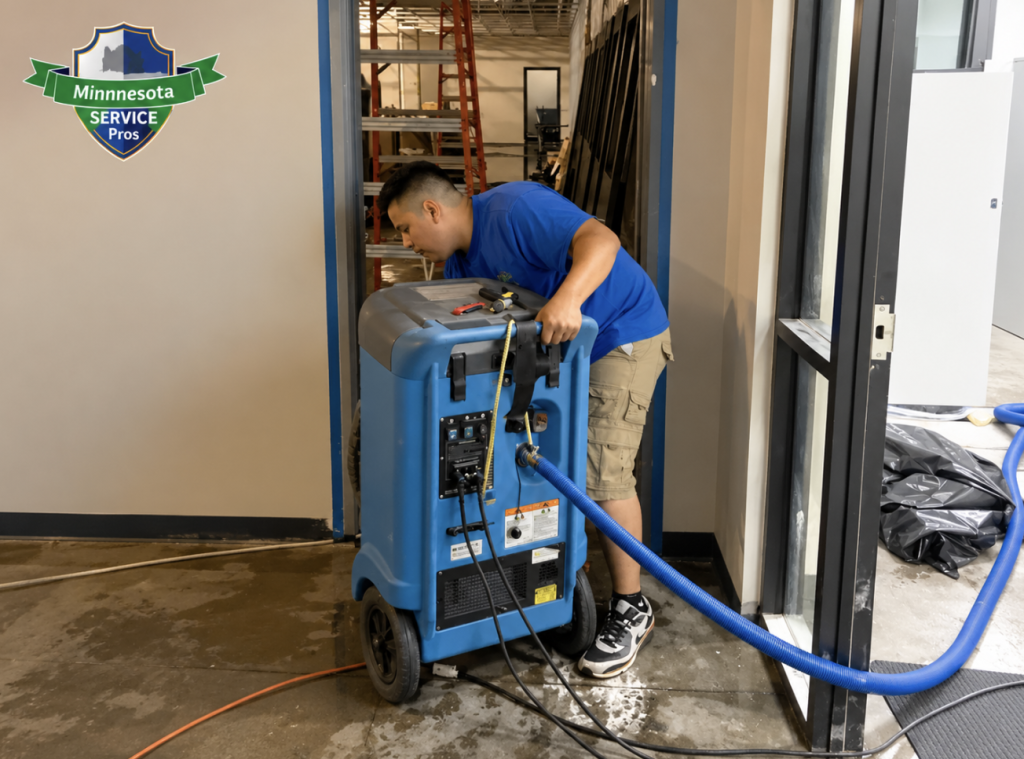
Standing water is removed with extraction equipment or pumps suited to the amount of wastewater and the building materials involved. Our technicians then check floors, walls, cabinets, baseboards, subfloors, and nearby rooms for moisture or migration that is not visible from the surface.
Porous materials such as carpet pad, damaged drywall, insulation, and some upholstered items may not be suitable for cleaning after sewage exposure. Material removal is considered when contamination has soaked in, the material cannot be fully disinfected, or leaving it in place would interfere with safe drying.
Hard, salvageable surfaces are cleaned and disinfected using methods appropriate for the material. Containment may be used to limit cross-contamination while affected materials are removed or cleaned. Odor control addresses the source of the smell rather than covering it with fragrance alone.
Who We Help in Rochester
Homeowners dealing with a backed-up floor drain, overflowing toilet, sewer line problem, or wastewater intrusion can receive help with safe removal, cleaning, and drying.
Landlords and property managers may need a coordinated plan for apartments, condominiums, and shared plumbing systems. We can help identify affected units and common areas while keeping the scope focused on contaminated spaces.
Businesses, offices, retail properties, schools, healthcare settings, and industrial buildings may require larger-scale extraction, controlled access, documentation, and a plan that considers occupants, employees, inventory, and ongoing operations.
What to Expect From Our Sewage Removal and Cleanup Process
We explain what is affected before work progresses so you can make informed decisions about cleaning, removal, and drying. Our technicians look beyond the visible water because sewage can travel under flooring, behind trim, and into wall cavities.
Our IICRC-certified technicians follow restoration practices for contaminated water, moisture evaluation, material handling, and structural drying. We use personal protective equipment and appropriate containment to reduce exposure and cross-contamination during the work.
We are registered with the BBB in Minnesota. That gives you another point of accountability while you deal with an unpleasant and often stressful property problem.
A quick 1-hour local response is available, subject to current conditions and availability. The size of the loss does not determine whether an assessment is worthwhile; a small toilet overflow can affect hidden materials, while a larger backup may require a phased plan.
- Contact and safety review: We ask where the wastewater came from, whether the source is still active, how much of the property is affected, and whether anyone has been exposed. Keep people and pets away from contaminated areas.
- Source and scope assessment: Our technicians inspect the affected rooms and nearby spaces. We look at flooring, subfloors, walls, cabinets, floor drains, plumbing fixtures, and low areas where wastewater may collect or spread.
- Containment and protection: Affected areas may be separated from clean areas. Contents may be moved or protected, and access is limited while contaminated materials are handled.
- Water and sewage removal: Pumps, extraction tools, and other equipment remove standing wastewater and saturated contents. Removal continues until the visible water is gone and the affected area can be evaluated properly.
- Cleaning and disinfection: Salvageable surfaces are cleaned and disinfected. Materials that cannot be safely restored may be removed and bagged for proper handling. Odor sources are addressed during this stage.
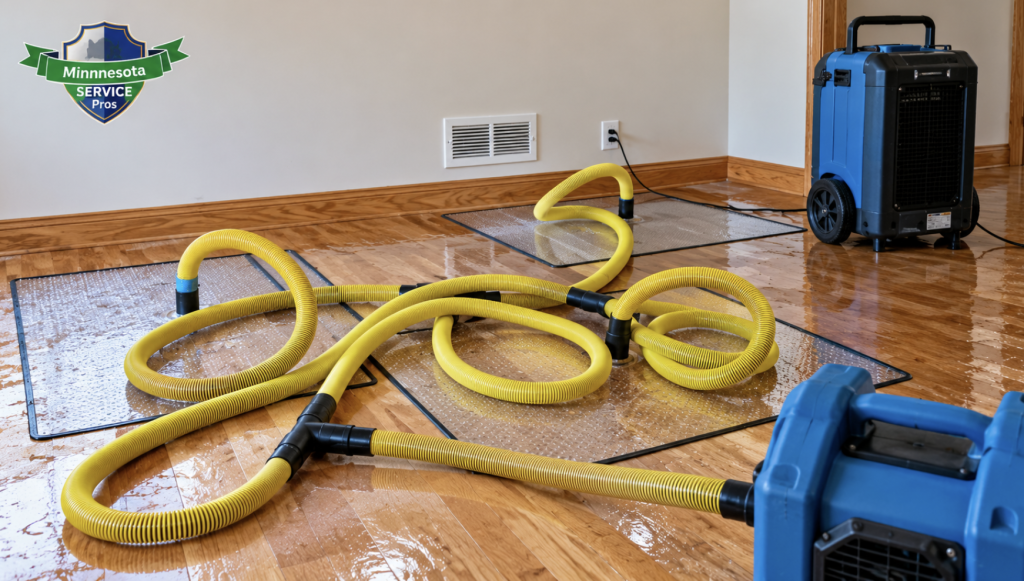
- Drying and monitoring: Air movement and dehumidification help dry structural materials. Moisture readings guide equipment placement and show whether subfloors, wall cavities, and other areas are progressing toward a dry condition.
- Documentation and next steps: We record affected areas, work performed, moisture conditions, and materials that may need rebuilding or replacement. Repairs outside the cleanup scope can then be planned with clearer information.
What Rochester Property Owners Should Know
Rochester properties include older homes, newer construction, apartments, condominiums, offices, healthcare-related buildings, and mixed-use spaces. Construction type and age affect how wastewater moves and where moisture may remain.
Basements and lower levels can be especially vulnerable when floor drains, sewer connections, sump systems, or plumbing fixtures cannot manage the volume of water. A backup may move across a finished basement before it is noticed.
Shared plumbing in multifamily buildings can spread a problem beyond one unit. Common corridors, laundry rooms, mechanical spaces, and neighboring units may need inspection when the source or pathway is uncertain.
Snowmelt, heavy rain, and changing groundwater conditions can increase pressure on drainage systems and expose weaknesses around lower levels. These conditions do not always cause a sewer backup, but they can affect where water enters and how far it travels.
Do not mix household cleaners with wastewater or other cleaning products. Keep electrical cords, appliances, and tools out of standing water, and contact emergency services if there is an immediate electrical or medical hazard.
Conditions That Can Contribute to Sewer Backups
Cold Minnesota winters can freeze or stress exterior plumbing and affect access to lower-level utility areas. If a pipe has frozen or burst, stop the water source when safe and arrange for the plumbing issue to be corrected.
Spring thaw and periods of heavy rain may place added demand on floor drains, sewer connections, and sump systems. A damp basement should be inspected promptly because wastewater and clean groundwater require different handling.
Summer storms can bring rapid rainfall and short-term drainage problems. Water that enters through a drain or sewer connection should not be treated like ordinary clean water until its source is confirmed.
Commercial Sewage and Wastewater Cleanup
Rochesteru2019s Downtown area, the Mayo Clinic campus, Apache Mall, and Broadway Avenue represent different property and access conditions, including offices, healthcare-related facilities, retail spaces, restaurants, and busy corridors. Commercial sewage cleanup in these settings may require coordinated entry, occupant protection, inventory or equipment considerations, phased extraction, after-hours planning, and clear documentation. Naming these areas does not imply that any listed property is our customer.
Larger commercial losses need a plan that protects people while work continues. We can help organize affected zones, access points, contents handling, extraction, drying equipment, and communication about areas that are safe to occupy or must remain restricted.
Offices, retail properties, healthcare facilities, schools, condominiums, multifamily buildings, and industrial spaces may have different sanitation, privacy, access, and operational needs. Our technicians consider those conditions when separating clean and contaminated areas and deciding how work should proceed.
Business interruption can grow when wastewater reaches corridors, restrooms, kitchens, storage rooms, mechanical areas, or customer-facing spaces. Documentation of affected materials, moisture readings, cleaning steps, and equipment placement can help property representatives coordinate restoration and insurance discussions.
We can plan our service around projects of different sizes, from smaller affected areas to larger losses involving retail properties, offices, hospitals, schools, condos and multifamily buildings, and industrial properties.
Estimated Sewage Cleanup Pricing
Every loss is different, so these general ranges are provided only to help with early planning. Your final cost can change based on the source of the problem, affected square footage, materials, contamination, access, equipment needs, drying time, demolition, cleaning, and repairs.
- Small project: $1,000–$3,500+
- Moderate project: $5,000–$10,500
- Large project: $10,500+
These prices are estimates for general reference only, not a quote for your property. An onsite inspection is required before our team can provide a complete price estimate. The affected area, materials, moisture or contamination, equipment needs, and full scope of work all have to be evaluated first.
Working With Insurance After Property Damage
Keep photographs, videos, receipts, work records, and written notes about when the loss occurred and what caused it. We can provide documentation of observed damage and completed restoration work, while your policy, deductible, exclusions, and coverage decisions remain with you and your insurer.
Popular insurance companies we work with include: State Farm, Allstate, Farmers Insurance, Travelers, Liberty Mutual, American Family Insurance, USAA, and Nationwide.
Our team can help document the damage and work performed, but coverage and claim decisions depend on your policy, the cause of loss, and your insurance carrier. You should contact your carrier directly with coverage questions.
Sewer Backup Cleanup in Nearby Communities
Our service area also includes nearby communities such as Bloomington, Maple Grove, and St Paul.
Sewage and Sewer Backup Cleanup FAQs
What should I do before sewage cleanup begins?
Keep people and pets away from the affected area. Do not touch the wastewater, use fans or vacuums, or operate electrical equipment in standing water. If it is safe, stop the source and contact a plumber for an active sewer or plumbing problem. Avoid mixing cleaning products.
Can I clean up a small toilet overflow myself?
A small amount of clean water from a supply line is different from wastewater. If water has come from a toilet bowl, sewer line, floor drain, or other contaminated source, professional assessment is safer. Porous materials and hidden moisture may need more than surface cleaning.
Will every affected material need to be removed?
No. The decision depends on the material, how long it was exposed, how deeply contamination entered, and whether it can be cleaned and disinfected. Carpet pad, soaked drywall, insulation, and some upholstered items often cannot be reliably restored after sewage exposure.
How do you find moisture that I cannot see?
Our technicians inspect material transitions and use moisture measurement tools to evaluate floors, subfloors, walls, baseboards, cabinets, and nearby spaces. Readings help identify areas that need drying and show whether the structure is progressing toward a dry condition.
How long does sewage cleanup take?
The time varies with the source, affected area, materials, access, and moisture level. Water removal may be completed before drying and sanitation are finished. Some properties need several monitoring visits, while smaller losses may move through the process more quickly.
Can I stay in my home during the work?
That depends on the location and extent of contamination, odors, affected utilities, and whether clean areas can be separated from work areas. We will explain access limits and safety concerns based on the conditions found during the assessment.