Sewage Cleanup in Bloomington, Minnesota

Sewage Cleanup services in Bloomington, Minnesota

Sewage Cleanup removes contaminated wastewater, protects your property from cross-contamination, and helps return affected rooms to a safe condition. We help homeowners, landlords, property managers, and businesses in Bloomington after a sewage backup, toilet overflow, blocked sewer line, or wastewater release. Acting quickly can limit contact with harmful contaminants, reduce odor, and prevent sewage from soaking deeper into flooring, walls, cabinets, and subfloors.

Our team provides service across Bloomington, including neighborhoods and local areas such as South Loop, Normandale Hills, and Penn Lake.

Our local team provides a quick one-hour local response, subject to conditions and availability. We arrive ready to assess the source, identify affected materials, and explain the safest next steps. Our IICRC-certified technicians use restoration procedures suited to contaminated water, not the same approach used for a clean-water spill.

From a finished basement to a multifamily building or commercial space, our goal is to give you clear information while protecting people and the structure. Keep children, pets, and unprotected occupants away from wastewater until the area has been assessed and cleaned.

Sewer Backup and Sewage Removal for Bloomington Properties

Sewage backup cleanup begins with a safety assessment. We look for the source of the wastewater, determine whether it is still active, and identify rooms, materials, and contents that may have been exposed. If a plumbing or sewer problem is still releasing water, that issue must be controlled before cleanup can be completed.

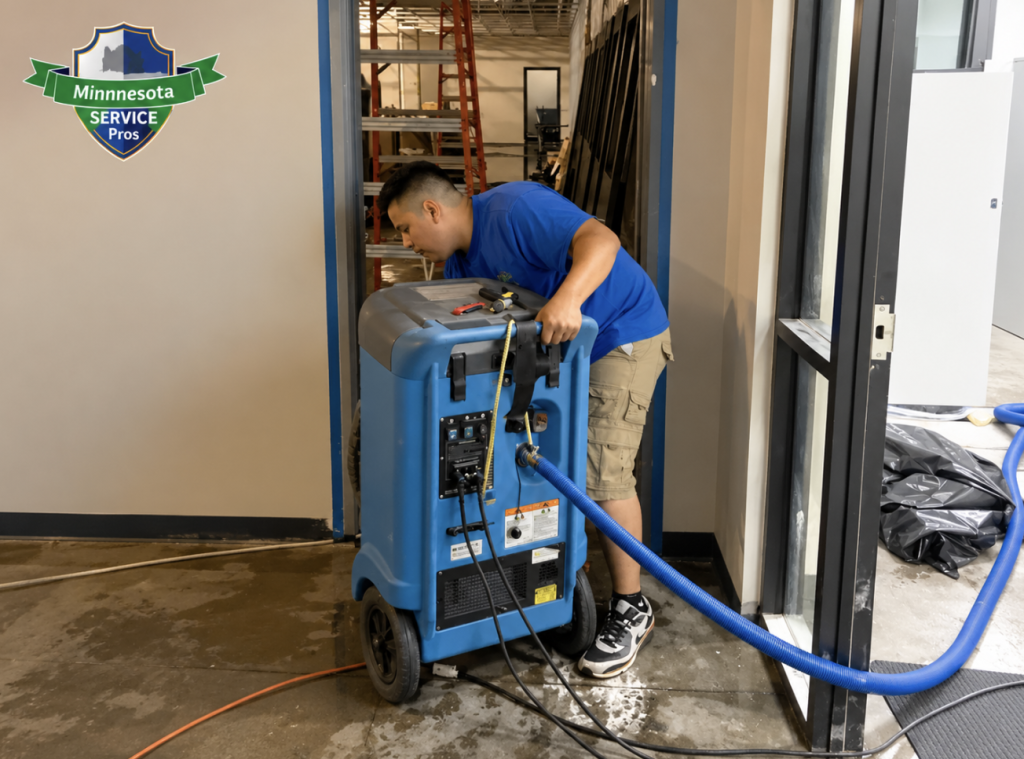
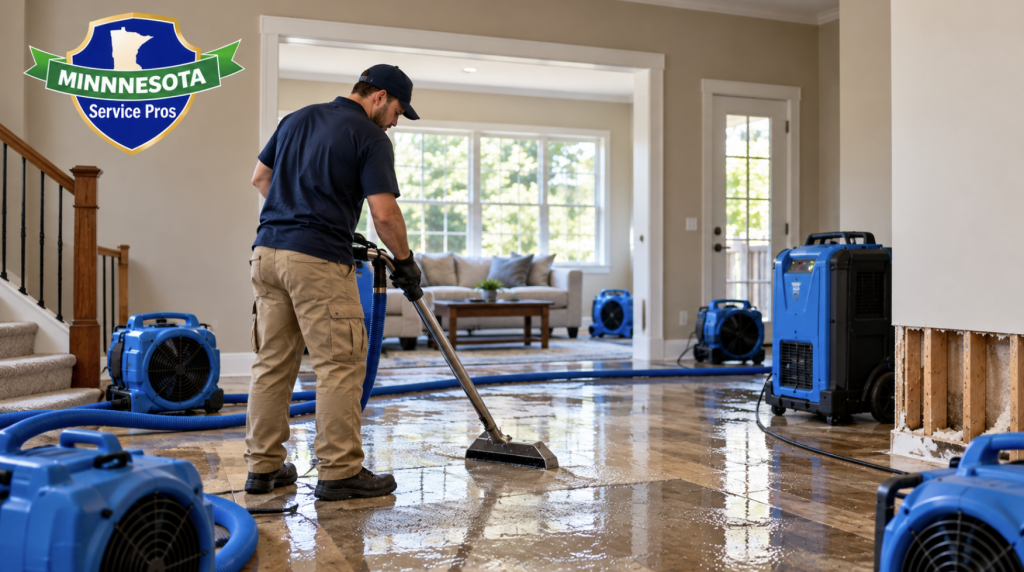
Our technicians wear appropriate personal protective equipment and use containment when needed to limit the movement of contaminated water, residue, and airborne particles. Standing wastewater is removed with pumps or extraction equipment. Removal is followed by cleaning, disinfection, odor control, and drying rather than treating the visible water as the entire problem.

Porous materials often require special attention because sewage can soak into carpet pad, drywall, insulation, unfinished wood, particleboard, and other materials that cannot be reliably cleaned. We evaluate each item based on the type and length of exposure, its condition, and whether safe restoration is practical. Material removal may be necessary in some areas.

Moisture can remain below flooring, inside wall cavities, under cabinets, and around floor drains after the surface appears dry. Moisture checks help us locate hidden dampness and guide structural drying. Drying the subfloor and surrounding materials is important because trapped moisture can contribute to deterioration, persistent odor, and later microbial growth.

Cleaning and disinfection address residue on hard, cleanable surfaces. We also work to reduce odors at their source instead of simply masking them with fragrance. The exact methods depend on the affected materials, the amount of wastewater, and the condition of the area.

Sewage Cleanup company serving Bloomington, Minnesota

Who We Help in Bloomington

We work with Bloomington homeowners dealing with sewage backups in basements, bathrooms, laundry rooms, kitchens, and utility areas. A blocked line can affect a single room, while a backup through a floor drain may spread across a larger finished basement.

Landlords, condo owners, and property managers may need a coordinated plan when wastewater affects shared walls, several units, hallways, mechanical spaces, or common laundry rooms. We help separate affected areas, identify access needs, and explain which materials require removal or drying.

Our restoration team also handles larger commercial and institutional cleanup needs when wastewater affects offices, retail areas, healthcare spaces, schools, multifamily buildings, or industrial properties. Small incidents and broad losses require different planning, but both benefit from early assessment and careful documentation.

What to Expect From Our Sewage Removal and Cleanup Process

We focus on the relationship between removal, cleaning, and drying. Pumping out standing water without addressing contaminated materials or hidden moisture can leave the underlying problem unresolved. Our technicians evaluate the full affected area before recommending the next steps.

Clear communication matters when your home or business cannot be used normally. We explain what we find, which areas should remain off limits, what may need to be removed, and how drying will be checked. You should not have to guess whether a surface has been cleaned or whether a wall is still damp.

We are registered with the BBB in Minnesota, and our technicians are IICRC certified. Those qualifications support a structured approach to water damage restoration and contaminated-water work, while the conditions at your property still guide the actual plan.

  1. Safety and source assessment: We inspect the affected rooms, ask what happened, and determine whether the sewage source has stopped. We also look for electrical, slip, structural, and access concerns before work begins.
  2. Containment and protection: Depending on the layout and level of contamination, we isolate affected areas and protect nearby surfaces and belongings. Occupants should stay out of contaminated areas unless our team gives different instructions.
  3. Wastewater removal: Pumps, extractors, and other equipment remove standing wastewater and saturated contents. We take care around toilets, floor drains, plumbing fixtures, and low areas where wastewater may collect.
  4. Material evaluation: We inspect flooring, carpet pad, drywall, insulation, cabinets, baseboards, and other contents. Materials that cannot be safely cleaned may need controlled removal and disposal.
  5. Cleaning and disinfection: Hard, salvageable surfaces are cleaned and treated with appropriate disinfecting methods. We address residue and odor while reducing the chance of cross-contamination to unaffected rooms.
  6. Drying and verification: Air movement and dehumidification help dry structural materials. Moisture checks guide equipment placement and help confirm when affected areas have reached an appropriate dry condition.
  7. Documentation and next steps: We record affected areas, visible conditions, removed materials, and drying progress as appropriate. You receive an explanation of remaining work and any concerns that need attention from a plumber, electrician, or other professional.

What Bloomington Property Owners Should Know

Bloomington includes a mix of older homes, finished basements, townhomes, condominiums, apartment buildings, and commercial properties. Building age and construction affect how wastewater travels and where moisture may be hidden. Finished lower levels can have carpet, drywall, insulation, and built-in storage that require a careful evaluation after a backup.

Low areas near floor drains, laundry equipment, bathrooms, and utility rooms may collect wastewater first. A backup can also move beneath flooring or into wall assemblies through seams, cracks, and openings around plumbing. We check beyond the visibly wet spot so the cleanup plan matches the actual spread.

Properties connected to shared plumbing or sewer systems may need coordination with a plumber, building manager, association, or utility contact. We focus on removing and restoring the affected area while the responsible party addresses the cause when that work is outside restoration.

Sewage Cleanup help for property owners in Bloomington, Minnesota

Conditions That Can Contribute to Sewer Backups

Freezing temperatures can contribute to burst pipes, blocked lines, and sudden releases in vulnerable plumbing areas. When wastewater follows a freeze-related failure, water removal and sanitation may need to happen alongside repairs to the damaged line or building materials.

Spring thaw and heavy rain can increase pressure on drainage systems and contribute to basement seepage or sewer backups in some properties. Rain does not make wastewater safe to handle. If sewage mixes with outside water, treat the affected area as contaminated until it has been assessed and cleaned.

Summer storms can overwhelm drains or expose weaknesses in lower-level plumbing and drainage. Warm, damp conditions may also make odor more noticeable. Prompt removal, cleaning, and drying are useful in every season, even when the visible amount of water seems small.

A Common Sewer Backup Cleanup Scenario in Bloomington

A Bloomington homeowner might discover wastewater around a basement floor drain after using a sink, toilet, or washing machine. We may find that the visible pooling is only part of the affected area, with moisture beneath flooring or at the base of nearby walls. Our assessment would separate the plumbing issue from the restoration work, contain the room, remove contaminated water, evaluate porous materials, and begin cleaning and drying where appropriate.

In a multifamily or commercial setting, a small restroom overflow can affect a corridor, neighboring suite, or space below. Our team may need to plan access around occupants, protect clean areas, document affected materials, and schedule extraction and drying so the property can continue operating as safely as possible.

What Our Customers Say

“Our upstairs bathroom line let go around two in the morning and water was coming through the kitchen ceiling. I called expecting to leave a voicemail and someone actually picked up. The crew was at the house in under an hour with fans and a pump. They walked me through what they were doing instead of just working around me, and by the third day everything read dry.”

— Kate Williams

Commercial Sewage and Wastewater Cleanup

Bloomingtonu2019s South Loop District, American Boulevard corridor, and Interstate 494 corridor include offices, retail, hospitality, multifamily housing, and other occupied properties. Wastewater incidents in these settings require attention to access, public safety, tenant communication, business interruption, and the size of the affected area. We plan extraction, containment, drying, and documentation around the propertyu2019s layout and operating needs without assuming that every incident follows the same schedule.

For offices, retail properties, restaurants, and hospitality spaces, we can help organize affected-area containment, wastewater removal, cleaning, and drying around employees, customers, deliveries, and building access. The safest plan may involve isolating one room or coordinating work across several connected areas.

Multifamily, condominium, healthcare, and school properties often require communication with managers, residents, facilities staff, or other responsible parties. We can document visible impacts, identify shared or affected areas, and help establish a sequence for extraction and drying while limiting unnecessary exposure to occupants.

Larger losses in industrial or commercial buildings may involve multiple rooms, floor drains, mechanical spaces, stored contents, or elevated drying needs. Our team evaluates the scale before equipment placement and keeps the work focused on removal, sanitation, material decisions, structural drying, and progress documentation.

We can plan our service around projects of different sizes, from smaller affected areas to larger losses involving retail properties, offices, hospitals, schools, condos and multifamily buildings, and industrial properties.

Estimated Sewage Cleanup Pricing

Every loss is different, so these general ranges are provided only to help with early planning. Your final cost can change based on the source of the problem, affected square footage, materials, contamination, access, equipment needs, drying time, demolition, cleaning, and repairs.

  • Small project: $1,000–$3,500+
  • Moderate project: $5,000–$10,500
  • Large project: $10,500+

These prices are estimates for general reference only, not a quote for your property. An onsite inspection is required before our team can provide a complete price estimate. The affected area, materials, moisture or contamination, equipment needs, and full scope of work all have to be evaluated first.

Working With Insurance After Property Damage

We can help you organize basic documentation about affected areas, visible damage, removed materials, and drying progress for discussion with your insurance representative. Coverage depends on your policy and the cause of loss, so contact your insurer promptly and keep receipts, photographs, and records related to the incident. Our documentation does not determine coverage or guarantee reimbursement.

Popular insurance companies we work with include: State Farm, Allstate, Farmers Insurance, Travelers, Liberty Mutual, American Family Insurance, USAA, and Nationwide.

Our team can help document the damage and work performed, but coverage and claim decisions depend on your policy, the cause of loss, and your insurance carrier. You should contact your carrier directly with coverage questions.

Sewer Backup Cleanup in Nearby Communities

Our service area also includes nearby communities such as Minneapolis, Minnetonka, and Maple Grove.

Sewage and Sewer Backup Cleanup FAQs

What should I do before sewage cleanup begins?

Keep people and pets away from the affected area, avoid touching wastewater, and do not use contaminated plumbing fixtures until the source is evaluated. If water is near electrical equipment, avoid entering the area and contact the appropriate professional. Photographs can help document the condition, but do not delay safety measures to take them.

Can I clean up a small sewage spill myself?

Contaminated water can contain harmful microorganisms and may spread beyond the visible surface. Small, isolated incidents still require proper protective equipment, removal of porous materials when needed, cleaning, disinfection, and drying. If the source is unknown, the water has spread, or anyone in the property is medically vulnerable, professional assessment is the safer choice.

Does sewage cleanup include fixing the sewer or plumbing problem?

Restoration removes contamination and addresses affected building materials, but a plumber or sewer professional may be needed to repair the blocked or damaged line. We look for an active source during our assessment and explain when another trade should be involved before restoration work can be completed.

Will carpet and drywall always need to be removed?

Not always. We evaluate the material, the type of exposure, how long it was wet, and whether it can be safely cleaned and dried. Carpet pad, insulation, particleboard, and lower sections of drywall are often more difficult to restore after sewage exposure, while some hard surfaces may be cleaned and disinfected.

How do you find moisture that I cannot see?

Our technicians use moisture checks and visual inspection to evaluate flooring, subfloors, walls, cabinets, and other areas near the release. We consider how wastewater traveled, including movement under flooring and through openings around plumbing. Drying equipment is adjusted based on these findings rather than surface appearance alone.

Can you help with an insurance claim?

We can provide service documentation such as affected-area observations, photographs when appropriate, material notes, and drying information. Your insurer decides whether the loss is covered and what payment applies. Keep your policy information available and ask your adjuster which records or approvals are required.

Scroll to Top