

Standing water can spread beyond one room and soak floors, walls, and belongings. If water is near outlets, appliances, your furnace, water heater, or electrical panel, do not step into it. Move people away and wait for safe electrical guidance.
Our Rochester team offers a quick one-hour local response for homes, rentals, and businesses. IICRC-certified technicians remove small or large amounts of standing water, then check for moisture below the surface.
Fast removal helps limit swelling, stains, and lost strength in wet materials. Visible water is only the first concern; the building also needs careful moisture checks and drying.
Water Removal and Pump-Out Service for Rochester Properties
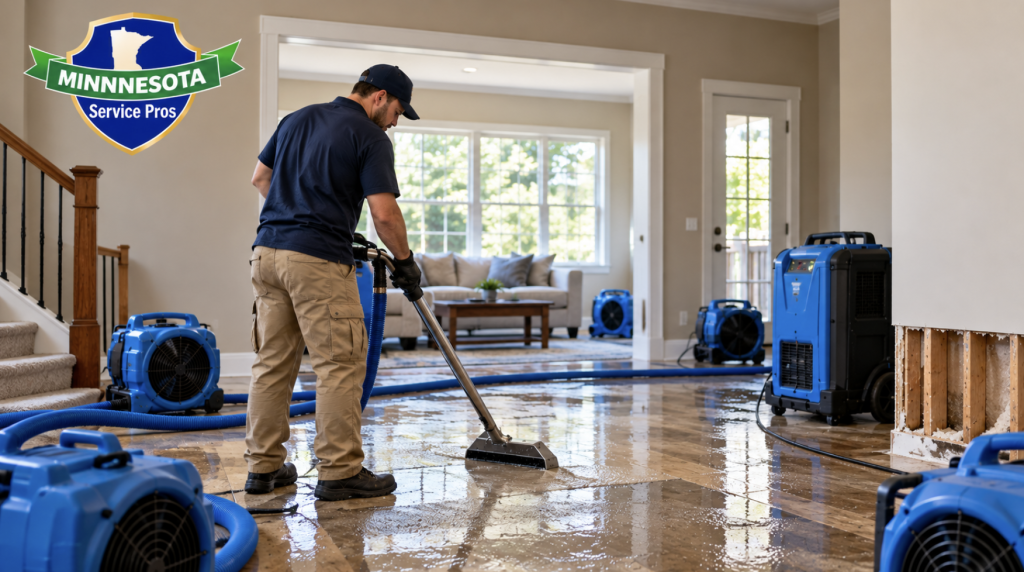
We remove standing water with portable extractors and submersible pumps. Equipment choice depends on water depth, the source, and the affected materials.
Wet carpet often holds water in the pad below it. Hard-surface floors can trap moisture along edges, seams, and beneath the flooring, so we check those areas instead of judging by touch.
Water can move into subfloors, drywall, and wall cavities. Moisture meters help us find damp areas that look dry from the outside.
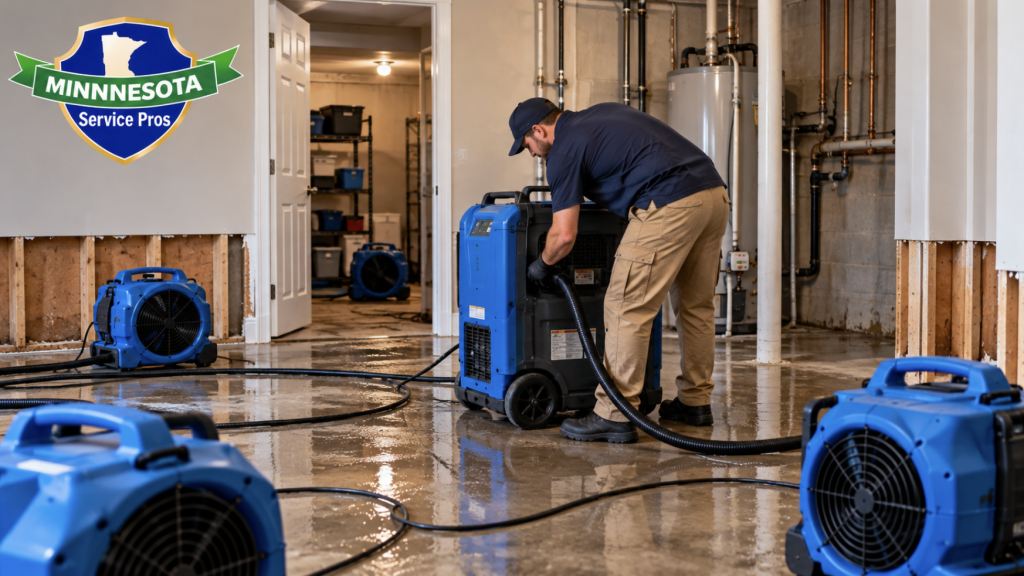
Extraction connects directly to structural drying. After water removal, air movers and dehumidifiers help dry building materials and lower indoor moisture.
Who We Help
Homeowners call after plumbing leaks, water heater failures, sump pump failures, appliance leaks, or storm intrusion. We help identify which rooms and materials need attention.
Landlords and property managers need clear information about affected units, shared spaces, and tenant safety. Our technicians document moisture conditions during cleanup.
We also work with businesses that need water removed while keeping clean areas accessible.
Some water problems need another trade first. A plumber should repair an active supply line, and an electrician should address unsafe electrical conditions. We can continue removal and drying after the area is safe.
What to Expect From Our Water Removal Process
- Safety check: We check immediate safety and identify the water source. Stop the leak through the proper trade before cleanup continues.
- Moisture inspection: We inspect floors, walls, contents, and hidden areas. Moisture meters help find absorbed water below carpet, inside walls, and beneath flooring.
- Water removal: We remove standing water with pumps or extractors. We work carefully around baseboards, cabinets, furnishings, and other items that may hold moisture.
- Drying setup: We place air movers and dehumidifiers to support drying. Equipment placement depends on room size, materials, and airflow.
- Follow-up readings: During drying, our technicians take additional readings. A wall can feel dry while moisture remains inside.
- Next steps: We explain the remaining work. Damaged materials, plumbing repairs, electrical repairs, and rebuilding may need separate specialists.
What Matters in Rochester
Water from a clean supply line is handled differently from water that sat on a floor or mixed with outside debris. Tell us what happened and how long the water remained.
Cold weather can make wet building materials harder to dry. Indoor temperature, ventilation, and humidity all affect the process.
Do not run household appliances through standing water. Avoid wet outlets and electrical equipment until a qualified professional confirms they are safe.
Seasonal Conditions That Can Lead to Standing Water
Winter freeze damage can release water from broken pipes and affect several rooms quickly. Shut off the water only if you can reach the valve safely.
Spring and summer storms can bring water through damaged roofs, doors, windows, or other openings. We remove interior water, while roof and exterior repairs need the proper contractor.
What Our Customers Say
“We got about six inches in the finished basement after the storm came through in June. I called three places that morning and they were the only one who gave me a straight answer about when they could actually be there. Their crew showed up that afternoon, pulled the water out and helped finish the entire mitigation process. We were pleased with their work and would recomment them to all of our neighbors.”
— David Lyons
Commercial Water Removal for Larger Properties
Commercial water removal requires planning around customers, staff, tenants, and clean areas. We can separate affected spaces, protect access routes, and schedule work around building operations.
Large buildings may have layered flooring, shared walls, elevators, or several affected rooms. Our team checks connected areas so drying doesn't stop at the first visible pool.
Estimated Water Removal and Extraction Pricing
These ranges are a starting point. Price changes with the size of the loss, what got damaged, and the work needed to clean or dry it.
- Small project: $1,000–$3,500+
- Moderate project: $5,000–$10,500
- Large project: $10,500+
These are estimates, not quotes. We need to see the damage before we can give you a full price. An onsite inspection shows us the size of the loss and what needs to be cleaned, removed, or dried.
Working With Insurance
Keep photos, videos, invoices, and notes about when the water started. We can document affected materials and drying progress, but your insurer decides coverage and claim payment. If your insurer is State Farm, Allstate, Farmers Insurance, Travelers, Liberty Mutual, American Family Insurance, USAA, or Nationwide, ask your adjuster which records and repairs they require.
We often work with insurers such as Nationwide, American Family Insurance, and Liberty Mutual.
We can document the damage and the work we do. We can’t decide what your policy covers. Ask your carrier or adjuster about coverage.
Water Removal Services in Nearby Communities
Our service area also includes nearby communities such as Minnetonka, Maple Grove, and St Paul.
Water Extraction and Water Removal FAQs
How quickly should standing water be removed?
Standing water should be removed as soon as it's safe. Fast removal limits absorption into carpet, flooring, drywall, and subfloors.
Is it safe to walk through water in my basement?
Do not walk through water near outlets, appliances, the furnace, water heater, or electrical panel. Leave the area and get qualified electrical guidance.
Can you remove water from carpet and carpet pad?
Yes, we can extract water from carpet and assess the pad below it. Saturated pad often needs different treatment than the carpet surface.
Will water extraction dry my walls too?
Removal takes out pooled water, but walls need moisture checks and controlled drying. Air movers and dehumidifiers help dry damp materials after extraction.
How long will the drying process take?
Drying time depends on the water amount, materials, airflow, temperature, and indoor humidity. We use follow-up readings instead of guessing from the surface.
Do I need a plumber before cleanup?
An active plumbing leak needs a plumber or another qualified repair professional. We can remove released water and dry the area after it's safe.