Water Extraction in Edina, Minnesota

Water Extraction services in Edina, Minnesota

Water extraction removes standing and absorbed water from your Edina property before it causes more damage. We help homeowners, landlords, property managers, and businesses address water from plumbing leaks, failed water heaters, sump pump problems, appliance overflows, and storm intrusion. Acting promptly can limit damage to carpet, flooring, drywall, cabinets, and structural materials while reducing the chance that hidden moisture leads to mold growth or lingering odors.

We begin by identifying the water source and checking how far the moisture has traveled. Our IICRC-certified technicians use suitable extraction equipment, moisture meters, and drying equipment based on the conditions we find. We serve Edina and the wider Minneapolis-St. Paul Metro Area, where seasonal storms, freezing temperatures, and varied housing construction can all affect how water moves through a property.

Water removal is not complete just because the visible puddle is gone. Water can remain under carpet, inside carpet pad, below flooring, beneath cabinets, or within wall cavities. Our work focuses on removing accessible water and determining what still needs to dry so you can make informed decisions about the next steps.

Water Removal and Pump-Out Service for Edina Properties

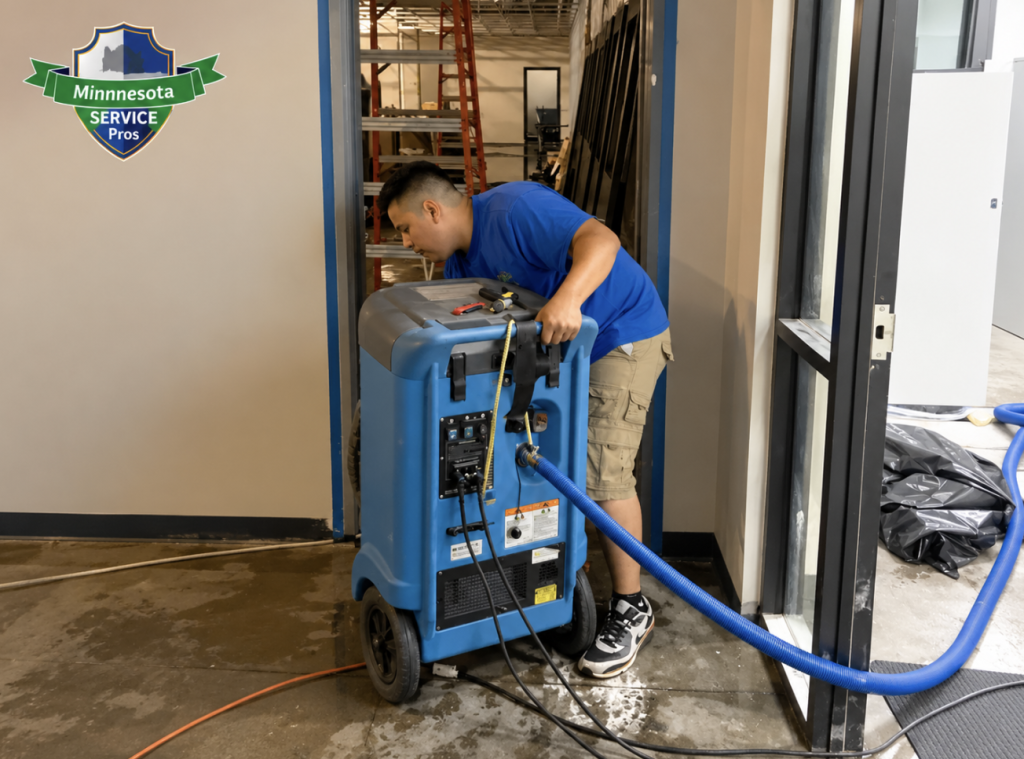
We use portable extractors for wet carpet, carpet pad, upholstery, and smaller affected areas. When a property has substantial standing water, submersible pumps may be needed first to move water out safely and efficiently. The equipment choice depends on the depth, volume, type of water, and materials involved.

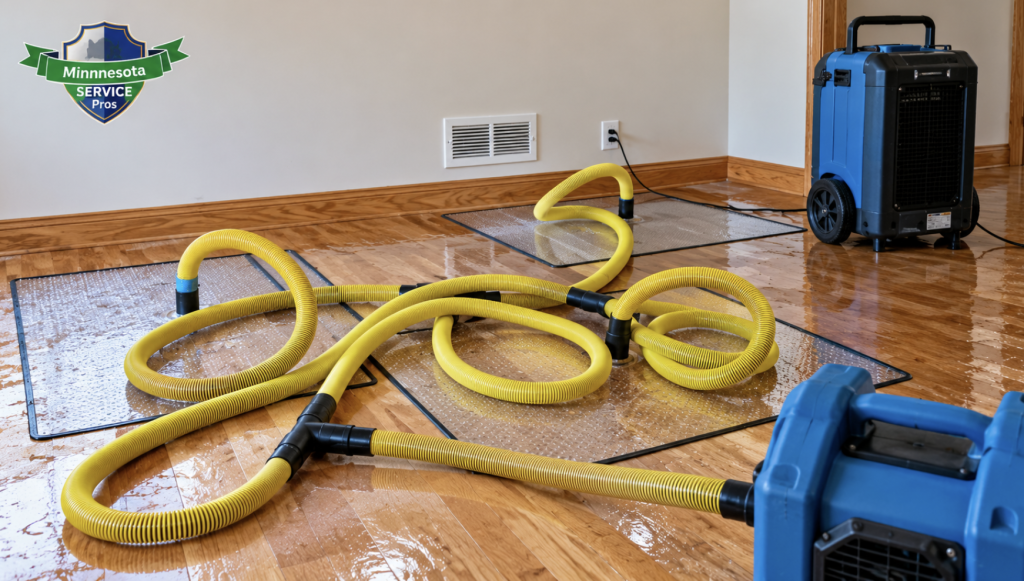
Hard-surface flooring can hold water at seams, edges, and beneath the finished surface. We inspect around transitions, baseboards, cabinets, and appliances to look for moisture that is not visible. Water beneath flooring can affect subfloors and may cause swelling, separation, staining, or odor if it remains in place.

Extraction is closely connected to structural drying. After removing standing water, we may place air movers and dehumidifiers to help pull moisture from carpet, wood, drywall, framing, and other materials. We use moisture meters during the process to track conditions rather than relying only on how a surface feels.

The water source matters. Clean water from a supply line may create different concerns than water from a drain backup, toilet overflow, or outside intrusion. We can explain what we observe and what additional safety measures or specialized work may be needed. If the source is still active, it must be controlled before extraction can be effective.

We document affected areas, visible conditions, equipment placement, and moisture readings as appropriate. This information helps you understand the scope of the work and can provide useful support when you discuss the loss with your insurer, property manager, plumber, or building representative.

Water Extraction company serving Edina, Minnesota

Who We Help in Edina

We help Edina homeowners dealing with wet carpet after a washing machine overflow, water heater failure, refrigerator line leak, or plumbing problem. We also work with owners of older homes and newer construction, since water can travel differently through each building.

We support landlords, condominium owners, and multifamily property managers when a leak affects one unit, neighboring units, shared walls, hallways, or lower levels. Early moisture checks can help identify whether water has moved beyond the room where the problem was first noticed.

We provide extraction planning for offices, retail spaces, schools, medical facilities, industrial properties, and other commercial buildings. Our approach accounts for occupied areas, access limits, equipment placement, safety concerns, and the need to keep essential operations moving when possible.

What to Expect From Our Water Removal Process

We keep the focus on the actual condition of your property. Instead of treating every water loss the same way, we consider the source, water category, affected materials, temperature, airflow, and how long the moisture has been present.

Our technicians are IICRC certified, and we are BBB certified in Minnesota. These qualifications do not replace a careful inspection, but they reflect the importance we place on recognized restoration practices and clear communication.

We explain the difference between extraction and drying. Removing visible water is an important first step, but materials may still hold moisture afterward. Moisture monitoring helps us determine whether drying is progressing and whether additional attention is needed.

We can work on small affected areas as well as larger losses when the equipment, access, and project conditions require a broader plan. We explain what we find without asking you to guess which materials are affected or what happens next.

  1. We start by reviewing what happened, when it happened, and whether the water source has been stopped. Tell us about any plumbing work, weather event, appliance failure, or earlier cleanup so we can consider how it may affect the property.
  2. We inspect visible and accessible areas, including floors, carpet, pad, baseboards, lower walls, cabinets, and nearby rooms. Moisture can travel through gaps and beneath finished surfaces, so the first room is not always the full affected area.
  3. We identify standing water and remove it with portable extraction equipment or submersible pumps when appropriate. We protect access paths and work carefully around furniture, flooring, electrical hazards, and other property concerns.
  4. We check materials with moisture meters and note conditions that may require additional drying. If drywall, insulation, flooring, or other materials have absorbed water, we explain the likely drying needs and any visible limitations.
  5. We place air movers and dehumidifiers when structural drying is needed. Air movement helps moisture leave materials, while dehumidification removes moisture from the indoor air. Both are important when water has moved beyond the surface.
  6. We monitor conditions as the property dries. Readings from affected materials and nearby unaffected areas help us compare progress. We adjust equipment when conditions change and explain when the extraction and drying phase is complete.
  7. We provide information about remaining repairs, source correction, or other specialists when those steps fall outside extraction and drying. A plumber, electrician, flooring professional, or building contractor may be needed depending on the cause and damage.

What Edina Property Owners Should Know

Edina has a mix of older homes, remodeled properties, townhomes, condominiums, and larger commercial buildings. Construction details such as finished lower levels, enclosed wall spaces, wood subfloors, and layered flooring can affect where water travels and how long it takes to dry.

Minnesota winters create a risk of frozen or split pipes, especially in unheated areas, exterior walls, utility rooms, and vacant properties. When temperatures rise, a thaw can reveal water damage that began earlier. We look beyond the first wet spot to check nearby materials and lower levels.

Summer storms in the Minneapolis-St. Paul region can bring heavy rain that overwhelms drainage, enters through roofs or windows, or reaches lower-level rooms. Sump pump failures and seepage can also affect basements and finished living areas during wet conditions.

Water may move through a condominium or multifamily building through ceilings, shared walls, chases, and flooring assemblies. A quick inspection of adjacent areas can help identify moisture that is not obvious from the original leak location.

If electricity, contaminated water, unstable materials, or active leaks create a safety concern, avoid entering or disturbing the affected area until it can be assessed safely. Do not use electrical equipment in standing water.

Water Extraction help for property owners in Edina, Minnesota

Seasonal Conditions That Can Lead to Standing Water

During winter, shutoff valves and exposed plumbing deserve prompt attention after a leak. Frozen materials can split and release water later, even if the initial signs seem minor. Keep people away from wet areas near electrical outlets, appliances, and mechanical equipment.

Spring thaw and heavy rain can expose drainage problems, sump pump failures, or water intrusion around foundations. Lower-level carpet and drywall may absorb water quickly, so visible removal should be followed by moisture checks in the pad, subfloor, walls, and nearby storage areas.

Summer storms may produce roof, window, or exterior drainage leaks. Water that enters from outside can affect insulation, wall cavities, ceilings, and flooring. We consider both the amount of water and the time materials remained wet before extraction began.

A Common Flood Water Removal Scenario in Edina

A Plymouth homeowner might discover water spreading from a failed supply line into a kitchen, hallway, and finished lower level. We may arrive to find visible water on the floor, damp carpet pad nearby, and moisture at the base of a wall that looks dry. In that situation, extraction would address the water on and beneath the flooring, while moisture readings would help determine whether the wall or subfloor also needs drying.

In an Edina condominium, a leak from an upper unit might leave a ceiling stain and damp flooring below. We would look at the visible room, nearby wall areas, and any path water may have taken through the building. The affected units and the source location may require coordination, but the extraction plan would remain based on the materials and moisture actually present.

What Our Customers Say

“Our upstairs bathroom line let go around two in the morning and water was coming through the kitchen ceiling. I called expecting to leave a voicemail and someone actually picked up. The crew was at the house in under an hour with fans and a pump. They walked me through what they were doing instead of just working around me, and by the third day everything read dry.”

— Kate Williams

Commercial Water Removal for Larger Properties

For commercial properties, we plan extraction around access, occupants, business hours, security, and safe equipment placement. We can help organize work in offices, retail spaces, schools, hospitals, condominiums, multifamily buildings, and industrial properties while keeping the affected area separated when conditions allow.

Larger losses may involve several rooms, floors, units, or building systems. We assess the water path, available power, drainage, elevator or stair access, and the amount of extraction and drying equipment needed. We also identify areas that should remain closed because of slip hazards, electrical concerns, or contaminated water.

Clear documentation supports communication among owners, facility managers, occupants, insurers, plumbers, and contractors. We can record affected areas, observed conditions, equipment, and moisture monitoring information so decisions about reopening, repairs, and continued drying are based on current property conditions.

We can plan our service around projects of different sizes, from smaller affected areas to larger losses involving retail properties, offices, hospitals, schools, condos and multifamily buildings, and industrial properties.

Estimated Water Removal and Extraction Pricing

Every loss is different, so these general ranges are provided only to help with early planning. Your final cost can change based on the source of the problem, affected square footage, materials, contamination, access, equipment needs, drying time, demolition, cleaning, and repairs.

  • Small project: $1,000–$3,500+
  • Moderate project: $5,000–$10,500
  • Large project: $10,500+

These prices are estimates for general reference only, not a quote for your property. An onsite inspection is required before our team can provide a complete price estimate. The affected area, materials, moisture or contamination, equipment needs, and full scope of work all have to be evaluated first.

Working With Insurance After Property Damage

We can provide documentation such as affected-area notes, photographs when appropriate, equipment information, and moisture readings to help you discuss the loss with your insurance adjuster. Coverage depends on your policy, the water source, exclusions, and the facts of the loss, so your insurer makes the coverage decision. Keep receipts and records related to emergency work and ask your adjuster what information is needed next.

Popular insurance companies we work with include: State Farm, Allstate, Farmers Insurance, Travelers, Liberty Mutual, American Family Insurance, USAA, and Nationwide.

Our team can help document the damage and work performed, but coverage and claim decisions depend on your policy, the cause of loss, and your insurance carrier. You should contact your carrier directly with coverage questions.

Water Removal Services in Nearby Communities

Our service area also includes nearby communities such as Minnetonka, Plymouth, and Brooklyn Park.

Water Extraction and Water Removal FAQs

How quickly should standing water be removed?

Remove it as soon as it is safe to do so. The longer water remains, the more time it has to soak into carpet, pad, flooring, drywall, trim, and subfloors. Prompt extraction can reduce the amount of absorbed water, although the final condition still depends on the source, duration, and materials.

Is water extraction the same as water damage repair?

No. Extraction removes standing and accessible absorbed water. Drying may follow, and repairs may be needed for damaged flooring, drywall, cabinets, trim, or other materials. We explain what we observe during extraction so you can plan for the next stage.

Can wet carpet be saved?

Sometimes. The answer depends on the water source, how long the carpet and pad stayed wet, the amount of contamination, and the condition of the materials. Carpet pad often holds a large amount of water and may not be suitable for restoration in every situation.

Why are moisture meters needed if the floor looks dry?

A surface can feel dry while moisture remains beneath it or inside nearby materials. Moisture meters help identify damp areas in materials such as drywall, wood, and flooring. Readings also help track whether structural drying is progressing.

Should I run fans or a household vacuum?

Avoid using a household vacuum to remove standing water unless it is specifically designed and rated for wet use. Do not operate electrical equipment in or near standing water. Fans can spread contaminated air or move moisture into other areas, so equipment placement is best based on the water source and property conditions.

What should I do before extraction begins?

If it is safe, stop the water source and move small valuable items away from the affected area. Avoid walking through contaminated water, touching electrical equipment, or disturbing damaged materials. Take photographs from a safe location and keep notes about when the loss occurred and what caused it.

Scroll to Top