Water Extraction in Brooklyn Park, Minnesota

Water Extraction services in Brooklyn Park, Minnesota

Water extraction removes standing and absorbed water after a leak, overflow, appliance failure, sump pump problem, or storm-related intrusion. Our team helps homeowners, landlords, and property managers in Brooklyn Park protect flooring, walls, contents, and the structure by removing water before it spreads farther. Quick action can reduce secondary damage, limit odors, and make the drying process more controlled.

We serve homes and businesses across Brooklyn Park, including communities around Tessman Farm, Village Creek, and Edinbrook.

Our local team offers a quick 1-hour response, and our IICRC-certified technicians use the situation at your property to guide the work. We serve both smaller losses and larger cleanup needs across Brooklyn Park and the Minneapolis-St. Paul Metro Area. The first priority is to make the area safer, identify the water source, and determine which materials have been affected.

From wet carpet in a finished basement to water across several rooms, the right response depends on the amount of water, how long it has been present, and whether it may be contaminated. You will receive a clear explanation of what we find and what needs to happen next.

Water Removal and Pump-Out Service for Brooklyn Park Properties

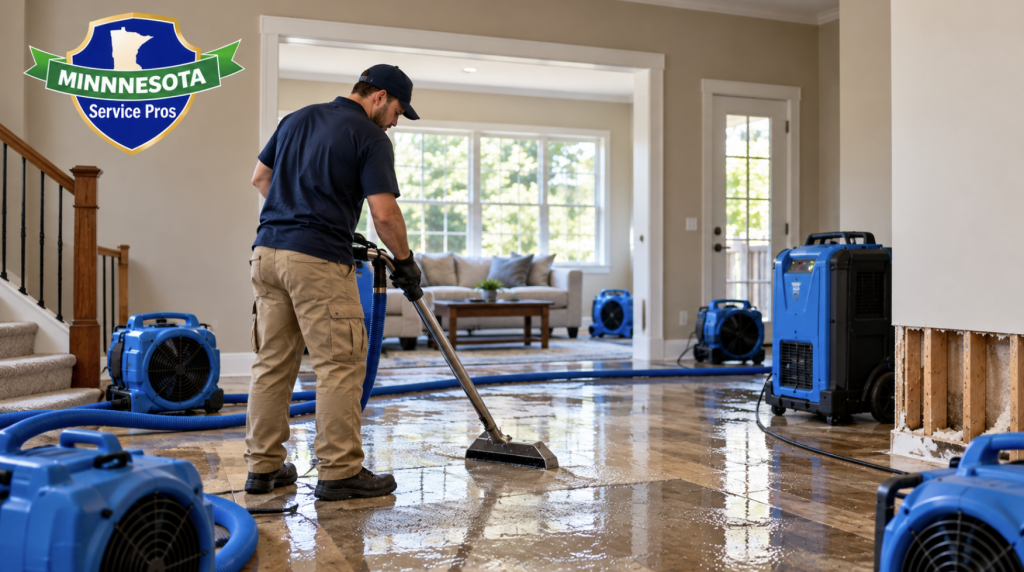
Standing water is removed with equipment suited to the depth and conditions. Submersible pumps can move larger amounts of water, while portable extractors are useful for floors, carpet, upholstery, and areas where controlled vacuuming is needed. Removing visible water is only the beginning; moisture can remain below flooring and inside building materials.

Wet carpet and carpet pad often hold more water than the surface suggests. Hard-surface flooring can also allow water to reach seams, underlayment, and subfloors. Our technicians check these areas with moisture meters and inspect transitions, baseboards, and other places where water may have traveled.

Water can move through drywall, insulation, wall cavities, cabinets, and lower sections of framing. If hidden moisture remains, drying may take longer and the affected materials may develop odor or other damage. We identify areas that need monitoring rather than assuming a room is dry because the floor feels better.

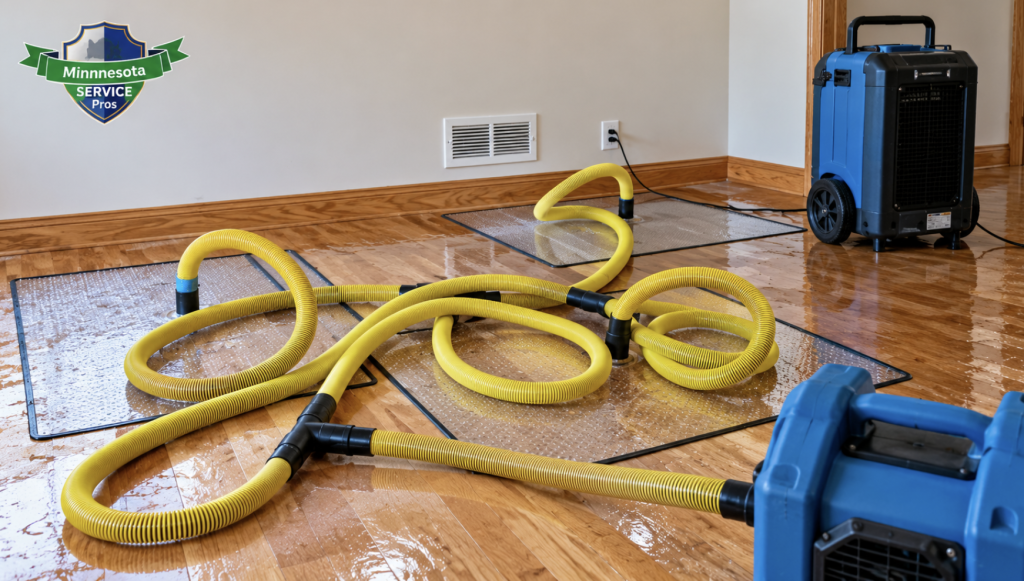
Extraction connects directly to structural drying. After water removal, air movers help increase evaporation and dehumidifiers help control moisture in the air. Moisture monitoring shows whether the structure is drying as expected and helps us adjust equipment or focus on areas that remain damp.

Our work may address water from a broken supply line, plumbing leak, water heater failure, overflowing fixture, appliance, sump pump failure, or storm intrusion. We focus on removing the water and evaluating affected materials. A plumber or other specialist may be needed to repair the source, and we can explain that next step when the cause is outside restoration work.

Water Extraction company serving Brooklyn Park, Minnesota

Who We Help in Brooklyn Park

Homeowners may call us after finding water in a basement, kitchen, bathroom, laundry room, or finished lower level. Rental property owners and managers can also use the service when a leak affects more than one unit or threatens common areas.

We work with occupants who need a practical explanation of what is wet, what can be dried, and what may need additional evaluation. If contents are in the affected area, we can help identify items that should be moved, protected, or assessed before drying begins.

Our approach also fits larger properties, including condominiums, multifamily buildings, offices, retail spaces, schools, healthcare facilities, and industrial areas. The scale may change, but the basic goals remain the same: control the source, remove water, protect people and property, and document drying conditions.

What to Expect From Our Water Removal Process

We are available for a quick 1-hour local response in Brooklyn Park. Response time does not replace a careful assessment, but arriving promptly can help limit how far water travels and how long materials stay wet.

Our technicians are IICRC certified, which supports a methodical approach to water damage assessment, extraction, drying, and documentation. We are also BBB certified in Minnesota. You can ask questions throughout the process and receive explanations in plain language.

A visible puddle does not show the full extent of a loss. Our crew looks below the surface and around the edges of affected areas so the plan is based on moisture conditions rather than appearance alone. We can handle both smaller residential losses and broader commercial or multifamily projects when the affected area requires a larger response.

  1. First, make safety the priority. If water is near electrical outlets, appliances, or electrical equipment, avoid entering the area until it is safe. If the source is active, shut it off only when you can do so without risk. Call the appropriate utility, plumber, or emergency service when necessary.
  2. During the assessment, we identify the likely water source, affected rooms, materials, and any conditions that could change the work. We look for standing water, absorbed moisture, damaged flooring, wet drywall, and water that may have moved into wall cavities or lower building areas.
  3. Next, we set up the needed extraction equipment. Pumps handle deeper or larger volumes, while extractors remove water from flooring and other surfaces. Furniture and contents may need to be raised, moved, or separated from wet materials to allow access and airflow.
  4. After the water pump-out or surface extraction, drying equipment is placed where it can move air and lower humidity effectively. Air movers and dehumidifiers may run for several days, depending on the materials, temperature, humidity, and amount of water absorbed.
  5. Moisture monitoring continues as the structure dries. Our technicians compare readings in affected and unaffected areas, check subfloors and wall edges, and adjust the drying plan when needed. Equipment is removed when the affected materials reach appropriate dry conditions for the situation.
  6. At the end, we explain the work completed, remaining concerns, and any repairs or specialty evaluations that may still be needed. If the water source has not been repaired, that issue must be addressed so new moisture does not undo the drying work.

What Brooklyn Park Property Owners Should Know

Brooklyn Park includes a mix of older and newer single-family homes, townhomes, apartments, commercial properties, and industrial buildings. Construction methods and flooring materials vary from one property to another, so a leak in a finished basement may require a different plan than a supply-line failure in a newer multifamily unit.

Many properties in the northern Minneapolis-St. Paul area have basements or lower-level living and storage areas. Water can collect there after plumbing failures, foundation seepage, heavy runoff, or sump pump problems. A basement may appear dry at the entrance while moisture remains under flooring, behind finished walls, or around utility spaces.

Roads, parking areas, roof drainage, and grading all influence how stormwater reaches a property. During a heavy rain event, water may enter through a window well, door, roof opening, or low foundation area. We evaluate how the water entered because extraction alone will not prevent a repeat problem if the source remains active.

Cold weather brings another concern. Frozen or burst pipes can release water quickly and send it through several rooms or levels. When a building has been closed or unoccupied, the damage may not be discovered until materials have been wet for an extended period. The longer moisture remains, the more carefully affected materials need to be assessed.

Water Extraction help for property owners in Brooklyn Park, Minnesota

Seasonal Conditions That Can Lead to Standing Water

Spring thaw and heavy rainfall can increase runoff around foundations, window wells, and lower-level entrances. Keep an eye on sump pump operation, discharge lines, and areas where water has entered before. If water begins collecting indoors, avoid delaying assessment while waiting for the weather to improve.

Summer storms can bring wind-driven rain, roof damage, and fast surface runoff. Water may affect ceilings, insulation, drywall, and flooring at the same time. Wet contents should be moved only when it is safe and practical, since heavy or saturated items can be difficult to handle without causing injury or spreading damage.

In fall, clogged gutters and downspouts can send more water toward the foundation. Winter brings frozen pipes, ice-related roof concerns, and equipment failures in vacant or lightly heated spaces. Maintaining heat and checking vulnerable plumbing areas can reduce risk, but a failure still needs prompt water removal and drying.

A Common Flood Water Removal Scenario in Brooklyn Park

A Brooklyn Park homeowner might discover water around a failed water heater or sump pump after returning from work. We may find standing water on the floor, wet carpet pad at the room edges, and elevated moisture in the lower drywall. The first steps would be to confirm that the source is controlled, remove standing water, and check whether moisture reached the subfloor or wall cavities.

A larger loss might involve a multifamily building where a plumbing failure affects a hallway, several units, and a shared mechanical area. Our crew would need to plan access, protect occupied spaces, separate work zones, and monitor drying across multiple materials. The example illustrates why water removal and structural drying must be coordinated rather than treated as separate tasks.

What Our Customers Say

“We got about six inches in the finished basement after the storm came through in June. I called three places that morning and they were the only one who gave me a straight answer about when they could actually be there. Their crew showed up that afternoon, pulled the water out and helped finish the entire mitigation process. We were pleased with their work and would recomment them to all of our neighbors.”

— David Lyons

Commercial Water Removal for Larger Properties

Properties along the Highway 169 corridor and West Broadway Avenue commercial corridor can include offices, retail spaces, restaurants, and service businesses, while Brooklyn Park Business Park represents a setting where industrial or warehouse areas may have large floor surfaces and valuable equipment. Water extraction in these properties requires attention to access, employee and customer safety, inventory, electrical systems, operating hours, and the need to keep unaffected areas functioning. Multifamily and institutional buildings may also require coordinated entry, clear work zones, and drying documentation across several rooms or units.

Commercial water removal often requires a written plan for access, occupants, equipment placement, and business continuity. We can separate affected areas from occupied areas where practical and coordinate extraction around safety requirements, inventory, furnishings, and building operations.

Retail, office, healthcare, education, condominium, and multifamily properties may have water spread across corridors, shared walls, mechanical rooms, or several floors. Larger losses can require more pumps, extractors, air movers, and dehumidifiers, along with moisture checks in multiple zones.

Industrial and warehouse settings bring additional planning concerns, including high ceilings, stored materials, machinery, loading access, and electrical hazards. We evaluate the affected space before equipment is placed and explain what areas need to remain clear during extraction and drying. Documentation of moisture readings, equipment placement, and progress can help property managers organize repairs and communicate with owners or occupants.

We can plan our service around projects of different sizes, from smaller affected areas to larger losses involving retail properties, offices, hospitals, schools, condos and multifamily buildings, and industrial properties.

Estimated Water Removal and Extraction Pricing

Every loss is different, so these general ranges are provided only to help with early planning. Your final cost can change based on the source of the problem, affected square footage, materials, contamination, access, equipment needs, drying time, demolition, cleaning, and repairs.

  • Small project: $1,000–$3,500+
  • Moderate project: $5,000–$10,500
  • Large project: $10,500+

These prices are estimates for general reference only, not a quote for your property. An onsite inspection is required before our team can provide a complete price estimate. The affected area, materials, moisture or contamination, equipment needs, and full scope of work all have to be evaluated first.

Working With Insurance After Property Damage

We can provide documentation such as the observed damage, affected areas, moisture findings, work performed, and drying progress for your records. Coverage depends on your policy and the cause of loss, so contact your insurer promptly and ask about required procedures, deductibles, and claim documentation. Keep receipts and photographs when it is safe to do so, and do not discard damaged materials before your insurer or adjuster explains the process unless they create a safety risk.

Popular insurance companies we work with include: State Farm, Allstate, Farmers Insurance, Travelers, Liberty Mutual, American Family Insurance, USAA, and Nationwide.

Our team can help document the damage and work performed, but coverage and claim decisions depend on your policy, the cause of loss, and your insurance carrier. You should contact your carrier directly with coverage questions.

Water Removal Services in Nearby Communities

Our service area also includes nearby communities such as Woodbury, Minnetonka, and Minneapolis.

Water Extraction and Water Removal FAQs

How quickly should water extraction begin?

Begin as soon as it is safe. Standing water can spread into flooring, subfloors, drywall, and contents, while absorbed water becomes harder to remove as time passes. Our quick 1-hour local response helps us start assessing the affected area promptly.

Can you remove water from carpet and carpet pad?

Yes, we can extract water from wet carpet and evaluate the pad, flooring beneath it, and nearby walls. The condition of the water, how long the materials were wet, and the type of carpet and pad all affect whether drying or replacement is appropriate.

Is visible water removal enough?

Usually not. Water may remain under flooring, inside wall cavities, around baseboards, or in subfloors after the surface looks dry. Moisture meters and follow-up readings help determine whether structural drying is complete.

What should I do before the technicians arrive?

Keep people and pets away from unsafe areas, avoid electrical hazards, stop the water source if you can do so safely, and move small items from the affected area when practical. Do not operate electrical equipment in standing water or walk through contaminated water.

Will dehumidifiers and air movers be needed after extraction?

Often, yes. Extraction removes liquid water, but materials may still hold moisture. Air movers support evaporation and dehumidifiers remove moisture from the air. Equipment needs depend on the affected materials, room conditions, and moisture readings.

Can water extraction address a basement after a sump pump failure?

We can remove standing water and evaluate the basement for moisture in flooring, walls, contents, and structural materials. The sump pump or drainage problem also needs to be corrected so additional water does not enter after cleanup.

Scroll to Top