
Water extraction removes standing and absorbed water before it can cause more damage to your home or building. Our team helps property owners in Plymouth recover from plumbing leaks, appliance failures, sump pump problems, storm intrusion, and other water emergencies. Acting promptly can limit damage to flooring, walls, cabinets, insulation, and personal belongings.
Property owners throughout Plymouth can call our team for help, including those in and around Plymouth Creek, Bassett Creek, and Medicine Lake.
Our technicians assess where the water came from, how far it traveled, and which materials may be holding moisture below the surface. We then remove accessible water and plan the structural drying work needed to help protect your property from lingering dampness, odors, and secondary damage.
We provide a quick one-hour local response for urgent water problems when available. Our IICRC-certified technicians use established restoration practices, and we are BBB certified in Minnesota. You receive a clear explanation of the affected areas and the next steps before work begins.
Water Removal and Pump-Out Service for Plymouth Properties
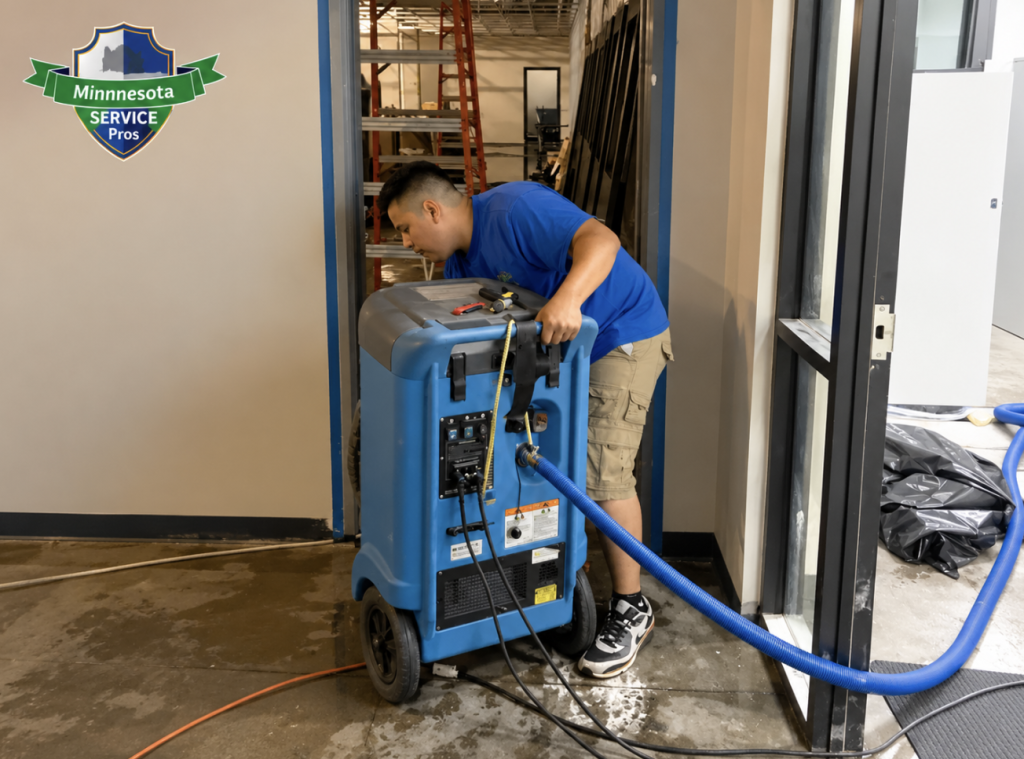
Standing water is removed with equipment suited to the amount and location of the loss. Portable extractors can handle wet carpet and smaller areas, while submersible pumps may be needed for deeper flooding or a larger water pump-out.
Water removal is only one part of the restoration process. Carpet pad, subfloors, drywall, wall cavities, and other porous materials can absorb water even after the visible surface looks dry. Moisture meters help our technicians locate damp areas that cannot be identified by sight alone.
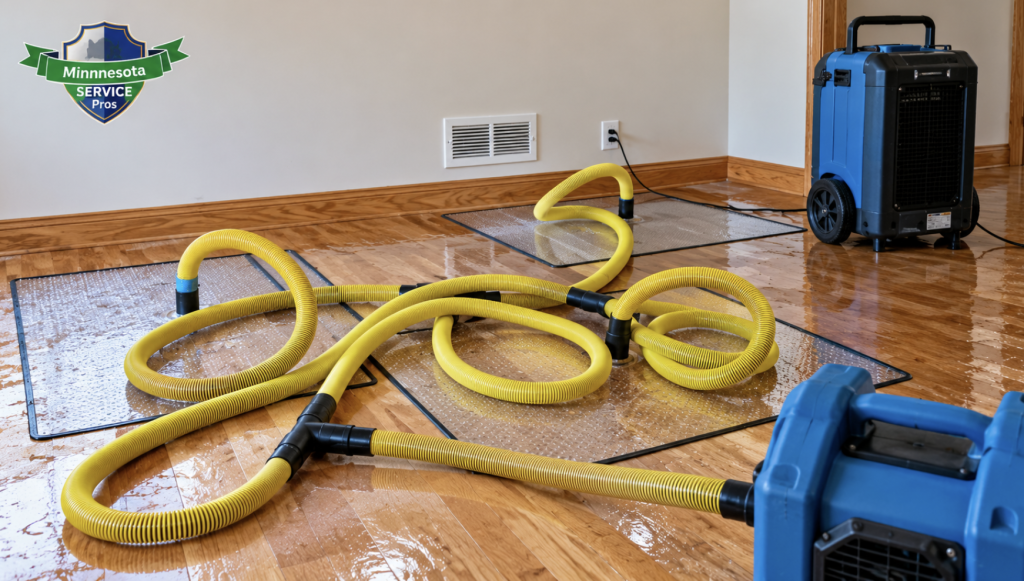
Hard-surface flooring may allow water to travel underneath or between sections. We check edges, seams, transitions, cabinets, and nearby walls so that hidden moisture is not overlooked. Some materials can be dried in place, while others may need removal based on their condition and the type of water involved.
After the initial pump-out or extraction, air movers and dehumidifiers help move moisture out of the structure. Our crew monitors conditions during structural drying rather than assuming that a room is dry because the standing water is gone.
The water source matters. Clean water from a supply line may require a different response from water affected by a drain backup, toilet overflow, or outdoor flooding. We help identify immediate safety concerns and explain when additional cleaning, contents handling, or specialized treatment may be needed.
Who We Help in Plymouth
Homeowners may need water extraction after a burst pipe, failed water heater, overflowing appliance, backed-up drain, or sump pump failure. Fast removal can help reduce the time that flooring, trim, drywall, and belongings remain exposed.
Property managers and owners of condos or multifamily buildings often need a coordinated response when water moves between units or affects shared walls, hallways, mechanical spaces, and lower levels. Access planning and moisture checks help define the full area that needs attention.
Small losses and larger projects require different equipment and planning, but both benefit from an early assessment. We work with you to identify the source, establish safe access, remove water, and organize drying around the condition of your property.
What to Expect From Our Water Removal Process
A visible puddle does not show the entire extent of a loss. Our technicians look for moisture beneath carpet, around baseboards, below cabinets, and inside accessible wall areas so you can make decisions based on more than surface appearance.
Clear communication matters during a stressful property problem. We explain what we find, what the equipment is doing, which materials may need further evaluation, and what conditions we will monitor as drying continues.
Our IICRC-certified technicians follow restoration principles for water removal and structural drying. We are also BBB certified in Minnesota. These credentials do not replace a property assessment, but they give you useful information about the standards and accountability behind our work.
- First, we identify the water source and help you address it when possible. If water is still entering the property, stopping the leak or arranging the needed plumbing, appliance, or sump pump repair is important before removal can be completed.
- Next, we inspect affected rooms and nearby areas. Moisture meters, visual checks, and information from you help us trace the spread. We also consider electrical hazards, slip risks, contaminated water, damaged ceilings, and other conditions that may affect safe work.
- Standing water is then removed using extractors, pumps, or both. Furniture and movable belongings may be repositioned when that helps expose wet flooring or improve access. The approach depends on the depth of the water, the materials involved, and the water category.
- Drying equipment is placed to move air and control humidity. Air movers support evaporation, while dehumidifiers collect moisture from the air. Equipment can be noisy and may require a reliable power source, so we explain placement and what to expect in occupied areas.
- Moisture monitoring continues during the drying stage. We compare readings in affected materials with readings in unaffected areas and adjust equipment as conditions change. When the structure reaches appropriate dry conditions, we review the work completed and discuss any remaining repairs or restoration needs.
What Plymouth Property Owners Should Know
Plymouth includes a mix of single-family homes, townhomes, condominiums, apartments, and commercial properties. Different construction types can change how water travels through floors, wall cavities, shared assemblies, and finished spaces.
Properties near drainage areas, ponds, and lower-lying sections can face added exposure during heavy rain or rapid snowmelt. Exterior water can enter through doors, foundation openings, window wells, or overwhelmed drainage systems, while indoor losses often begin with plumbing or mechanical equipment.
The Minneapolis-St. Paul metro area has many finished lower levels and homes with carpeted living spaces. A small amount of water on a basement floor can reach carpet pad, stored contents, framing, and insulation, making early moisture evaluation useful even when the water appears limited.
Seasonal Conditions That Can Lead to Standing Water
Winter brings frozen-pipe risks, ice-related drainage problems, and water damage after heating or plumbing equipment fails in cold conditions. If a pipe has frozen or burst, avoid entering areas with electrical hazards and arrange for the water source to be controlled as soon as it is safe.
Spring thaw and heavy rain can challenge sump pumps, foundation drainage, window wells, and lower-level entrances. Water entering from outside may carry soil or other contaminants, so avoid treating it like a simple clean-water spill until its source and condition are evaluated.
Summer storms can bring wind-driven rain, roof or siding intrusion, and overwhelmed drainage. Humid weather can also slow evaporation, which is why dehumidification and moisture monitoring remain important after visible flooding has been removed.
Commercial Water Removal for Larger Properties
Plymouth Town Center and the Interstate 494 and Highway 55 corridors include retail, office, service, and mixed commercial properties where an unexpected water loss can affect customers, employees, inventory, equipment, and operating schedules. Extraction and drying plans may need to account for deliveries, tenant access, security, occupied areas, shared mechanical spaces, and the separation of public and work zones.
Commercial water extraction requires careful planning when several rooms, tenant spaces, or building levels are affected. We assess how water is moving through the property, establish safe work areas, and organize pumps, extractors, air movers, and dehumidifiers around the building's access and operating needs.
For offices, retail properties, healthcare or education facilities, condos, multifamily buildings, and industrial spaces, business continuity can depend on controlling the affected area without unnecessarily closing unaffected sections. We coordinate the work area, equipment placement, access points, and drying sequence with the information available at the property.
Larger losses often require more documentation and moisture monitoring than a single-room event. We can help track affected areas, equipment placement, drying progress, and conditions that may require repair or additional restoration. You receive practical information to support communication with occupants, managers, owners, and your insurance representative.
We can plan our service around projects of different sizes, from smaller affected areas to larger losses involving retail properties, offices, hospitals, schools, condos and multifamily buildings, and industrial properties.
Estimated Water Removal and Extraction Pricing
Every loss is different, so these general ranges are provided only to help with early planning. Your final cost can change based on the source of the problem, affected square footage, materials, contamination, access, equipment needs, drying time, demolition, cleaning, and repairs.
- Small project: $1,000–$3,500+
- Moderate project: $5,000–$10,500
- Large project: $10,500+
These prices are estimates for general reference only, not a quote for your property. An onsite inspection is required before our team can provide a complete price estimate. The affected area, materials, moisture or contamination, equipment needs, and full scope of work all have to be evaluated first.
Working With Insurance After Property Damage
Keep photos, notes about when the loss occurred, information about the water source, and records of work performed. We can provide service documentation for your records, while your insurance representative can explain coverage, deductibles, reporting requirements, and claim decisions.
Popular insurance companies we work with include: State Farm, Allstate, Farmers Insurance, Travelers, Liberty Mutual, American Family Insurance, USAA, and Nationwide.
Our team can help document the damage and work performed, but coverage and claim decisions depend on your policy, the cause of loss, and your insurance carrier. You should contact your carrier directly with coverage questions.
Water Removal Services in Nearby Communities
Our service area also includes nearby communities such as Edina, Bloomington, and Woodbury.
Water Extraction and Water Removal FAQs
How quickly should water be removed from my property?
As soon as it is safe to do so. Standing water can move into flooring, drywall, trim, and other porous materials. Prompt removal may reduce the time those materials remain saturated and can make the drying process more manageable.
Can you remove water from carpet and carpet pad?
We can evaluate wet carpet and pad and use professional extraction equipment when the materials and water conditions make that appropriate. The condition of the pad, the length of exposure, and the type of water all affect whether materials can be dried or need removal.
Is water extraction the same as water damage restoration?
No. Extraction focuses on removing standing and absorbed water. Water damage restoration is the broader process, which can include source control, cleaning, structural drying, moisture monitoring, repairs, and treatment of affected contents or materials.
What should I do before your technicians arrive?
If it is safe, stop the water source and turn off affected utilities only when you can do so without electrical or other hazards. Keep people and pets away from standing water, avoid using electrical devices in wet areas, and move undamaged belongings away from the affected space if possible.
Can hidden moisture remain after the floor looks dry?
Yes. Water may remain under flooring, inside carpet pad, behind baseboards, beneath cabinets, or in wall cavities. Our technicians use moisture meters and visual inspection to check areas that may not be dry at the surface.
How long does structural drying take?
The time varies with the amount of water, building materials, temperature, humidity, ventilation, and how long the property was wet. We monitor moisture conditions and adjust equipment rather than relying on a fixed schedule.