Water Extraction removes standing and absorbed water from your home or business after a leak, overflow, appliance failure, sump pump problem, or storm-related intrusion. Our team uses pumps, portable extractors, and moisture checks to reduce the amount of water affecting floors, walls, and other building materials.
Our crews serve properties throughout Maple Grove, including areas around Arbor Lakes, Fish Lake, and Weaver Lake.
Fast action can help limit swelling, staining, odors, and secondary damage. If water has reached electrical equipment, contaminated areas, or hidden spaces, avoid unnecessary contact and call for professional guidance. We provide a quick 1-Hr Local Response in Maple Grove and throughout the Minneapolis-St. Paul Metro Area.
From a wet carpet in one room to a larger property loss, we help you understand what is wet, what must be removed, and what drying work comes next. Our IICRC-certified technicians and BBB Certified in Minnesota status give you useful points of reference while your property is being assessed.
Water Removal and Pump-Out Service for Maple Grove Properties
The first step is identifying the water source and stopping it when possible. Common causes include burst or leaking pipes, failed water heaters, overflowing toilets, appliance hoses, sump pump failures, roof or storm intrusion, and water entering through a foundation or low area.
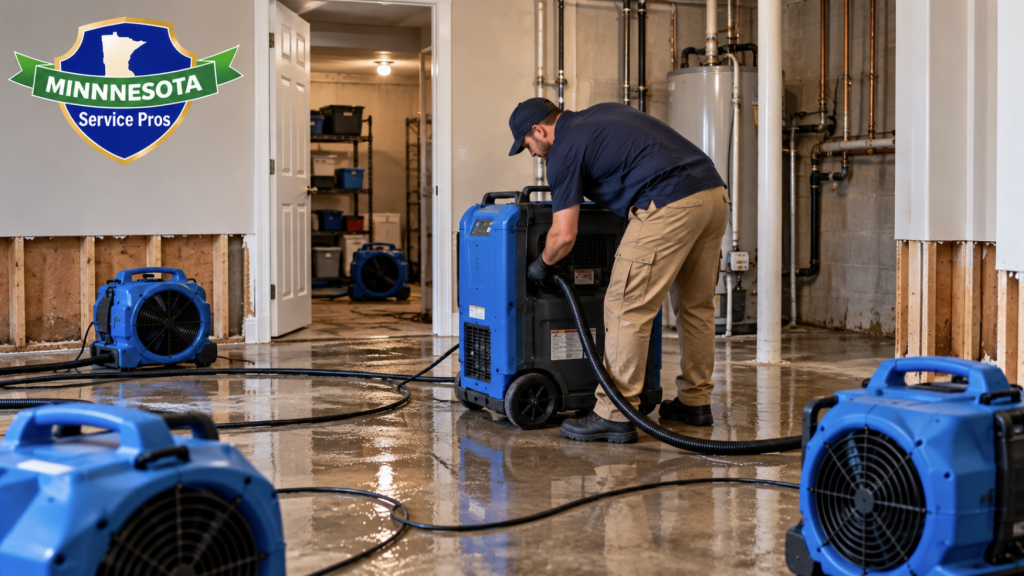
Standing water is removed with submersible pumps or portable extraction equipment, depending on the amount and location. Once the visible water is gone, our technicians check carpet, carpet pad, hard-surface flooring, subfloors, baseboards, drywall, and wall cavities for absorbed moisture.
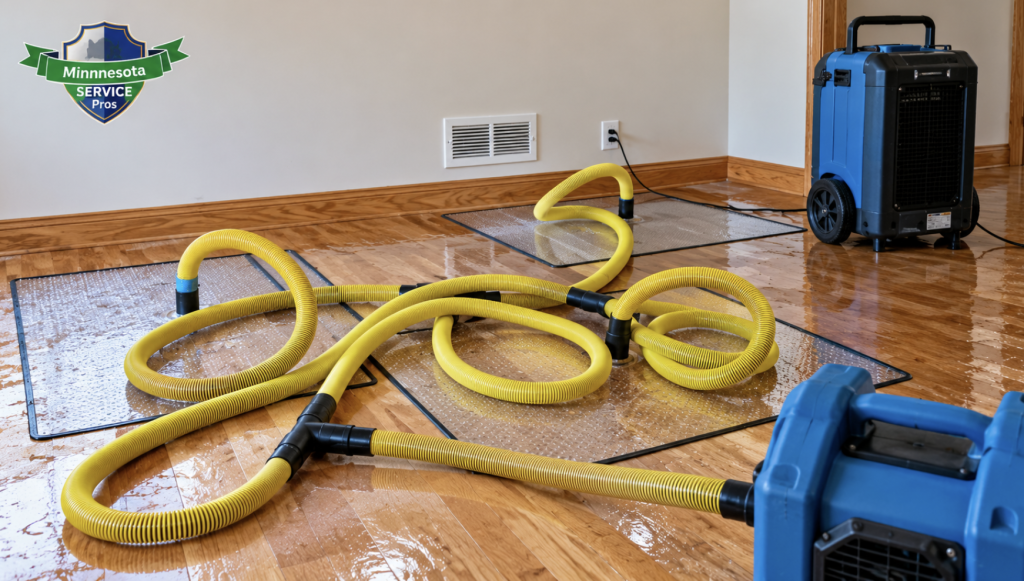
Water removal is only part of the larger restoration process. Structural drying may require air movers and dehumidifiers to move moisture out of materials and control humidity. Moisture monitoring helps show whether drying is progressing below the surface, not just on top of the floor.
Some materials may need special handling or removal if they are swollen, delaminated, permanently damaged, or affected by contaminated water. We explain those decisions before work moves forward whenever conditions allow. Clean water from a supply line, gray water from an appliance or bathroom, and sewage-contaminated water require different safety measures.

Who We Help in Maple Grove
Homeowners often call after discovering a wet basement, soaked carpet, a ceiling stain, or water beneath a sink. We also help landlords, property managers, condo associations, and occupants dealing with damage that affects more than one unit.
Our crew can work on focused residential losses as well as larger extraction and drying projects when water has spread through several rooms or building levels. You receive an explanation of the affected areas and the next practical steps rather than a one-size-fits-all answer.
Property owners should keep people and pets away from standing water when contamination or electrical hazards may be present. Do not use outlets, appliances, or equipment in wet areas, and avoid cutting into walls unless a qualified professional has evaluated the situation.
What to Expect From Our Water Removal Process
Our approach connects visible water removal with the hidden moisture that can remain underneath flooring, behind trim, or inside wall cavities. That connection matters because a dry-looking surface does not always mean the structure is dry.
You will know what our technicians are checking, which equipment is being used, and why monitoring may continue after the initial pump-out or extraction. IICRC-certified technicians apply recognized restoration principles to the assessment and drying process.
We are registered with the BBB in Minnesota, and our technicians are IICRC certified. These qualifications do not replace a property-specific inspection, but they give you helpful information about the standards and training behind our work.
A quick 1-Hr Local Response can be especially useful when water is still spreading or a source has just failed. Timing, access, the water category, and the materials involved all affect the appropriate plan.
- Contact and safety review: We ask what happened, whether the source is controlled, where water is visible, and whether anyone is exposed to electrical or contaminated water hazards.
- Source and damage assessment: Our technicians inspect accessible rooms and materials, look for hidden moisture, and identify the likely path water took through the property.
- Water removal: Pumps and extraction equipment remove standing water from affected areas. Wet carpet, pad, flooring, and other materials are evaluated based on their condition and the type of water involved.
- Drying setup: Air movers and dehumidifiers may be placed to support structural drying. Equipment placement depends on room layout, material type, humidity, and the areas that need to be dried.
- Moisture monitoring: Readings are taken during the process to track moisture in floors, walls, and other materials. Adjustments are made when conditions show that more drying or additional removal is needed.
- Next-step discussion: We explain remaining concerns, cleaning or repair needs, documentation, and questions you may have for your insurer or other property professionals.
What Maple Grove Property Owners Should Know
Maple Grove homes and commercial properties include finished basements, attached garages, slab areas, multifamily units, retail spaces, offices, and newer construction with connected mechanical systems. Water can travel beyond the room where a leak begins, especially through subfloors, wall cavities, and floor transitions.
Low areas and basement spaces may be affected when heavy rain overwhelms drainage, a sump pump stops working, or runoff reaches a foundation. A pump-out may remove the visible water, but the concrete, framing, insulation, flooring, and contents still need to be evaluated for retained moisture.
In the Minneapolis-St. Paul region, frozen pipes and winter plumbing failures can release water quickly after temperatures drop. Spring thaw and summer storms can create different concerns, including seepage, roof leaks, and water entering through doors or lower-level openings.
Maple Grove properties may also experience damage from water heaters, washing machines, dishwashers, refrigerators, bathroom fixtures, and HVAC or plumbing lines. The source and duration of the event help determine whether extraction, drying, cleaning, material removal, or a combination is appropriate.

Seasonal Conditions That Can Lead to Standing Water
Winter freezing can split supply lines or create failures in garages, exterior walls, crawl spaces, and utility areas. If a pipe breaks, shut off the water when it is safe to do so and protect yourself from electrical hazards before entering wet spaces.
Spring rain and snowmelt can put pressure on foundations and drainage systems. Basement seepage may affect flooring and lower wall sections even when the water level appears shallow.
Summer thunderstorms can bring wind-driven rain, roof damage, power interruptions, and sump pump problems. Water removal should be followed by a check of insulation, drywall, flooring, and other porous materials that may hold moisture.
A Common Flood Water Removal Scenario in Maple Grove
A Maple Grove homeowner might find water across a basement floor after a sump pump failure during heavy rain. We may arrive to find visible standing water near the pump, damp carpet farther into the room, and moisture in the lower drywall. The first task is to address the source and remove the standing water safely.
After the pump-out, our technicians would check the carpet pad, subfloor, baseboards, and wall edges rather than assuming the room is dry. Air movers and dehumidifiers may be needed, with follow-up moisture readings to guide the drying plan. This example shows why flood cleanup includes more than removing what you can see.
What Our Customers Say
“We got about six inches in the finished basement after the storm came through in June. I called three places that morning and they were the only one who gave me a straight answer about when they could actually be there. Their crew showed up that afternoon, pulled the water out and helped finish the entire mitigation process. We were pleased with their work and would recomment them to all of our neighbors.”
— David Lyons
Commercial Water Removal for Larger Properties
Properties around the Arbor Lakes retail district, the Highway 610 corridor, and Maple Grove office and medical areas can have different access, occupancy, and continuity needs than a single-family home. Extraction planning may need to protect customers, staff, residents, inventory, records, equipment, and shared building systems while keeping safe paths open. Condos, multifamily buildings, schools, medical properties, offices, retail spaces, and industrial areas may also require coordination across rooms, units, floors, or managers without assuming that a named area is a customer.
Commercial water damage can affect operations quickly, even when the affected area seems limited. We plan extraction and drying around occupancy, access, safety barriers, sensitive contents, and the need to keep unaffected parts of the property usable when conditions permit.
For offices, retail properties, medical spaces, schools, condos, and multifamily buildings, water may move through shared walls, ceilings, utility spaces, or several units. Our technicians evaluate the spread, document moisture conditions, and explain how equipment placement may affect access and daily activity.
Larger losses in industrial or commercial properties may require staged water removal, additional drying equipment, coordination with building representatives, and ongoing moisture monitoring. We focus first on safety and source control, then on reducing damage while the property owner organizes repairs, contents work, and insurance documentation.
We can plan our service around projects of different sizes, from smaller affected areas to larger losses involving retail properties, offices, hospitals, schools, condos and multifamily buildings, and industrial properties.
Estimated Water Removal and Extraction Pricing
Every loss is different, so these general ranges are provided only to help with early planning. Your final cost can change based on the source of the problem, affected square footage, materials, contamination, access, equipment needs, drying time, demolition, cleaning, and repairs.
- Small project: $1,000–$3,500+
- Moderate project: $5,000–$10,500
- Large project: $10,500+
These prices are estimates for general reference only, not a quote for your property. An onsite inspection is required before our team can provide a complete price estimate. The affected area, materials, moisture or contamination, equipment needs, and full scope of work all have to be evaluated first.
Working With Insurance After Property Damage
We can help you organize basic information about the loss, affected areas, equipment used, moisture findings, and work completed. Coverage depends on your policy and the cause of loss, so contact your insurer promptly and keep receipts, photographs, and written records for its claims process.
Popular insurance companies we work with include: State Farm, Allstate, Farmers Insurance, Travelers, Liberty Mutual, American Family Insurance, USAA, and Nationwide.
Our team can help document the damage and work performed, but coverage and claim decisions depend on your policy, the cause of loss, and your insurance carrier. You should contact your carrier directly with coverage questions.
Water Removal Services in Nearby Communities
Our service area also includes nearby communities such as Woodbury, Eagan, and Plymouth.
Water Extraction and Water Removal FAQs
How soon should water extraction begin?
As soon as it is safe and the water source is controlled. Prompt removal can reduce the time water remains in flooring, drywall, insulation, and contents. If the water may be contaminated or electrical equipment is involved, wait for qualified guidance rather than entering the area.
Is removing standing water enough?
Not always. Water can remain under carpet, beneath flooring, inside subfloors, behind baseboards, and in wall cavities. Moisture readings and structural drying help determine whether the building materials have reached an appropriate dry condition.
What should I do before your technicians arrive?
Stop the source if you can do so safely, move dry items away from the affected area, and take photographs from a safe location. Do not operate electrical equipment in wet areas, walk through sewage-contaminated water, or use household vacuums to remove large amounts of water.
Can wet carpet be saved?
It depends on the water type, how long the carpet was wet, the amount of saturation, and the condition of the carpet and pad. We evaluate both materials and explain whether extraction and drying are reasonable or whether removal is safer and more practical.
How do you find hidden moisture?
Our technicians use moisture meters and visual inspection to evaluate accessible flooring, walls, trim, and other materials. Readings are compared during drying so the plan can be adjusted when moisture remains below the surface.
What is the difference between extraction and structural drying?
Extraction or pump-out removes liquid water that can be collected. Structural drying uses air movement, dehumidification, and monitoring to remove absorbed moisture from building materials. Both may be needed after a significant leak or flood.